


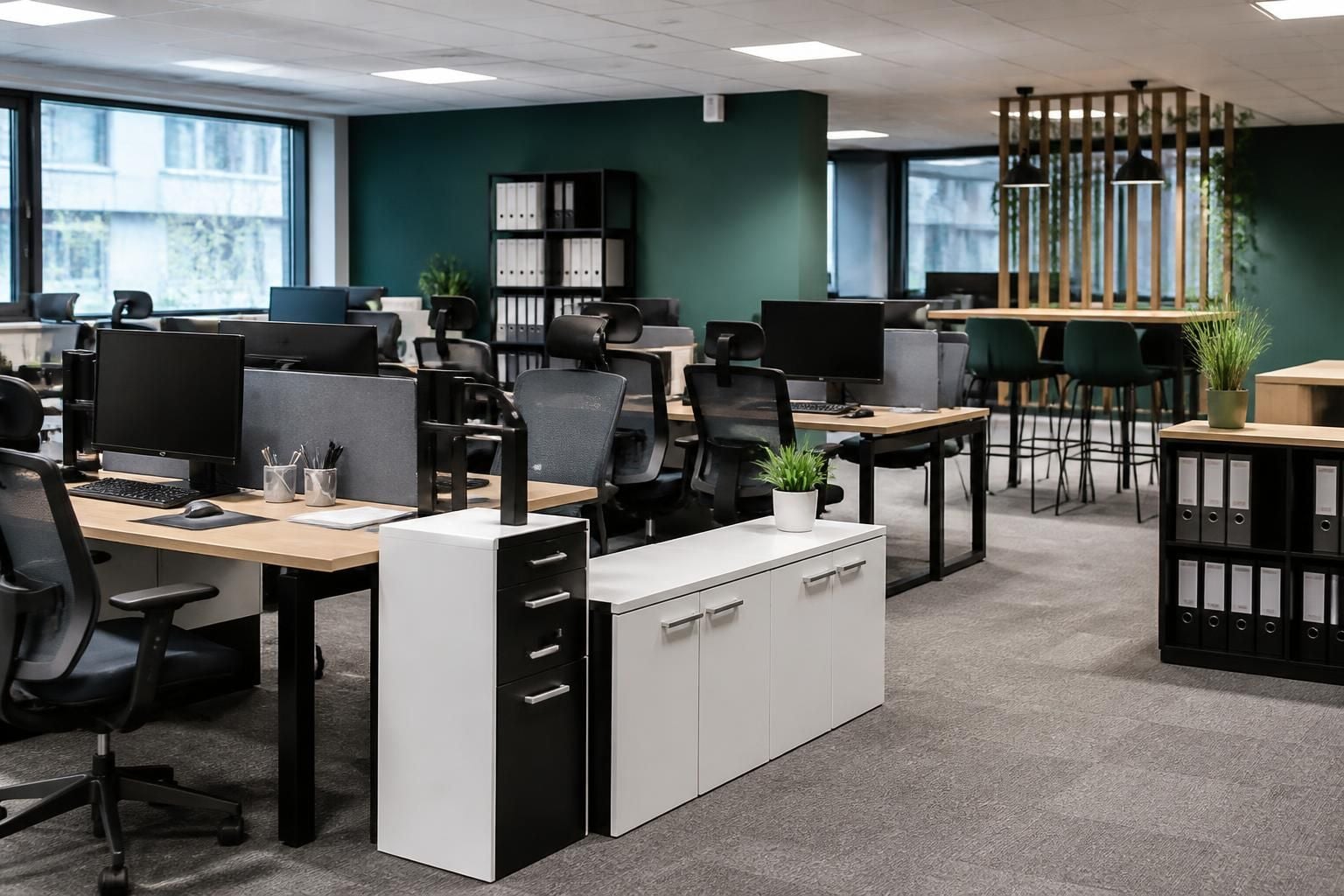
Smart Office Furniture for Productive Workspaces
Office furniture solutions give you a clearer, more adaptable working environment when outdated desks, limited storage or poor layouts restrict daily work. We plan workstations, seating and office storage around your space, requirements and workflow, with fit-out support where needed.
Choose Office Furniture Around Space, Workflow and Future Growth
Begin with the available floor area, entrances and circulation routes around desks, chairs and storage. The number of people using the room affects desk positions, seating and clear movement. We assess these relationships before recommending office furniture solutions.
Next, list the items each area must hold, including filing, equipment, stationery and personal belongings. Storage height, door clearances and walking routes influence access, daily tasks and the layout. This helps distinguish suitable office storage solutions from furniture that restricts movement.
Leave room for changing team sizes, additional equipment or altered working patterns. A no-obligation consultation may include a site meeting and survey, followed by written proposals and working drawings. This gives you a clearer basis for comparing furniture, layout and fit-out requirements before work begins.
Questions to Ask When Comparing Office Furniture Solutions
Should you choose modular or fixed office furniture?
Fixed desks can suit settled layouts, while modular office furniture supports reconfiguration as requirements change. Compare construction, cable management, seating comfort, installation access and total replacement needs, not price alone.
Should office storage be personal, shared or mobile?
Personal storage keeps belongings accessible, while shared storage suits communal equipment. Mobile units add flexibility but need clear routes. Compare access, security, capacity and relocation needs before choosing storage type.
Should you choose open-plan or cellular office furniture?
Open-plan furniture supports shared visibility and simpler reconfiguration, while cellular layouts provide quieter, separated work areas. Compare acoustic needs, collaboration, privacy, circulation and partition installation before choosing for each team.
Should you choose freestanding or fitted office furniture?
Freestanding furniture allows easier relocation and replacement, while fitted units use wall dimensions for continuous storage. Compare access, fixing requirements, future changes and installation work against the planned layout carefully.
Should you choose benching or individual office desks?
Benching uses continuous desks, supporting team interaction and efficient floor use, but offering less privacy. Individual desks provide clearer separation, potentially requiring more space; compare cable access and movement routes.
Features of a Smarter Office Workspace
Choose office furniture solutions that support clear movement, practical storage and comfortable daily work. Modular workstations, suitable seating and accessible filing keep each area organised, while considered layouts support changing requirements without unnecessary replacement.
Workstations Around Your Layout
Workstations positioned around floor area, entrances and circulation routes help maintain clear movement between desks and shared areas.
Seating For Daily Work
Suitable seating supports practical desk arrangements, helping each workstation remain usable as people move through their daily tasks.
Storage Without Obstruction
Office storage for filing, equipment and stationery keeps essential items accessible without narrowing walking routes or blocking door clearances.
Furniture That Can Adapt
Modular furniture supports altered working patterns, additional equipment and changing team requirements without redesigning the whole workspace.
Furniture And Partitioning Together
Partitioning can define separate work areas while furniture maintains practical access, clearer organisation and a consistent office layout.
Questions to Ask Before Choosing Office Furniture & Workspace Solutions
What survey information should you provide before choosing office furniture?
Ask how proposed desks, storage and seating accommodate circulation, access and electrical needs. We can coordinate office fit-out requirements, so furniture decisions support the wider workplace layout before installation begins.
What should an office furniture specification include?
Specify desk dimensions, finishes, cable management, seating, storage capacity, access requirements and electrical points. Include quantities, preferred locations and future needs, so proposals and drawings can be compared fairly accurately.
How should office furniture be maintained after installation?
Set cleaning, adjustment and defect-reporting responsibilities before installation. We can advise on aftercare and coordinate remedial work where required, helping furniture remain suitable as office requirements change and teams grow.
Who is responsible for preparing the office before furniture installation?
You should clear agreed work areas, secure valuables, confirm access and identify services. We can confirm preparation requirements during consultation, helping avoid obstacles before installers arrive on site for installation.
Can office furniture be adapted as your workplace changes?
Modular office furniture can accommodate changed team arrangements by allowing components to be repositioned or added. Discuss these requirements during consultation, so proposals reflect likely workplace changes and available space.



