


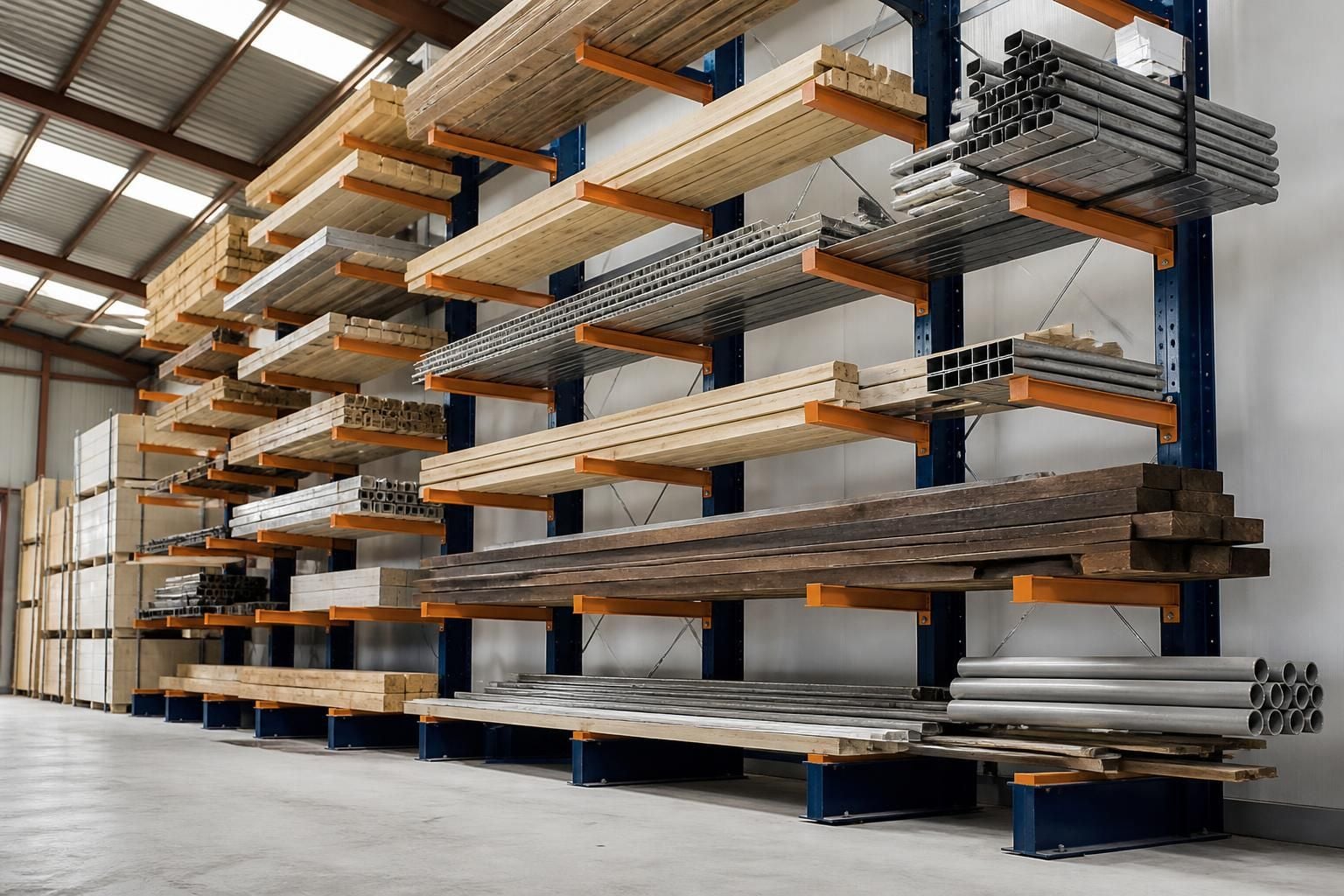
Cantilever Racking for Organised Long-Stock Storage
Long, heavy or awkward stock can waste floor space and hinder safe access. Cantilever racking systems keep timber, pipes, sheets and similar materials organised, with clear loading points that support smoother warehouse handling and better use of existing premises.
What to Consider When Choosing Cantilever Racking
Start with the available floor area, clear height and aisle layout. Cantilever racking must accommodate stock dimensions, load weights and the equipment used to place or remove materials.
Consider how often people handle the stock and how access affects workflow. Arm levels, loading direction and separation between storage areas should support safe movement without obstructing nearby operations.
Allow for changes in stock, handling equipment and capacity requirements as the business grows. We can review the site through a no-obligation consultation, then prepare written proposals and working drawings for the chosen arrangement.
Cantilever Racking: Capacity, Access and Installation Questions
When is cantilever racking preferable to pallet racking for long or awkward stock?
Single-sided cantilever racks suit wall-side storage, while double-sided versions use central floor space for access from both directions; the better choice depends on layout and handling routes within your facility.
How flexible is cantilever racking when stock dimensions change?
Adjustable arm levels accommodate changing stock profiles, while additional bays or reconfigured spacing can support evolving requirements. A site review confirms whether the proposed arrangement remains suitable for handling equipment.
Can cantilever racking be installed without relocating your stock?
A site survey can assess phased installation, temporary relocation and access routes. The final arrangement depends on available working space, stock movement, handling equipment and safe installation requirements during installation.
What affects the cost of cantilever racking?
Cost depends on rack dimensions, arm levels, load requirements, site access, handling equipment and installation arrangements. Our survey and written proposal clarify the specification before commitment to support informed comparison.
What load capacity should cantilever racking provide?
Choose capacity according to each stock type, arm arrangement, bay spacing and handling method. We confirm proposed loads against site conditions, then document suitable specifications in written proposals and drawings.
Cantilever Racking Features for Safer, More Efficient Storage
Cantilever racking systems provide open-front access for long stock, with upright frames and projecting arms supporting organised storage. Their clear structure helps you identify materials, maintain orderly handling areas and make practical use of available warehouse volume.
Open-front access
Open fronts let you identify and handle long stock from the aisle, without front posts obstructing access.
Floor-efficient storage
Upright frames and projecting arms hold materials above floor level, helping release space for clearer working routes.
Load-aware arrangement
The arrangement can reflect stock dimensions, weights and handling equipment, giving each material a practical storage position.
Capacity for changing stock
Plan the system around changing stock and capacity requirements, supporting continued use of existing premises as operations develop.
Inspection and aftercare
Racking inspections and aftercare provide a planned opportunity to review condition and continued suitability for your storage needs.
Questions to Ask Before Choosing Cantilever Racking
Does cantilever racking require a site survey before installation?
A site survey helps us check upright positions and arm levels against stock dimensions, loads and handling routes before drawings confirm the proposed cantilever racking arrangement for installation planning.
What compliance checks should accompany cantilever racking installation?
Confirm that installation includes checks of frame stability, arm security, load information and protection around operating areas. Ask how findings are recorded, explained and incorporated into future onsite inspection arrangements.
What maintenance does cantilever racking require after installation?
Schedule inspections of uprights, arms, fixings and protective components, checking for damage, movement or wear. Record findings and arrange remedial work promptly to support safe, usable storage throughout daily operations.
What does project management cover during cantilever racking installation?
Project management may coordinate the proposal, tender stage, installation and final commissioning, keeping responsibilities and handovers clear where contractors are involved and several cantilever racking tasks require careful onsite alignment.
How can cantilever racking installation limit disruption to warehouse operations?
Plan phased installation around active work areas, separating access routes and storage operations. Confirm delivery, assembly and handover arrangements beforehand, so warehouse teams can maintain orderly movement during installation where possible.



