


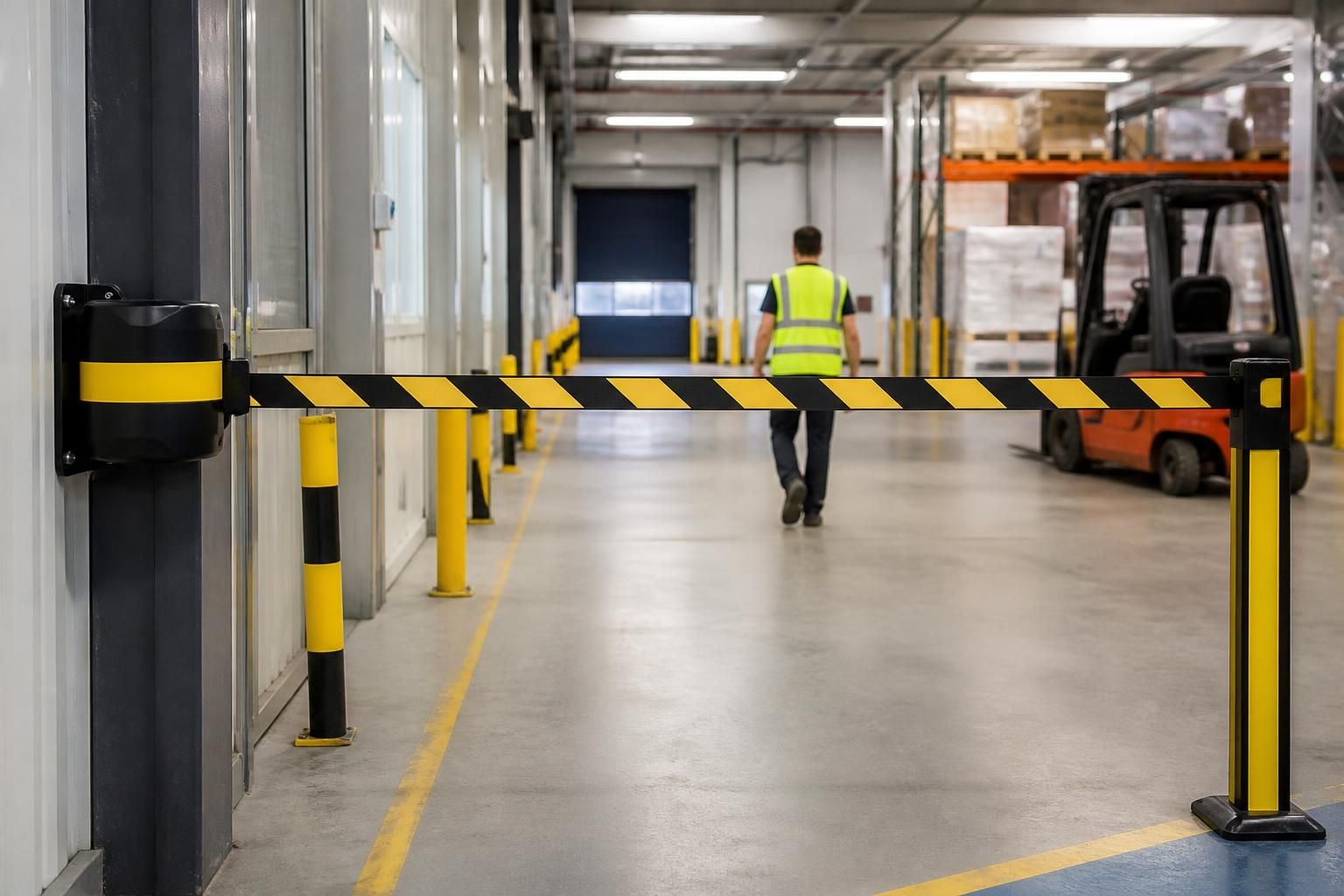
Retractable Barriers For Safer Workplaces
Retractable barriers create controlled separation where aisles, loading points or work areas change throughout the day. We design, supply and install flexible safety barriers that restrict access when needed, then retract to preserve clear routes and usable floor space.
Choose a Retractable Barrier for Your Space and Workflow
Start with the available footprint and mounting position. Wall-mounted retractable barriers suit limited floor space, while portable expandable barriers allow repositioning.
Consider how people, vehicles, stock and equipment move through the area. A site review can compare retractable belt, chain or concertina formats against those demands.
Include access rules, visibility and future layout changes in the specification. We can discuss your requirements during a no-obligation consultation, then prepare written proposals and working drawings.
Retractable Barrier Questions: Comparing Access, Protection and Installation
When are retractable barriers preferable to fixed safety barriers?
For changing access points, retractable barriers provide control without permanent obstruction. Portable versions suit temporary zones, while fixed units support repeat use at defined entrances and require suitable mounting positions.
Which retractable barrier format suits your site's access requirements?
Match barrier reach and movement to the opening. Belt units suit controlled pedestrian access; concertina barriers cover broader openings, while chain formats offer visible separation where mounting points support them.
Where should retractable safety barriers be installed?
Install retractable safety barriers at aisle ends, loading areas, doorways or temporary work zones, positioning mounts outside vehicle paths while preserving pedestrian visibility, emergency access and clear circulation around them.
What affects the cost of retractable barriers?
Cost depends on barrier material, reach, mounting method and site preparation. A survey can identify fixing requirements, access conditions and quantities, allowing our written proposal to separate supply and installation.
What safety features should a retractable barrier include?
Look for high-visibility belt or chain, positive locking, stable mounting, controlled retraction and construction suited to contact risks. For vehicle areas, add impact protection and assess fixing strength when surveying.
Retractable Barrier Features for Safer, More Efficient Workspaces
Retractable barriers should support more than occasional access control. The defining features below connect physical separation with safer routines, clear responsibilities and efficient use of working areas, helping you compare options against the demands of your operation.
Defined access control
Deployed retractable barriers create clear no-entry areas around loading points, work zones and stored stock. This supports safer routines without relying on verbal instructions alone.
Workplace segregation
Use barrier guarding to separate people, vehicles, stock and equipment where activities overlap. Clear boundaries help reduce confusion at busy operational points.
Visible boundaries
A visible barrier makes restricted areas easier to recognise. The specification can account for sightlines, access rules and the way people move through the site.
Planned for the site
Mounting position, available floor area and changing layout needs all influence the right retractable barrier arrangement. We can review these points before preparing proposals and working drawings.
Questions to Ask Before Choosing Retractable Barriers
What site information is needed before specifying retractable barriers?
A site survey should check fixing points, floor conditions, sightlines, escape routes and traffic interfaces. Written drawings then clarify installation sequence, access arrangements and any temporary restrictions before work begins.
What maintenance should retractable barriers receive after installation?
Check belts, chains, fixings and posts routinely for wear, looseness or damage. Keep mechanisms clear, record inspections and address defects before reuse, particularly after impact or planned layout changes.
How can retractable barrier installation limit workplace disruption?
Careful phased installation protects essential routes while barriers are fitted. We can coordinate project management where required through installation and final commissioning, helping limit disruption to daily operations on site.
What compliance requirements should retractable barriers meet?
Specify barriers against applicable workplace safety duties, risk assessments and site rules. Confirm visibility, access control, emergency routes and guarding interfaces, then record responsibilities for installation in proposals and drawings.
Can retractable barriers adapt when your workplace layout changes?
Choose modular retractable barriers where work areas may change. Relocatable posts, removable sections or wall-mounted units can support revised access arrangements, provided the configuration remains suitable for traffic and visibility.
Discuss Your Retractable Barrier Requirements
Discuss your retractable barrier requirements with us. We can review access points, operating conditions and future changes, then recommend a suitable specification for your site. You will receive clear written proposals and a quotation to support an informed decision.



