


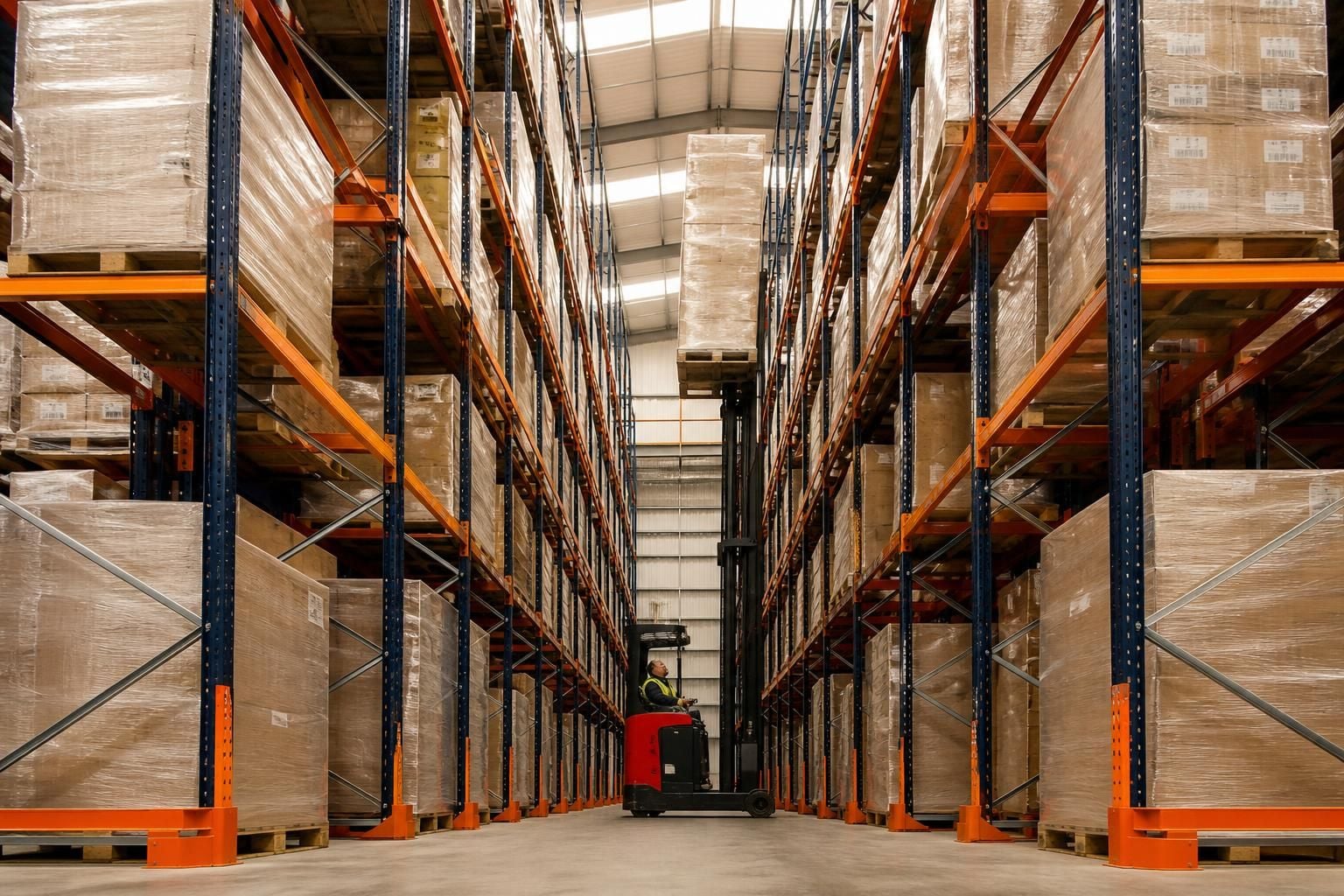
High-Density Drive-In Pallet Racking
Drive-in pallet racking creates dense storage by allowing forklifts to enter rack lanes, reducing aisle space for suitable stock profiles. We design, install and inspect drive-in warehouse racking to support better capacity and controlled access.
Choosing the Right Drive-In Pallet Racking Layout
Drive-in pallet racking suits uniform pallets, repeated stock and fewer product lines. Confirm pallet dimensions, loads and rack dimensions before selecting a system.
Consider stock rotation and handling patterns carefully. Drive-in racking usually follows last-in, first-out access, while drive-through racking can support loading and retrieval from opposite ends.
Plan forklift movements, pedestrian separation and safe access around the rack face. A site survey can test available space, then inform working drawings and future capacity planning.
Comparing Drive-In Pallet Racking with Other Systems
Is drive-in pallet racking suitable for your warehouse layout?
Drive-in pallet racking can reduce aisle requirements and suit repeated pallets, but limited lane access may hinder fast stock rotation. Compare handling priorities, installation space and future product changes first.
What are the advantages and disadvantages of drive-in racking?
Drive-in racking offers high-density storage and fewer aisles, but restricted access can slow rotation and complicate picking. It suits stable, uniform stock; choose alternatives for selective retrieval or varied stock.
What affects drive-in pallet racking prices?
Drive-in pallet racking prices depend on rack dimensions, load requirements, lane numbers, protection and installation conditions. We survey the site, then provide written proposals and drawings before prices are issued.
What forklift requirements apply to drive-in pallet racking?
Forklifts need suitable mast clearance, load capacity and manoeuvrability for lane entry and retrieval. We confirm these requirements against drive-in racking dimensions, operating methods and site constraints before installation.
When is drive-through pallet racking a better choice?
Drive-through pallet racking suits warehouses needing loading from one side and retrieval from the other, supporting stock rotation where site layout permits access from both ends of each lane.
Drive-In Pallet Racking Features for Safer, More Efficient Storage
Drive-in pallet racking supports dense, controlled storage when structure, protection and access are planned together. We assess rack penetrability, forklift clearances and load requirements, then produce drawings that support safer handling and consistent day-to-day warehouse operations.
Dense block storage
Rack lanes use depth rather than repeated aisles, helping suitable stock occupy more of the available footprint.
Clear stock rotation
Grouped, uniform stock makes lane loading practical when last-in, first-out handling suits the workflow.
Protected rack faces
Plan barriers and protected rack faces around vehicle routes to reduce contact risks and control access points.
Coordinated layout
Working drawings coordinate rack positions with columns, doors and usable clearances before installation.
Inspection support
Racking inspections provide a structured check of condition, helping identify issues that could affect safe ongoing use.
Repeatable handling
Defined loading and retrieval routes give operators a consistent process through each drive-in lane.
Questions to Ask Before Choosing Drive-In Pallet Racking
What information does a site survey need for drive-in pallet racking design?
Keep load signage, protection components and inspection records under review. We can inspect installed racking and identify maintenance requirements, supporting safer decisions as stock, vehicles or layouts change over time.
What safety requirements apply to drive-in pallet racking installation?
Installation should follow working drawings and manufacturer requirements, with anchored frames, guarded uprights, suitable aisle clearances and pedestrian separation. We coordinate installation to protect stock, vehicles and operations during fitting.
How can drive-in racking accommodate future changes in stock requirements?
Allow for changing stock by reviewing pallet sizes, load weights and product turnover before committing. Drive-in storage racks suit consistent loads; mixed inventory may require adaptable pallet racking alongside them.
What disruption should you expect during drive-in pallet racking installation?
Disruption depends on access, stock movements and the installation sequence. We can plan work through site discussions and project management, coordinating warehouse activities around fitting requirements using agreed access plans.
What maintenance does drive-in pallet racking require?
Maintain drive-in pallet racking by keeping rails, frames and entry points clear, checking for impact damage, and arranging repairs before returning affected lanes to service safely or storing stock there.



