


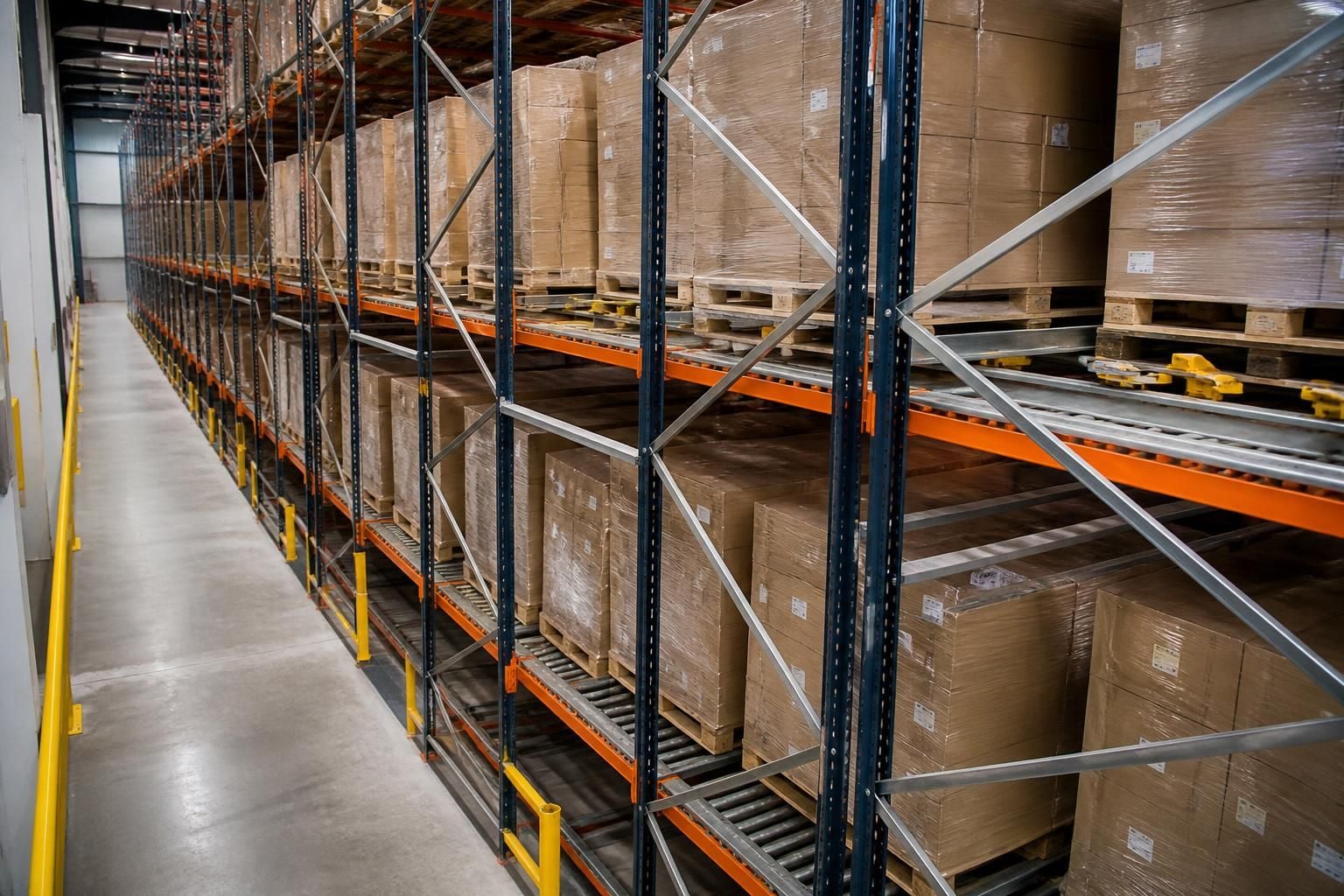
Push Back Pallet Racking for High-Density Storage
Push back pallet racking gives warehouses greater storage density while retaining access to grouped stock from the aisle. We design and install a push back rack system around available space, loads and workflow.
Choose Push Back Pallet Racking Around Space, Loads and Access
Push back pallet racking must match clear height, bay depth, columns, lighting, sprinklers and aisle clearance. A site survey and working drawings can test push back racking dimensions against these constraints.
Consider stock rotation, pallet size, load weight and handling equipment before selecting a push back rack system. These lanes generally suit last-in, first-out stock; another arrangement may better serve stock requiring oldest-first access.
Include pedestrian routes, operator visibility and protection when assessing push back warehouse racking. Discuss expected changes in stock and capacity, so the proposed layout supports future growth without restricting daily movements.
Push Back Pallet Racking: Capacity, Access and Installation Questions
When should you choose push back pallet racking over double deep racking?
Compared with selective racking, push back pallet racking uses fewer aisles but needs compatible pallets, handling equipment and accurate loading. A survey confirms whether installation suits existing clearances and operations.
Is push back pallet racking suitable for last-in, first-out stock?
Yes, push back racking suits grouped stock with predictable rotation, but it limits direct pallet access. Choose selective or pallet live racking when first-in, first-out control matters for stock control.
How is push back pallet racking priced for a warehouse?
Pricing depends on bays, load specification, site conditions and installation scope. We assess through consultation, then issue a proposal and drawings; quotations remain valid for 14 Business Days from issue.
What pallet types suit push back pallet racking?
Push back pallet racking suits uniform, stackable pallets that can move safely on the rollers. Confirm pallet dimensions, condition and load compatibility before specifying a push back system for storage.
What maintenance does push back pallet racking require?
Maintenance includes checking frames, rollers, guides and locking components for damage, wear or obstruction. Arrange racking inspections and address defects promptly to support safe movement through push-back lanes during use.
Push Back Pallet Racking: Features for Space, Access and Protection
A push back pallet racking system uses inclined roller lanes to store pallets behind one another. We specify components around handling equipment, protection needs and inspection requirements, supporting controlled loading, unloading and ongoing warehouse use.
High-density pallet storage
Push back pallet racking stores multiple pallets in depth, increasing capacity within the available footprint.
Grouped stock access
Inclined roller lanes move pallets towards the loading face, keeping grouped stock accessible from one aisle.
Designed around handling
We set lane dimensions around pallet sizes, load weights and handling equipment, supporting controlled warehouse movements.
Safer warehouse operation
The layout allows pedestrian routes, operator visibility and rack protection to be considered alongside storage density.
Planned for continued use
Racking inspections and aftercare help identify issues and support informed maintenance decisions as warehouse use develops.
Questions to Ask Before Choosing Push Back Pallet Racking
How can push back pallet racking installation limit warehouse disruption?
Ask whether installation can proceed around operations, how stock moves during works, and which maintenance access is needed. We can coordinate installation and project management through final commissioning where required.
What safety requirements should push back pallet racking meet before installation?
Confirm load ratings, impact protection, safe working clearances, signage and inspection arrangements before installation. We review these points with site conditions and handling practices, then record them in working drawings.
What should a push back pallet racking survey measure?
Measure floor level and condition, clearances around obstructions, pallet access points, loading-bay access and equipment routes. Record these details so the push back pallet racking specification fits daily operations safely.
What documentation should accompany a push back pallet racking installation?
Expect written proposals and working drawings covering the agreed layout, components and relevant protection details. Ask how commissioning records, inspection arrangements and future alterations will be documented for future reference.
How should push back pallet racking allow for future warehouse changes?
Allow for changing pallet sizes, stock volumes and handling equipment when planning push back pallet racking. We can record future alterations against the agreed proposals and drawings, preserving layout context.



