


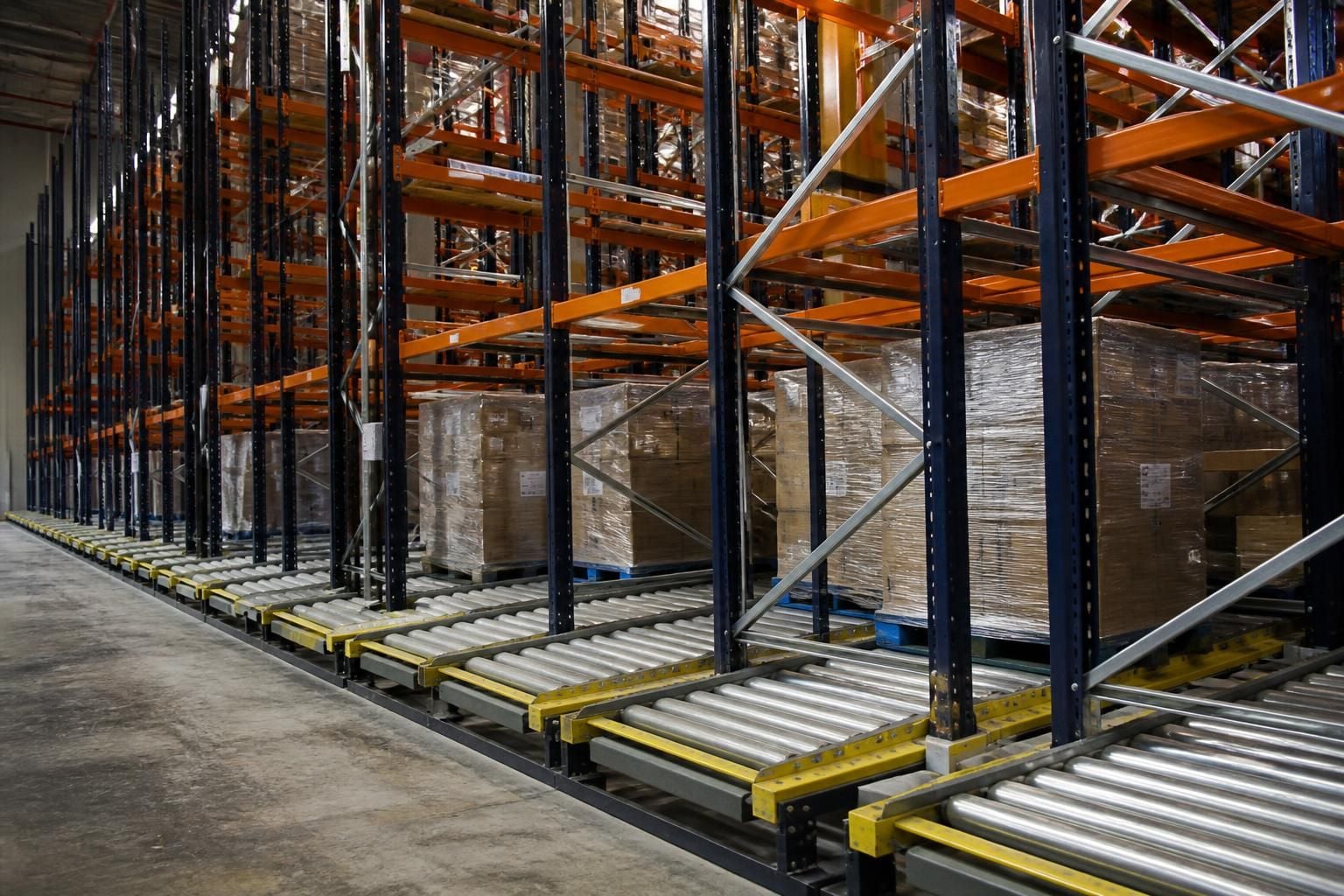
Pallet Live Racking For Stock Rotation
Pallet live racking uses gravity-fed lanes to support first-in, first-out stock rotation, helping you organise high-volume warehouse storage. We assess available space, loads and workflow before designing and installing a system suited to your operation.
Choosing a Pallet Live Racking Configuration
Pallet live racking suits operations handling consistent pallet sizes and regular stock volumes. Check pallet dimensions, load weights and lane depth before choosing the configuration.
Review forklift turning space, replenishment methods and picking positions alongside pedestrian routes. Clear access supports safe movement of people, equipment and stock around the racking.
Allow space for additional lanes or levels if stock volumes may increase. We can reflect these requirements in written proposals and working drawings, helping you compare the system with other pallet racking options.
Comparing Pallet Live Racking With Other Systems
Can pallet live racking fit an existing warehouse without relocating?
Pallet live racking supports stock rotation and dense lanes, while conventional racking offers broader access. Compare handling equipment, installation changes, pallet consistency and future flexibility before choosing for your operation.
Is pallet live racking suitable for products requiring strict first-in, first-out rotation?
Yes, it suits dated or batch-controlled stock because gravity-fed lanes present older pallets first. Separate loading and picking faces support rotation, while lane depth affects capacity and replenishment space requirements.
What load limits should you check for pallet live racking?
Confirm beam and upright capacities match loaded pallet weights, including any impact allowance. Check lane roller ratings, support frames, floor loading and forklift handling against the proposed layout before installation.
How does pallet live racking affect forklift access and replenishment?
Forklifts load pallets at one face and collect them at the other, reducing crossing movements. Plan staging areas and replenishment routes carefully, preserving access around live lanes during daily operations.
Does pallet live racking provide greater storage capacity than conventional racking?
Potentially, yes: live lanes reduce repeated access space and use vertical storage efficiently. However, conventional racking may provide more flexible access, so compare capacity after circulation, loading, and picking areas.
Pallet Live Racking Features For Efficient Warehouse Operations
Roller lanes, guides and brakes help control pallet movement within each channel, supporting safer access and orderly handling. We configure the grid around loading and picking routes, then install it for lasting operational performance.
Storage Depth
Channel depth supports several pallet positions in line, using available floor space for organised storage.
Separate Handling Routes
Loading at one end and picking at the other can separate replenishment from collection, supporting clearer warehouse workflow.
Controlled Pallet Movement
Braking components moderate pallet travel, helping protect access points during loading and unloading.
Clear Lane Allocation
Defined lane positions give teams a clear place to load and collect each pallet, reducing searching across storage areas.
Ongoing Racking Checks
Racking inspections can be arranged after installation, supporting planned checks as operating conditions change.
Questions To Ask Before Choosing Pallet Live Racking
What survey details should you provide before choosing pallet live racking?
A site survey should confirm floor conditions, clearances, access routes and handling equipment before specification. We use these findings to prepare drawings that fully support installation planning and compliance discussions.
What maintenance does pallet live racking require?
Arrange periodic racking inspections to identify damage, movement or wear, then address findings through suitable repairs or replacements. Our aftercare supports continued safe operation and informed maintenance decisions over time.
What compliance checks should accompany a pallet live racking installation?
Confirm the design addresses load limits, aisle clearances, guarding, signage and access requirements. Record installation checks and retain drawings, specifications and handover information for future inspections and planned operational changes.
How much disruption does installing pallet live racking cause?
Plan installation around agreed access arrangements, stock movements and safe working zones. We coordinate proposals, drawings and site work where required, helping you manage phased changes without relocating the business.
Can pallet live racking adapt when product dimensions change?
Changing product dimensions may require revised lane widths, supports or pallet positions. We can review updated requirements and prepare amended drawings, helping you assess modifications before any installation work proceeds.
Discuss Your Pallet Live Racking Requirements
Discuss your pallet live racking requirements with us. We can review site conditions, stock handling and operational priorities, then prepare a suitable specification and clear quotation for your consideration. Contact Spartan Direct to take the next step.



