


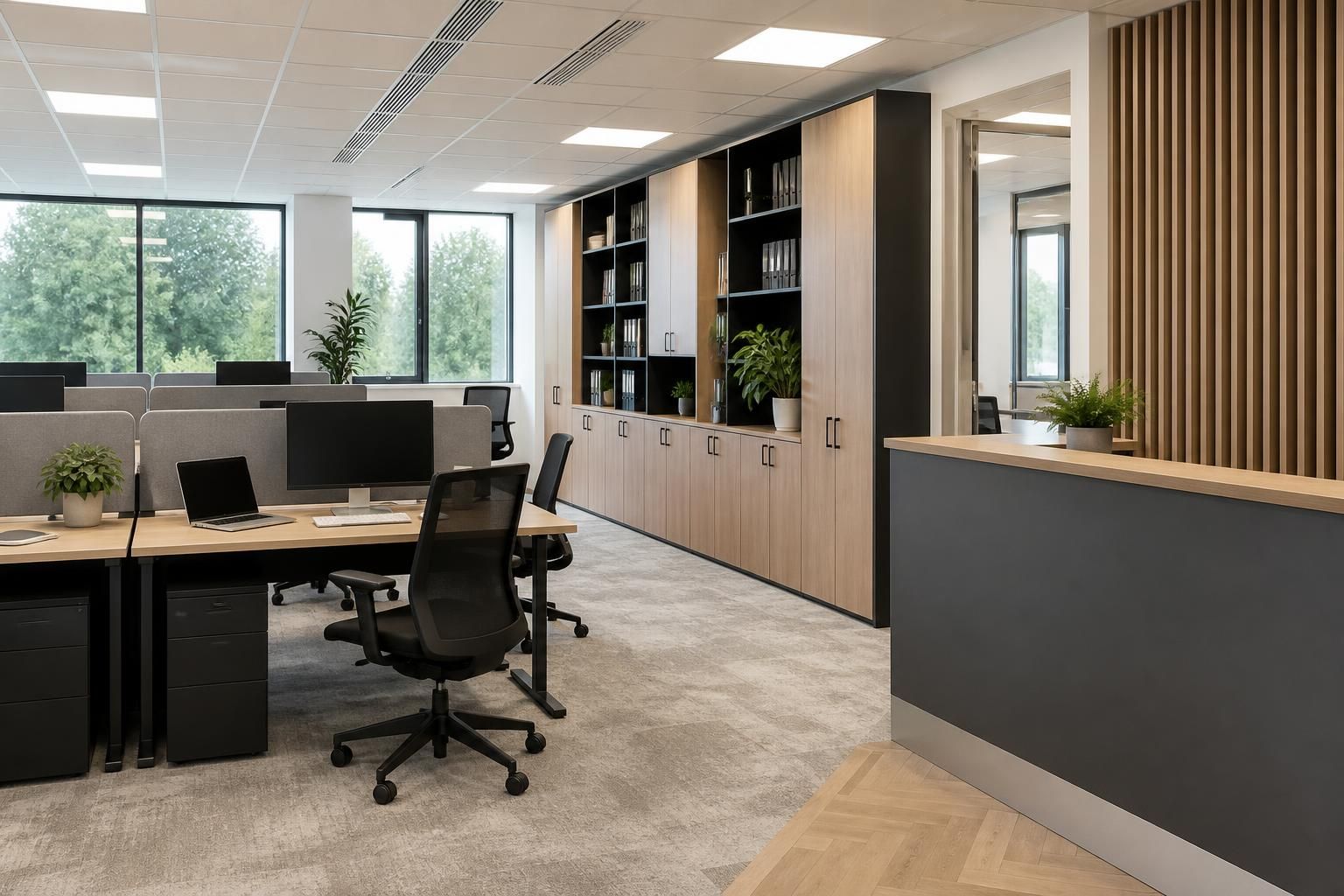
Should you choose modular or fixed office furniture?
Choose modular office furniture if your layout or team may change; choose fixed office furniture when you need a stable, defined arrangement. The right option depends on your requirements, available space and how often the workplace must adapt.
The practical choice depends on permanence, access to services and the work your office must support. Modular furniture allows components to be separated, replaced or rearranged. Fixed furniture creates a defined installation that remains in place.
Choose modular furniture when adaptability matters at component level. Desks, screens, storage units and meeting elements can form a coordinated arrangement. Changes can then focus on individual items rather than the whole office installation.
Modular furniture can also support phased changes. You may be able to add, remove or reposition elements as departments, equipment or work patterns develop. Check each product’s joining method, dimensions and compatibility before selecting it.
Choose fixed furniture when the office requires a settled arrangement. Built-in storage, fixed counters and attached work surfaces can define clear zones. They may suit reception areas, meeting rooms or rooms with a specific operational purpose.
Fixed furniture needs careful planning before installation. Access routes, door swings, windows, sockets, data points and ventilation can affect the final position. Later changes may involve dismantling surrounding items or altering the room.
Compare the options against these practical points:
- Layout: Modular furniture supports adjustments to individual areas. Fixed furniture gives the room a more permanent arrangement.
- Storage: Modular units can be repositioned or exchanged. Fixed cupboards and counters can use defined wall or corner positions.
- Services: Review cable routes, power access and data connections before choosing desk positions. Furniture must not obstruct safe access.
- Space: Measure circulation routes, clearance around desks and access to doors, windows and equipment. A survey helps test the proposed arrangement.
- Appearance: Modular items can create a consistent look across several areas. Fixed furniture can give selected rooms a more built-in appearance.
- Future work: Consider changes to equipment, team structure and room use. Select the construction that matches the changes you can reasonably anticipate.
Office fit-outs and partitioning may also affect the decision. Partitions can define rooms, routes and work zones, while furniture completes the working arrangement inside them.
Combining modular furniture with fixed elements can suit offices with different needs. For example, fixed reception storage may sit alongside modular desks and mobile storage.
Do not judge the choice from furniture photographs alone. Confirm the room dimensions, user numbers, storage requirements, equipment and service points. These details determine how much usable space remains after installation.
We can discuss the requirements through a no-obligation consultation, including a site meeting and survey where needed. We then prepare written proposals and working drawings for review.
Where a project requires it, we can coordinate the work from proposal and tender stage through installation and final commissioning. This gives you a clearer sequence for furniture, partitions and associated workplace changes.
For a West Midlands office, the best selection is the one that supports the intended work, respects the available space and allows practical maintenance. A survey-led comparison can show where modular, fixed or combined furniture fits the building.
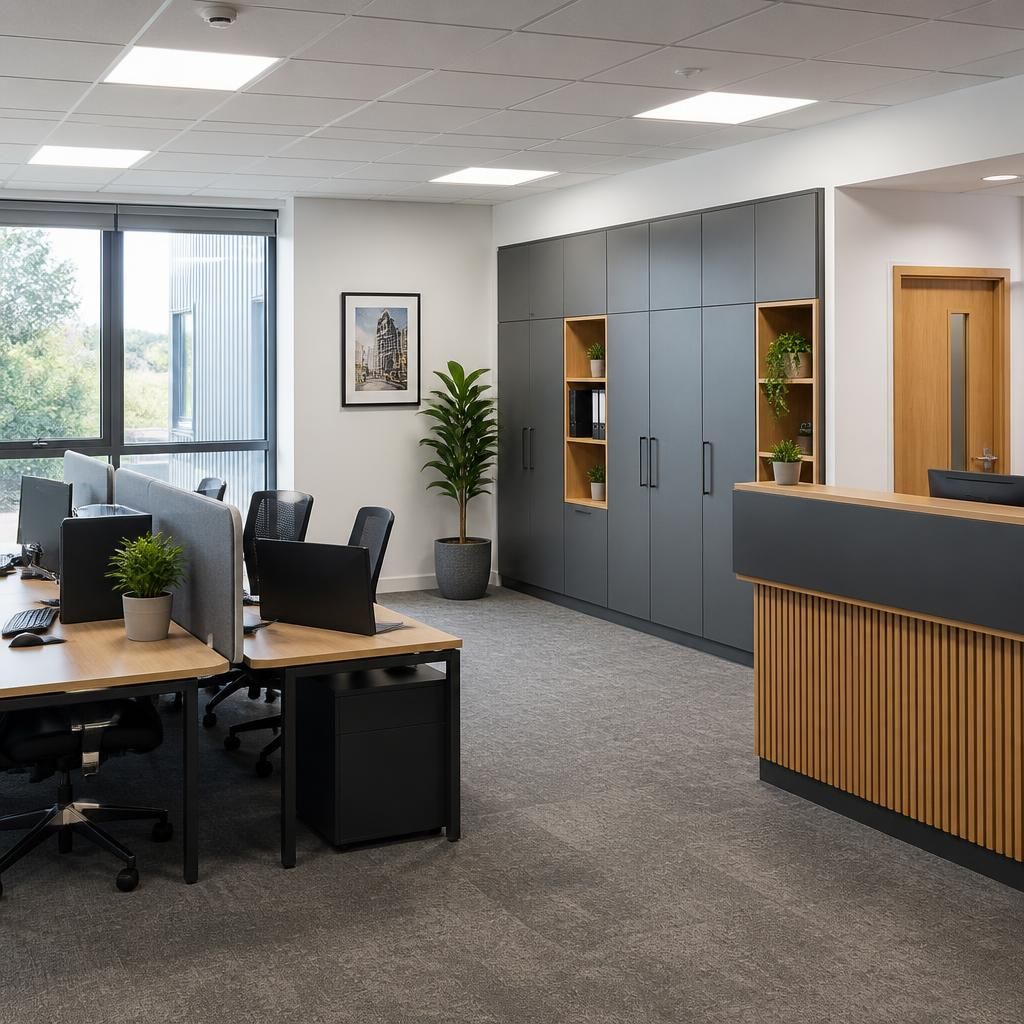
Check how the furniture relates to the building before choosing. Fixed units may require permission where they attach to walls, floors or existing finishes.
Modular furniture can suit leased offices or changing room allocations, provided its dimensions and weight work with access routes and floor conditions.



