


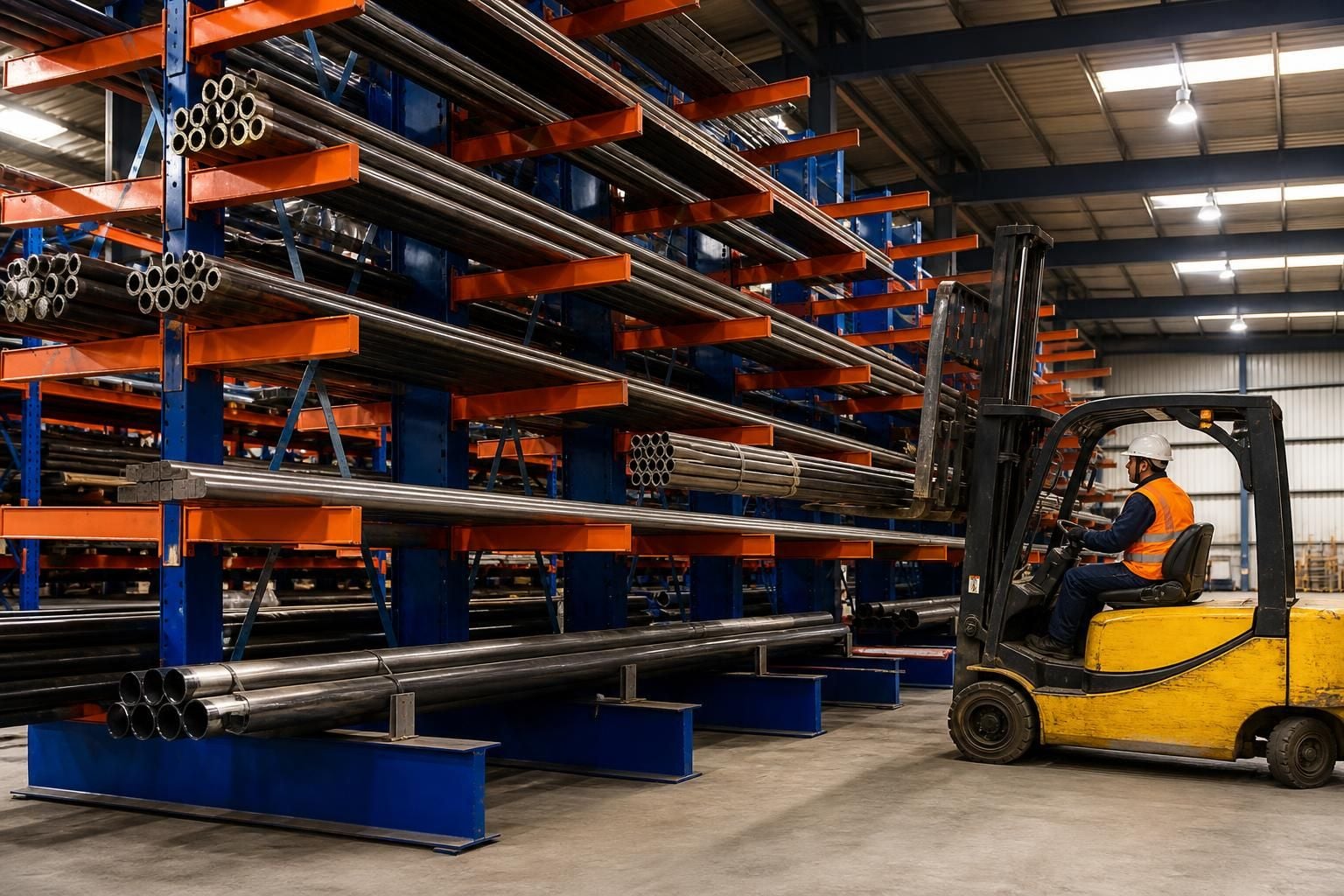
Cantilever Racking Systems
Cantilever racking systems provide stable, accessible storage for long, bulky or irregular loads. Spartan Direct is an experienced UK specialist designing and installing bespoke systems for commercial and industrial premises across the West Midlands.
Cantilever Racking Specifications and Configuration Options
Cantilever racking specifications determine how a system supports and presents long or awkward loads. Compare frame and arm dimensions, permissible loads, storage height, bay length and single- or double-sided access, alongside handling equipment, aisle requirements and environmental protection.
Frame and arm dimensions
Compare upright height, arm length, bay width and available clearances against the dimensions of the loads. Arm projection and spacing should support the stored material without creating unnecessary overhang or restricting access.
Load capacity by level
Each arm and complete bay must be specified for the intended load, with consideration given to how weight is distributed along the arm. Do not compare capacity figures without checking the loading assumptions and system configuration behind them.
Single- or double-sided layout
Single-sided racking suits storage against a wall or perimeter, while double-sided frames allow access from both aisles. The choice affects usable capacity, aisle planning and how handling equipment approaches each load.
Adjustable storage levels
Adjustable arm positions allow the system to accommodate different load heights and changing stock profiles. Check the adjustment range and whether the planned levels leave sufficient clearance for safe placement and removal.
Floor, ceiling and aisle requirements
The building survey should assess floor condition, available height, obstructions, doors and fire-protection equipment before finalising the arrangement. Aisle widths must also reflect the handling equipment and operating method used on site.
Load type and support method
Cantilever systems can be configured for long, bulky or irregular materials such as timber, tubes, sections and panels. Compare whether arms, supports, stops or specialist accessories are needed to keep the particular load stable and accessible.
Protection and inspection considerations
Where vehicles or handling equipment operate nearby, assess the need for barrier protection and other safeguards around the racking. Planned inspections and aftercare provide a way to identify damage or changes that may affect continued use.
Cantilever Racking Questions and Answers
How should cantilever racking arms be configured for different load types?
Suitability depends on load weight, length, rigidity, handling method, building conditions and required access. Confirm design loads, anchorage, protection, inspection arrangements and operator procedures before installation, then review them periodically.
How is cantilever racking anchored safely to the warehouse floor?
Anchoring safely requires checking slab thickness, concrete strength, edge distances and buried services, then selecting compatible fixings and baseplates. Install to specified torque, record checks, and inspect after initial loading.
Can cantilever racking be used outdoors safely?
Outdoor use requires protection from weather, corrosion, wind and uneven surfaces. Specify galvanised or suitable coated components, secure the structure against wind, provide drainage, and inspect regularly throughout service life.
What inspections does cantilever racking require during warehouse use?
Inspections should examine uprights, bases, arms, bracing, fixings, damage, overloading, labels and stability. Record findings, isolate unsafe sections, arrange competent repairs, and update inspection records after alterations or impacts reported.
Should you choose single-sided or double-sided cantilever racking?
Single-sided cantilever racking suits wall-adjacent storage and narrower layouts; double-sided configurations serve central aisles, increasing access flexibility. Choose based on available floor space, loading patterns, handling routes and future expansion.
Protected Storage
Protective cantilever racking keeps long stock organised and accessible, while our survey-led planning helps you assess fit, loads and workflow.
Questions to Ask Before Choosing Cantilever Racking
Cantilever racking is selected by matching the rack configuration to the dimensions, weight and handling method of the stored materials. Before choosing a system, establish the longest and heaviest loads, required storage levels, single- or double-sided access, available height and the floor conditions where the rack will be installed.
A productive enquiry should also cover vehicle and pedestrian routes, loading equipment, impact protection, outdoor exposure where relevant, future stock changes and inspection responsibilities. These details help determine whether adjustable arms, suitable uprights and other safeguards are appropriate for the intended cantilever rack system.
What will each rack carry?
Provide a representative schedule of the materials to be stored, including their length, weight, shape and handling method. This allows the proposed cantilever system to be assessed against the actual stock rather than a general description of the application.
Clarify the design load assumptions
Ask which load assumptions apply to each arm, level and upright, and whether the proposal distinguishes evenly distributed loads from concentrated or awkwardly positioned items. Confirm how bundled, coiled or easily damaged materials will be supported, and whether separators, end stops or other accessories are needed to keep loads stable and identifiable.
How will the system fit the building?
The rack layout must work within the building’s structure and operating constraints, not just the available footprint. Ask the surveyor to record obstructions and clearances that could affect the final arrangement.
Review the proposed layout
Discuss columns, doors, lighting, sprinklers, heating, roof structure, walls and changes in floor level before accepting a layout. Confirm the required aisle and headroom clearances, the position of loading and unloading points, and whether the arrangement leaves practical room for stock movement, maintenance access and any planned expansion.
Which access arrangement is suitable?
Cantilever racking may be arranged for access from one side or both sides, but the choice should reflect the handling route and stock rotation. Compare the proposed arrangement with the equipment operators will actually use.
Match access to daily workflow
Ask whether forklifts, cranes, trolleys or manual handling will load the rack, and how their turning, approach and reach requirements have been allowed for. Clarify how materials are identified and retrieved, whether frequently used items should be positioned differently from reserve stock, and how pedestrian movement will be separated from loading activity where necessary.
What is included in installation and handover?
A cantilever-racking quotation should make clear what happens between the agreed design and the system being put into use. Establish the responsibilities of the supplier, site team and any other contractors before work is scheduled.
Confirm installation, checks and documentation
Ask how the installation sequence will protect existing operations, who prepares the work area and how access is controlled during the works. Confirm what checks are carried out before commissioning, what drawings or load information are handed over, how impact damage or alterations should be reported, and who is responsible for arranging future inspections and maintenance. Spartan Direct’s consultation may include a site meeting and survey, followed by written proposals and working drawings; project management can be included where required through installation and final commissioning.
How will safety and compliance be addressed?
Cantilever racking should be considered as part of the wider workplace, including traffic routes, loading practices and protection from accidental impact. Ask for the safety assumptions behind the design rather than treating a rack specification as a complete site assessment.
Set clear responsibilities for safe use
Discuss barriers, guards, line marking, end protection and any segregation needed around the installation, together with the controls for damaged components, altered load patterns and overloaded positions. Ask which inspection arrangements are recommended, what information operators need, and how site-specific requirements will be recorded in the proposal and handover documents.
Once the site and load information has been reviewed, ask Spartan Direct to set out the proposed rack arrangement, key assumptions and installation scope in writing. This provides a practical basis for comparing the available storage configuration and access requirements before committing to a cantilever racking system.
Review the drawings and proposal carefully, including any requirements for site preparation or customer-supplied handling equipment. Spartan Direct’s terms state that quotations remain valid for 14 Business Days from issue, while agreed dates are estimates, so confirm the intended programme and deliverables within the written documentation.
Cantilever Racking Experience and Support
For cantilever racking suited to stock, site and workflow, we begin with a no-obligation consultation. Site surveys, written proposals and working drawings clarify the plan, while installation and project management can carry the work through commissioning where required.
Site-led planning
We start with a no-obligation consultation for cantilever racking in the West Midlands. Site meetings and surveys consider stock, access and available space.
Clear working drawings
Written proposals and working drawings set out the planned cantilever racking before installation begins, helping you review the arrangement against site requirements.
Installation through commissioning
Where required, project management can run from proposal and tender stage through installation and final commissioning.
Named project contacts
Richard is Director. Louis and Josh are Sales Executives, Rheanna provides Sales Support, and Rob provides Technical Support.
Clear project terms
Quotations remain valid for 14 Business Days from issue. Agreed dates are estimates, with reasonable endeavours used to meet them.
Discuss Your Cantilever Racking Requirements
Discuss your load types, handling methods and proposed storage arrangement with Spartan Direct. A site survey can inform tailored advice, working drawings and a written quotation for your cantilever racking project, giving you clear information before instructing installation.



