


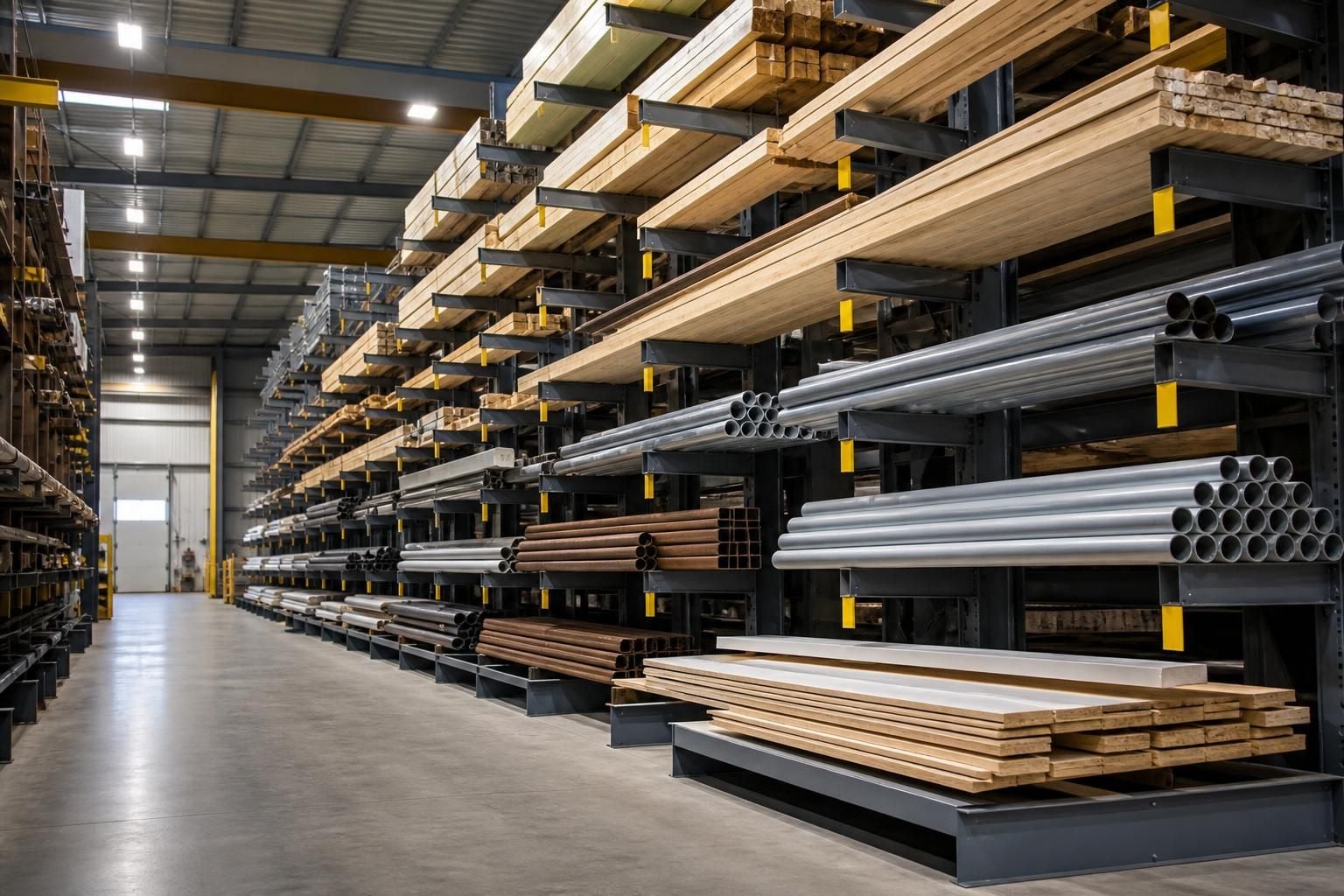
Cantilever Racking for Timber, Pipes & Sheet
Long pipes, timber and sheet materials can consume floor space and restrict safe access. Cantilever racking creates organised storage with clear loading points, helping you use existing warehouse space more effectively and keep stock visible during handling.
Choosing Cantilever Racking for Your Space, Stock and Workflow
Cantilever racking for timber, pipes and sheet materials should match stock lengths, weights, dimensions and handling equipment. Available floor area and clear height also influence the suitable arrangement.
Consider loading frequency, access routes and separation between stored materials. Arm spacing and levels should support controlled handling, while keeping people clear of moving stock and loading areas.
Allow for changes in stock lines, quantities and workflow before fixing the layout. We can assess the site, discuss requirements and prepare written proposals with working drawings for review.
Comparing Cantilever Racking Options for Pipes, Timber and Sheet Materials
Is cantilever racking suitable for mixed pipes, timber and sheet storage?
Single-sided cantilever racking suits perimeter placement, preserving central aisles; double-sided runs increase access from both faces, but require more floor depth and careful aisle planning near loading or pedestrian routes.
What load capacity does cantilever racking need for timber, pipes and sheet?
Capacity should reflect each load’s weight, length and distribution, with allowances for handling forces. We confirm capacities against site conditions and working drawings before installation, supporting safe onsite storage decisions.
Should you choose fixed or mobile cantilever racking?
Fixed cantilever racking suits stable layouts and heavier, regularly accessed stock. Mobile systems can increase flexibility, but need suitable floor conditions, movement controls and careful installation planning for safe operation.
What arm length suits pipes, timber and sheet materials?
Arm length should support the load’s centre of gravity without excessive overhang. We assess pipe diameter, timber bundles and sheet dimensions, then show suitable arm positions in drawings for review.
Are end stops needed for cantilever racking storing pipes?
End stops can help retain round pipes during loading and storage, but they must suit pipe diameter, handling method and access requirements. We confirm their position during design and drawings.
Features for Organised Pipe, Timber and Sheet Storage
Cantilever racking can separate pipes, timber and sheet materials by type or handling route, reducing mixed stock and unnecessary movement. Clear identification supports controlled retrieval, while planned protection and inspections help maintain safe, serviceable storage over time.
Open-front loading
Cantilever arms leave the front open, giving long pipes, timber and sheet materials clear loading and retrieval points.
Support for long stock
Distributed arm support keeps lengthy materials off the floor, freeing usable space and reducing obstructed storage areas.
Controlled handling zones
Defined loading positions help keep stored materials contained and separate people from active handling areas.
Inspection-led aftercare
Racking inspections can identify damage or changes requiring attention, supporting continued serviceability as storage needs develop.
Questions to Ask Before Choosing Cantilever Racking
What floor assessment does cantilever racking installation require?
We begin with a no-obligation site meeting and survey, then prepare written proposals and working drawings. This clarifies specifications, access, installation requirements and necessary coordination before commitment to proceed.
How should cantilever racking installation be planned around warehouse operations?
Coordinate installation with agreed access arrangements, stock movements and site responsibilities. We can manage the project through installation where required, helping you control disruption throughout planned works on active sites.
Can cantilever racking accommodate changing stock dimensions?
Yes. Adjustable arm positions and levels can accommodate differing stock lengths and heights, provided load capacities remain suitable. Review future changes during consultation so drawings support practical handling and access.
How should cantilever racking be protected from forklift impact?
Use barrier protection, workplace segregation and clear line marking to separate forklift routes from cantilever uprights. Specify protection during survey and drawings, then inspect impact damage before continued storage use.
What should be checked during cantilever racking inspections?
Check uprights, arms, baseplates, connections, labels and protection for damage, movement or missing components. Record findings, restrict unsafe areas, and arrange corrective work before normal storage resumes at the site.



