


Should office storage be personal, shared or mobile?
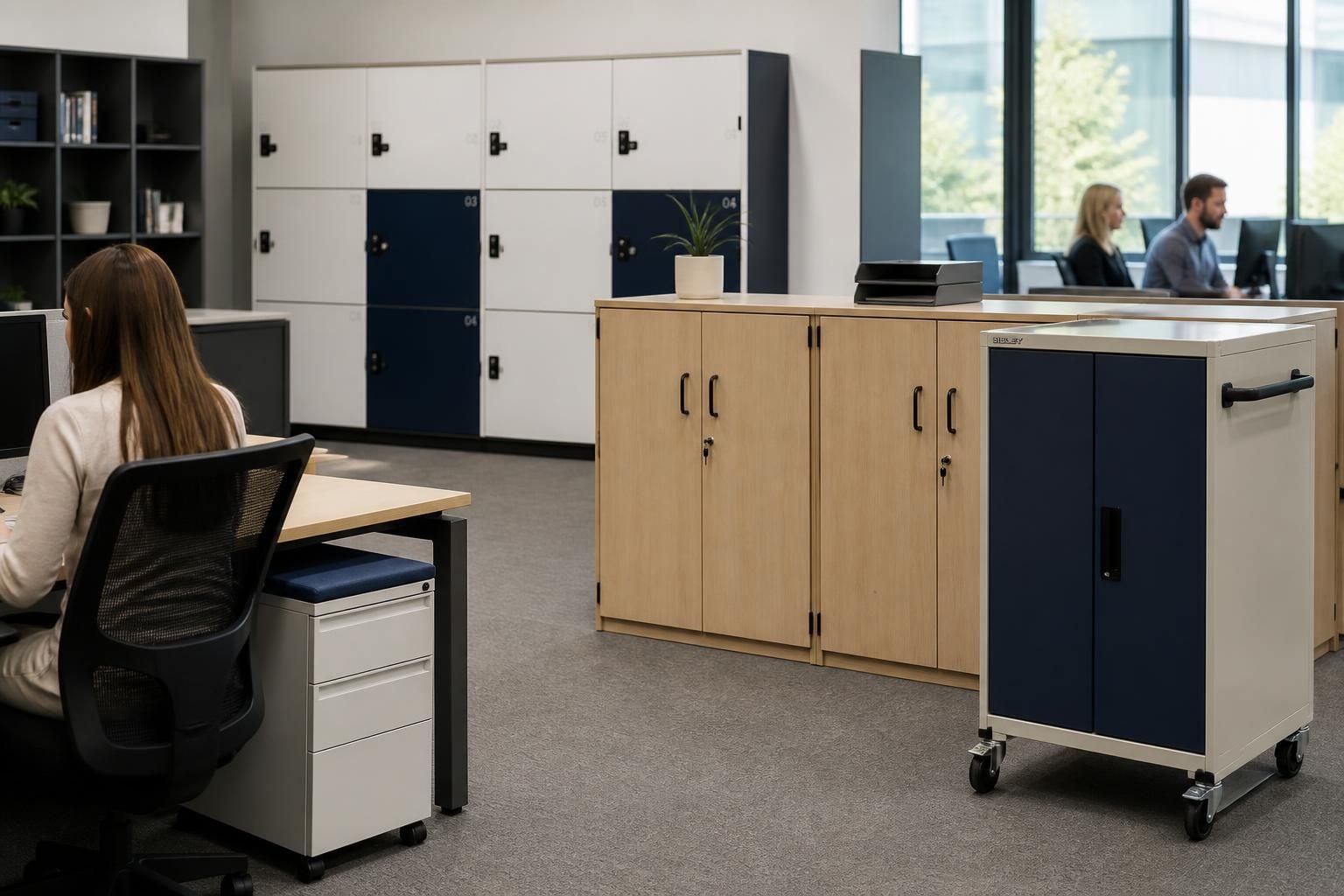
Personal office storage suits assigned belongings, shared storage supports common equipment, and mobile storage suits changing layouts.
The right choice depends on privacy, access, available floor space and how often the workplace changes.
Choose personal storage for controlled individual use, shared storage for communal resources, and mobile storage where furniture movement forms part of the workplace plan. The best arrangement often combines two or three types rather than applying one format throughout the office.
Personal storage
Personal storage gives each person a defined place for documents, equipment and everyday items. It suits assigned workstations, private records and belongings that should not circulate around the office.
Use it when accountability matters or when people need consistent access to the same contents. Lockable cupboards, pedestals and lockers can support different storage needs, depending on the furniture layout and the items being stored.
Personal storage can become inefficient when desks change regularly. Empty units may remain beside unassigned workstations, while other areas become crowded. Review ownership before specifying this format across the whole office.
Shared storage
Shared storage places commonly used items in agreed locations. It can suit stationery, reference material, meeting equipment, files and supplies used by several people.
This arrangement reduces duplication when departments can draw from the same stock. It also makes the storage plan easier to understand when cupboards, shelving and filing areas have clear purposes.
Shared storage needs simple rules. Decide who checks stock, where items return, and which records require restricted access. Without those decisions, communal cupboards can become difficult to manage and retrieval can take longer.
Locate shared units near the teams using them, while keeping circulation routes clear. The position should also reflect how often staff retrieve items and whether some contents need protection from unauthorised access.
Mobile storage
Mobile storage allows units to move when the office arrangement changes. It can support project areas, flexible team structures and rooms that serve more than one purpose.
It may also release floor space when storage is repositioned or grouped. However, movement needs to remain practical. Check the floor finish, route widths, thresholds, door openings and the weight of stored contents before selecting mobile furniture.
Mobile units should not obstruct escape routes, access points or working areas. Establish where units normally stand and who may move them. A clear arrangement protects circulation and reduces unnecessary disruption.
Compare the options against the work
- Storage ownership: assign personal units when contents belong to one person, or shared units when teams use the same resources.
- Retrieval pattern: keep frequently used items close to their users, while less frequently accessed records can occupy a separate storage zone.
- Security: identify confidential information, valuable equipment and records requiring controlled access before choosing open or lockable storage.
- Floor planning: measure available walls, circulation routes, doors and service points. Storage must fit the room without narrowing working routes.
- Change: consider how often teams, desks and room uses may change. Fixed personal storage demands more planning when the layout is regularly revised.
- Contents: check dimensions, quantities and weights. Shelving and cupboards should suit what you intend to store, not only the available footprint.
A combined arrangement may work best
Many offices need personal storage at desks, shared storage for team resources and mobile units for changing project areas. Separating these functions prevents one storage type from carrying every requirement.
For example, personal lockers can hold individual belongings, while shared cupboards contain office supplies. Mobile units can support temporary teams without fixing every storage location permanently.
Keep the categories visible through consistent positioning and clear labelling. This gives each item a logical home and makes the storage plan easier to maintain.
Plan storage with the wider office layout
Storage should be assessed alongside desks, partitions, meeting areas and circulation. Office fit-outs can coordinate these elements when a storage change forms part of a wider workplace project.
Partitioning may define storage zones, while shelving or cupboards can use available wall space. The arrangement should support movement between work areas without creating awkward access points.
We can discuss the room, existing furniture and storage requirements during a no-obligation consultation. A site meeting and survey may be followed by a written proposal and working drawings.
Where required, project management can continue from proposal and tender stage through installation and final commissioning. This gives you a defined basis for reviewing the layout before work begins.
Make the decision from evidence
Start by listing who uses each item, how often it is retrieved, and whether access must be restricted. Then record the room dimensions, fixed features and likely layout changes.
Personal, shared and mobile storage can each be appropriate. The right mix depends on the contents, working pattern and physical limits of the office. For organisations in the West Midlands, Spartan Direct can assess these points as part of an office storage and fit-out proposal.
Match storage to occupancy
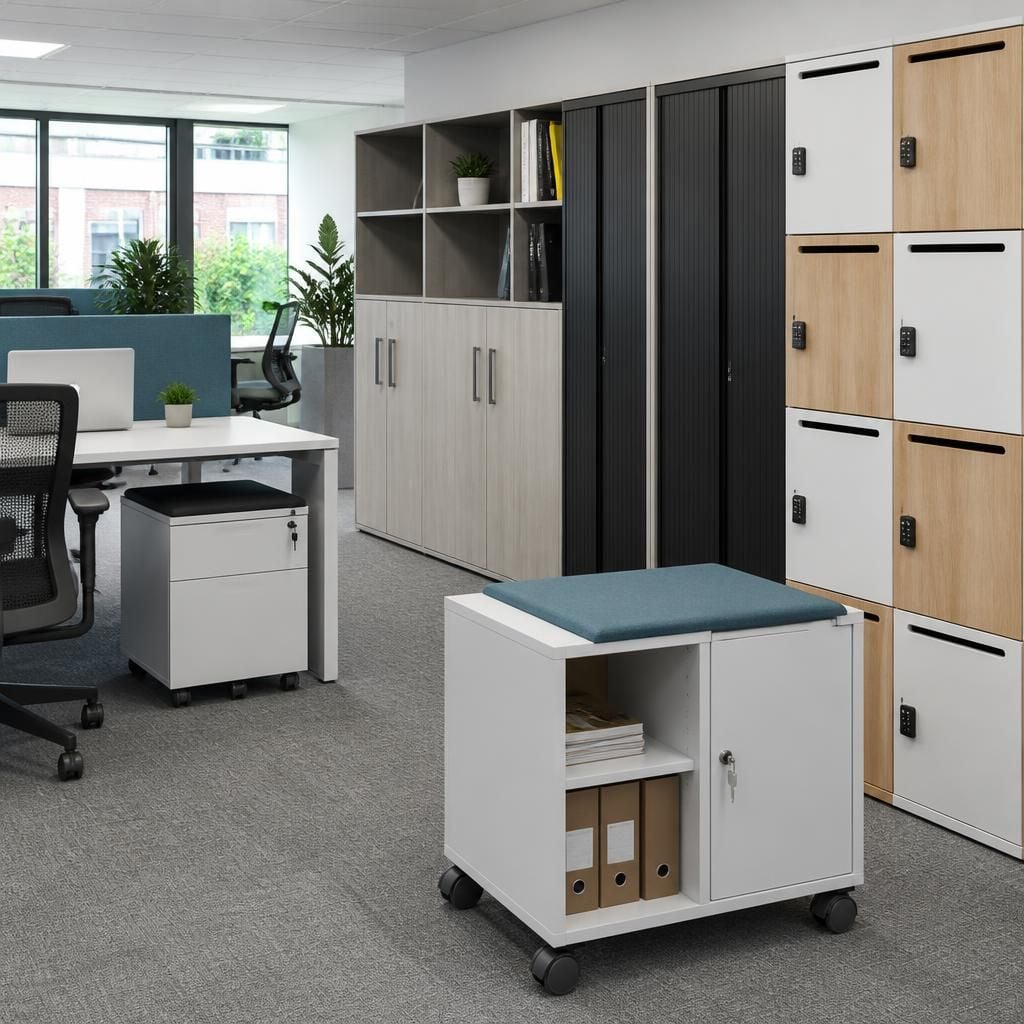
The storage type should follow how people use the office, rather than the desk plan alone. Assigned seating can support personal lockers or pedestals. Activity-based working may suit shared storage points between work areas. Project teams may need mobile units that move with changing work zones.
Before choosing, record whether people return to the same desk, carry materials between areas, or use several rooms. This information helps position storage around actual working patterns, instead of leaving unused units beside desks that no longer have permanent users.



