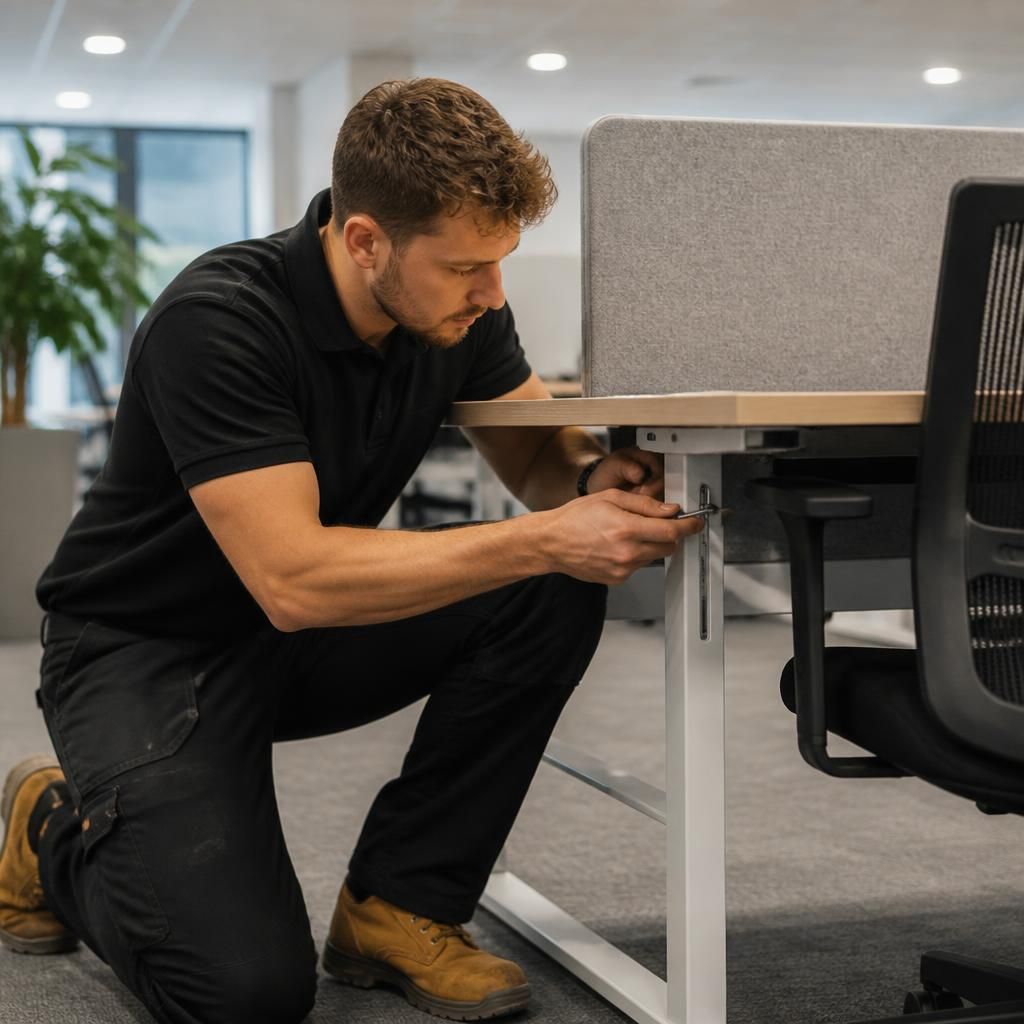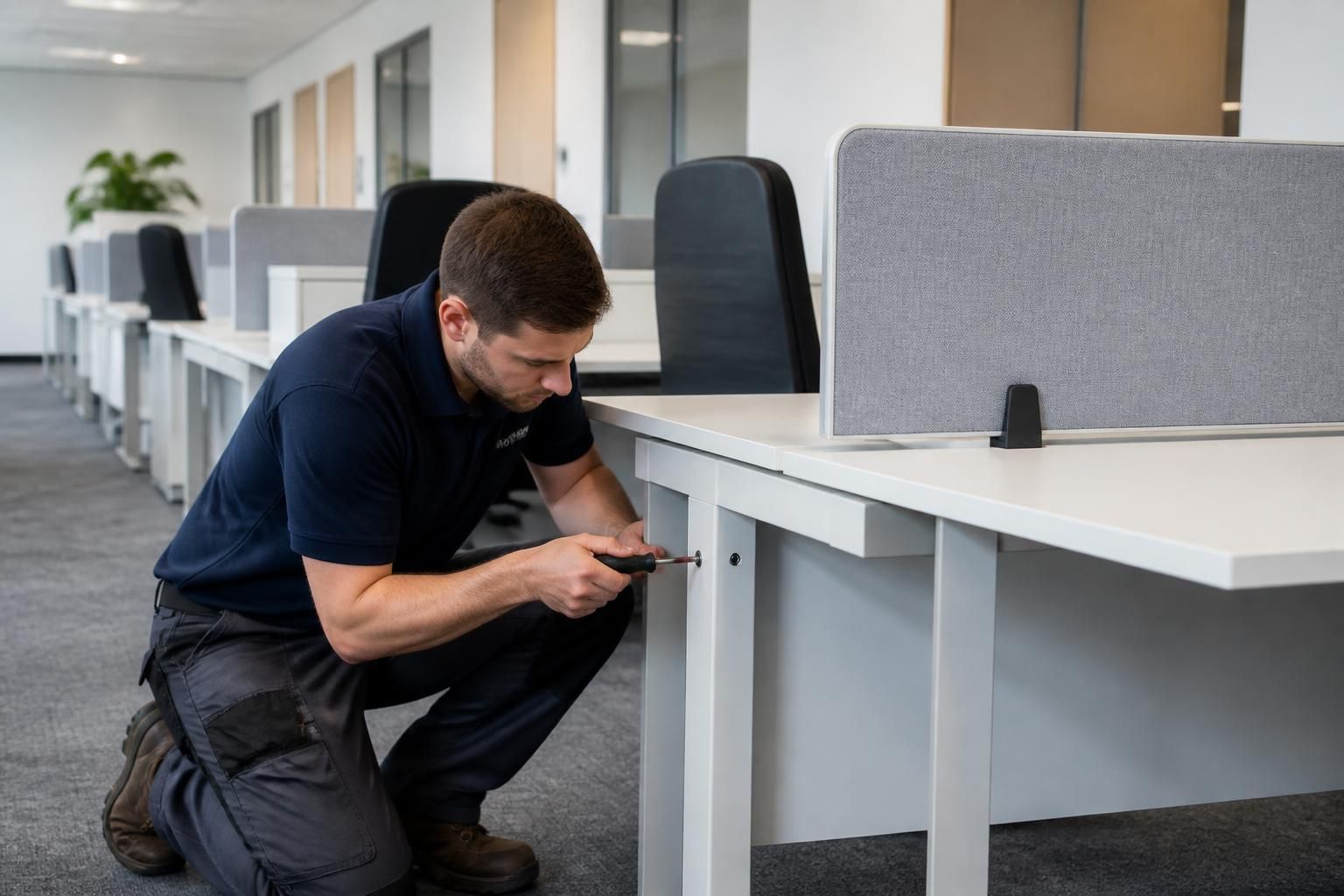
How should office furniture be maintained after installation?
After installation, keep office furniture clean, check fixings and moving parts regularly, and address damage before it affects safe use. Use suitable cleaning products, avoid overloading storage, and arrange repairs or adjustments when layout, access or workplace requirements change.
Maintain office furniture with a planned record, sensible user guidance and scheduled condition reviews. This keeps faults visible and supports safe, orderly use after installation.
Start with a handover record for the office fit-out. Note each desk, chair, storage unit, screen, partition and other item, alongside its location and intended use. Keep relevant installation information, care instructions and any stated load information with the record.
Assign responsibility for reporting problems. Users should report instability, sharp edges, damaged surfaces, sticking drawers, doors that no longer close properly or other changes in condition. A clear reporting route prevents minor faults from being overlooked.
- Review desk areas: look for damaged edges, strained cable routes, unstable components and changes that affect comfortable access.
- Review storage: check doors, drawers, handles, shelves and clearances. Confirm that contents remain arranged for safe access.
- Review seating: check the condition of upholstery, casters, bases and adjustment controls. Remove unsuitable seating from use until it has been assessed.
- Review screens and partitioning: look for movement, impact marks, gaps or changes that affect separation, circulation or access.
Keep these reviews on a recorded schedule that suits the furniture, its use and the surrounding workplace. Higher-use areas may need closer attention than lightly used meeting rooms. Record the date, item, finding, action and person responsible.
Give users simple instructions for everyday use. Do not climb on desks, cupboards or storage units. Do not force drawers, doors or adjustment controls. Move freestanding items carefully, keeping routes clear and protecting floors during repositioning.
Do not alter fitted furniture, screens, partitions or cable routes without checking the effect on the wider layout. A small change can affect access, workstations, electrical connections, data routes or workplace separation.
Before changing the arrangement, record the proposed location and the reason for the change. Check circulation routes, access to shared storage and the relationship between furniture and doors, walkways or other equipment.
Use suitable replacement components when repairs are needed. Avoid improvised repairs that could affect stability, access or the intended use of an item. Isolate furniture from use when its condition creates a concern, then arrange an appropriate assessment.
For larger changes, a site review can establish what remains suitable and what needs adjustment. We can discuss office fit-outs and partitioning alongside the existing layout, then prepare written proposals and working drawings where required.
Keep a maintenance record after every repair, relocation or alteration. Include the work completed, any parts replaced and any restrictions that users need to understand. This gives you a clearer basis for future decisions and helps identify repeated problems.
If supplied materials have a material defect, notify Spartan Direct Limited in line with the agreed terms. Those terms provide for repair or replacement without charge, or a refund of the relevant price, at the supplier’s discretion.
The contracting supplier is Spartan Direct Limited, registered in England and Wales under company number 3275287. Keeping the contract, quotation and maintenance records together makes responsibilities easier to establish.
Review the maintenance approach when staff numbers, working methods, equipment or room use change. Furniture that suited the original arrangement may need a new assessment before the workplace is reorganised.
Upholstered chairs and screens need careful stain treatment after installation. Check the care instructions first, then test any cleaner on an unseen area.
Blot spills rather than rubbing them into the fabric. Avoid soaking upholstery, and allow cleaned areas to dry fully before normal use. This helps preserve the finish and prevents cleaning work from creating another maintenance issue.