


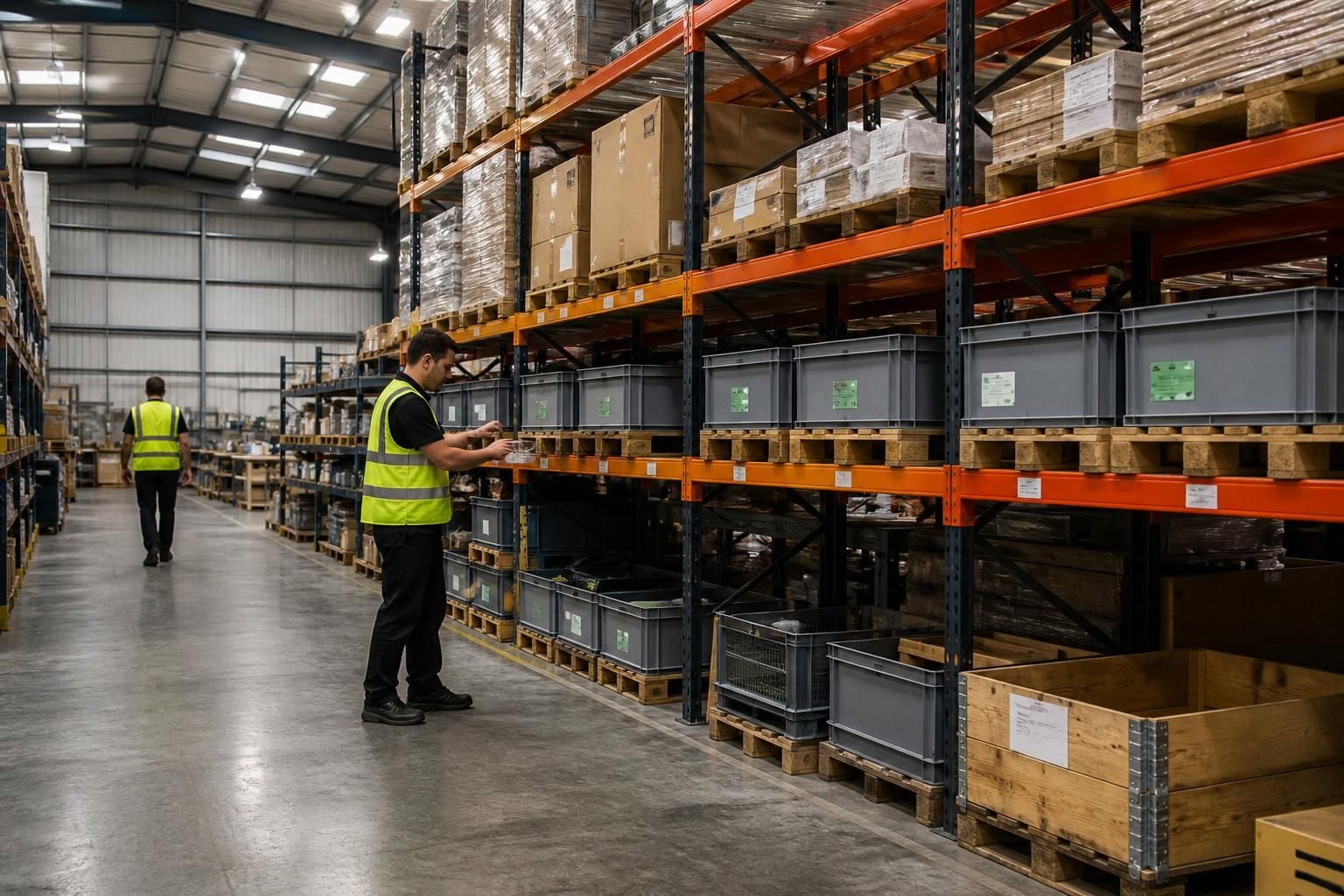
Industrial Storage & Shelving for More Space
Limited floor space can leave stock difficult to reach and work areas crowded. We design, supply and install industrial storage and shelving, including heavy-duty racks, bins and cabinets, to improve organisation and access within existing premises.
How to Choose Industrial Storage & Shelving
Available footprint, clear height, columns and door positions all affect the storage and shelving arrangement. Check floor loading, aisle widths and handling routes before selecting equipment.
Assess each item’s weight, dimensions, access frequency and handling method. Shelving, bin storage, cabinets or specialist racks should support clear identification while keeping people and equipment moving safely.
Allow for changes in stock, staffing and workflow when comparing options. A no-obligation consultation may include a site survey, written proposal and working drawings, helping you plan future capacity without choosing equipment that soon restricts growth.
Comparing Industrial Storage & Shelving Options
Should you choose shelving, bins or cabinets for small-part industrial storage?
Heavy-duty shelving suits accessible hand-loaded stock; racks support greater loads and palletised goods. Cabinets protect smaller items. We assess handling equipment, fixing requirements and installation constraints before recommending equipment for you.
Should you choose boltless or fixed industrial shelving?
Boltless shelving assembles quickly and allows reconfiguration as stock changes, while fixed shelving suits established layouts needing secure anchoring. We assess loads, access and installation constraints before recommending either option.
When is mobile industrial shelving suitable for a workplace?
Mobile shelving suits workplaces needing higher storage density where floor space is restricted and access can be planned. It may not suit fast-moving stock requiring simultaneous, unrestricted aisle access throughout.
When should you choose industrial drawer cabinets over open shelving?
Choose drawer cabinets when small parts need protected, identifiable storage and controlled access. Open shelving gives quicker visual access for larger or frequently handled items. We can plan around requirements.
When does high-density industrial racking justify reduced direct access?
High-density racking suits stable stock profiles where capacity matters more than immediate access. Reduced aisle space can limit picking flexibility, so confirm handling patterns, replenishment frequency and safety requirements first.
Features That Improve Industrial Storage Performance
Industrial storage and shelving should make stock easier to identify, protect working areas and adapt as requirements change. We recommend practical combinations of racks, shelving, bins and cabinets, with installation and inspection support for organised, safer operations.
Layout That Fits the Building
We account for columns, door positions and available height when developing working drawings. The proposed arrangement can remain practical within existing premises.
Clear Stock Zones
A planned combination of industrial shelving, pallet racking and cabinets keeps different stock types organised. Defined areas support smoother picking and replenishment.
Safer Working Areas
Storage arrangements should keep access routes clear and separate stock from active work areas. This supports safer movement around shelving and racking.
Installation With Oversight
We install the agreed arrangement and can provide project management where required, from proposal and tender stage through final commissioning.
Inspection and Aftercare
Racking inspections and aftercare give you a structured way to review storage condition after installation. Findings can highlight issues requiring attention.
Questions to Ask Before Choosing Industrial Storage & Shelving
What floor and building checks should precede industrial storage installation?
Before installation, confirm access routes, floor condition, load requirements and working clearances. We can assess these during a site meeting, then prepare drawings that installers can follow accurately during installation.
What should an industrial shelving specification include for practical daily use?
Specify shelf heights, clearances, load ratings, labelling and access points around daily picking tasks. Include surface finishes, bin compatibility and adjustment needs, so storage remains usable as stock and routines change.
What inspection arrangements should follow industrial storage and shelving installation?
Agree inspection arrangements after installation, including what equipment requires checking, how findings are recorded, and who receives recommendations. Our racking inspections can support ongoing maintenance and safer daily storage operations.
How can industrial shelving installation limit disruption to warehouse operations?
Discuss installation sequencing around key routes and busy work areas. We can use drawings and project management where required, helping you keep operations organised throughout the project.
How should industrial storage and shelving accommodate future stock changes?
Use adjustable shelving, modular bins and reconfigurable compartments where stock profiles may change. Review load ratings and access arrangements during revisions, so additions remain organised without compromising safe handling practices.



