


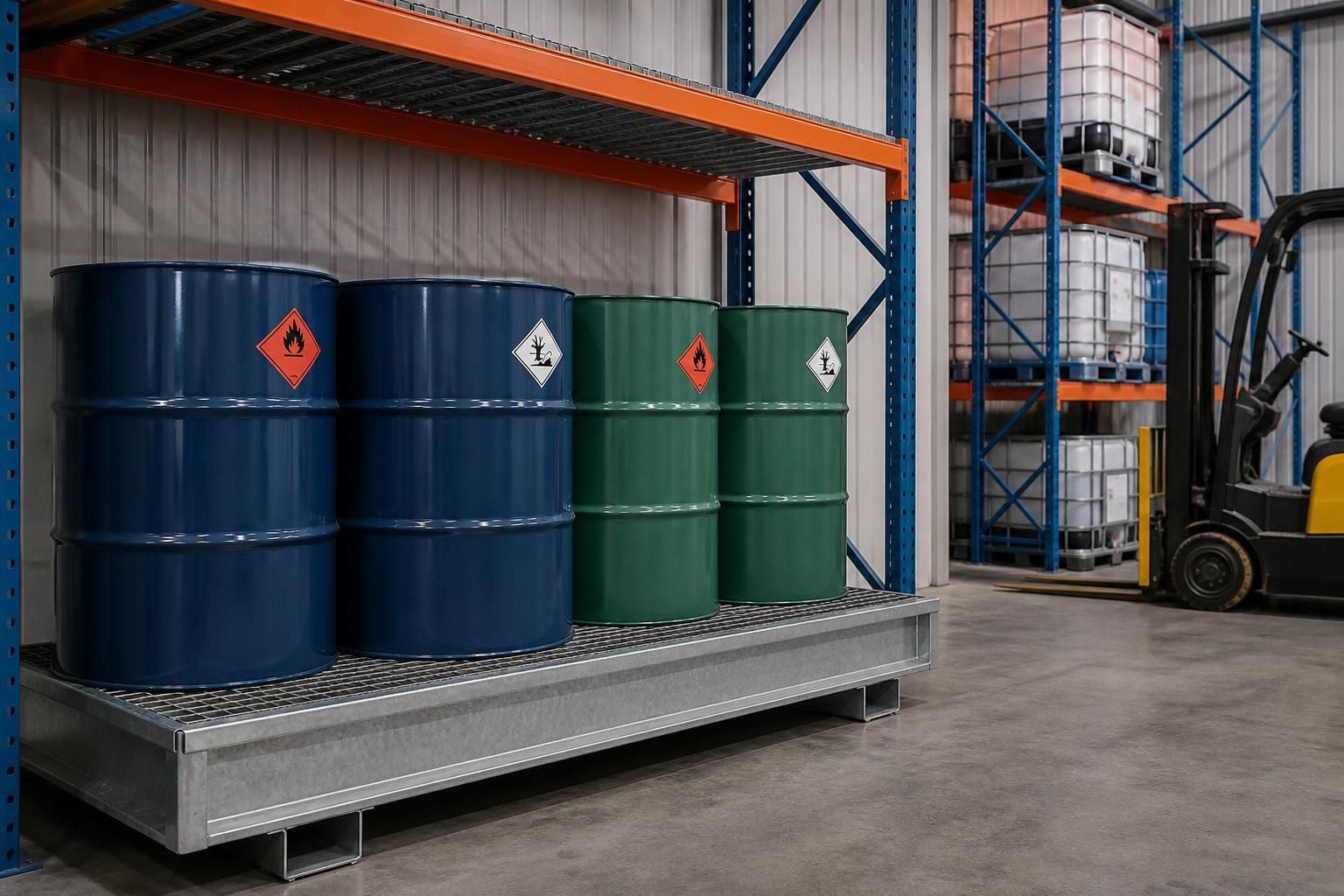
Chemical Drum Storage for Safer Warehouses
Storage of flammable liquids in warehouses requires controlled placement, suitable containment and clear access. We design chemical drum storage around your site, stock and workflow, helping you separate hazardous materials, protect working areas and use available space more effectively.
What to Consider When Planning Chemical Drum Storage
Begin with the available footprint, ceiling height and surrounding activities. These details help determine whether floor-level chemical drum storage or raised storage suits the site without obstructing movement.
Review drum sizes, weights, handling equipment and how often people need access. Storage of flammable liquids in warehouses should support controlled handling, clear identification and suitable separation from other work areas.
Allow for changes in stock levels, handling methods and staffing as the operation develops. We can assess the site, discuss requirements and prepare written proposals and working drawings for the storage arrangement.
Comparing Chemical Drum Storage Options for Capacity, Access and Safety
Should chemical drum storage be floor-level or raised?
Floor-level systems suit straightforward handling and lower installation complexity; raised arrangements use vertical space but require structural assessment, suitable access equipment, and careful planning around installation disruption and surrounding operations.
How should chemical drum storage accommodate changing stock levels?
Plan spare positions and review storage as quantities change, keeping incompatible materials separated. Adjustable layouts can support reorganisation, while a site review confirms access, containment and handling requirements for safe.
What containment features should chemical drum storage include?
Include compatible spill containment, secure drum support and surfaces that resist leaks, with inspection access around each arrangement. These features help isolate releases during handling and protect adjacent work areas.
How should chemical drum storage support controlled drum handling?
Use suitable drum-handling equipment, stable transfer routes and clear identification so operators can move containers without unnecessary manual handling. Site planning should clearly coordinate loading, retrieval and emergency access arrangements.
How should chemical drum storage address ignition risks?
Assess ignition sources, such as electrical equipment, hot work and vehicle routes, before positioning drums. Keep separation from these risks, control access, and document site arrangements through design.
Chemical Drum Storage Features for Safer, More Efficient Warehouse Handling
Effective hazardous materials storage brings containment, identification and access into one planned arrangement. We consider drum movement, separation from other activities and safeguard placement, supporting inspection, handling and future stock changes without compromising clear working routes.
Spill Containment
Containment keeps leaks within a defined area, helping protect floors, routes and nearby work zones.
Controlled Segregation
Defined storage zones separate hazardous materials from other activities, supporting clearer warehouse control and safer movement.
Clear Drum Identification
Clear labels and location references help people recognise drum contents and return stock to the intended position.
Planned Handling Access
A considered set-out around handling equipment supports planned drum movements without forcing awkward access or obstructing routes.
Inspection-Friendly Layout
Visible containment and accessible components make condition checks easier, supporting prompt attention to damage or deterioration.
Questions to Ask Before Choosing Hazardous Materials Storage
What site survey information is needed for hazardous materials storage?
Confirm that the specification addresses containment, segregation, identification, access routes and inspection needs. Request drawings, installation responsibilities and maintenance guidance, then clarify how future stock changes can be accommodated safely.
What compliance requirements apply to chemical drum storage?
Ask which legislation, fire precautions, containment standards and separation rules apply to the substances stored. Confirm responsibilities, documentation and inspection arrangements, then reflect requirements in drawings and clear installation instructions.
How can hazardous materials storage installation limit disruption to warehouse operations?
Discuss phased installation and agreed work sequences before site activity begins. We can coordinate installation stages, isolate work areas and manage progress through commissioning, helping you maintain warehouse movements throughout.
What inspection and maintenance arrangements should hazardous materials storage include?
Set inspection intervals according to use, damage risk and site procedures. Record findings, report defects promptly, isolate unsafe areas, and agree repair responsibilities before storage returns to normal service again.
What should be included in a hazardous materials storage specification?
Specify compatible materials, drum capacities, load limits, containment details, labels, separation distances, access equipment and inspection provisions. Include drawings, installation responsibilities and commissioning records, so everyone clearly understands the arrangement.



