


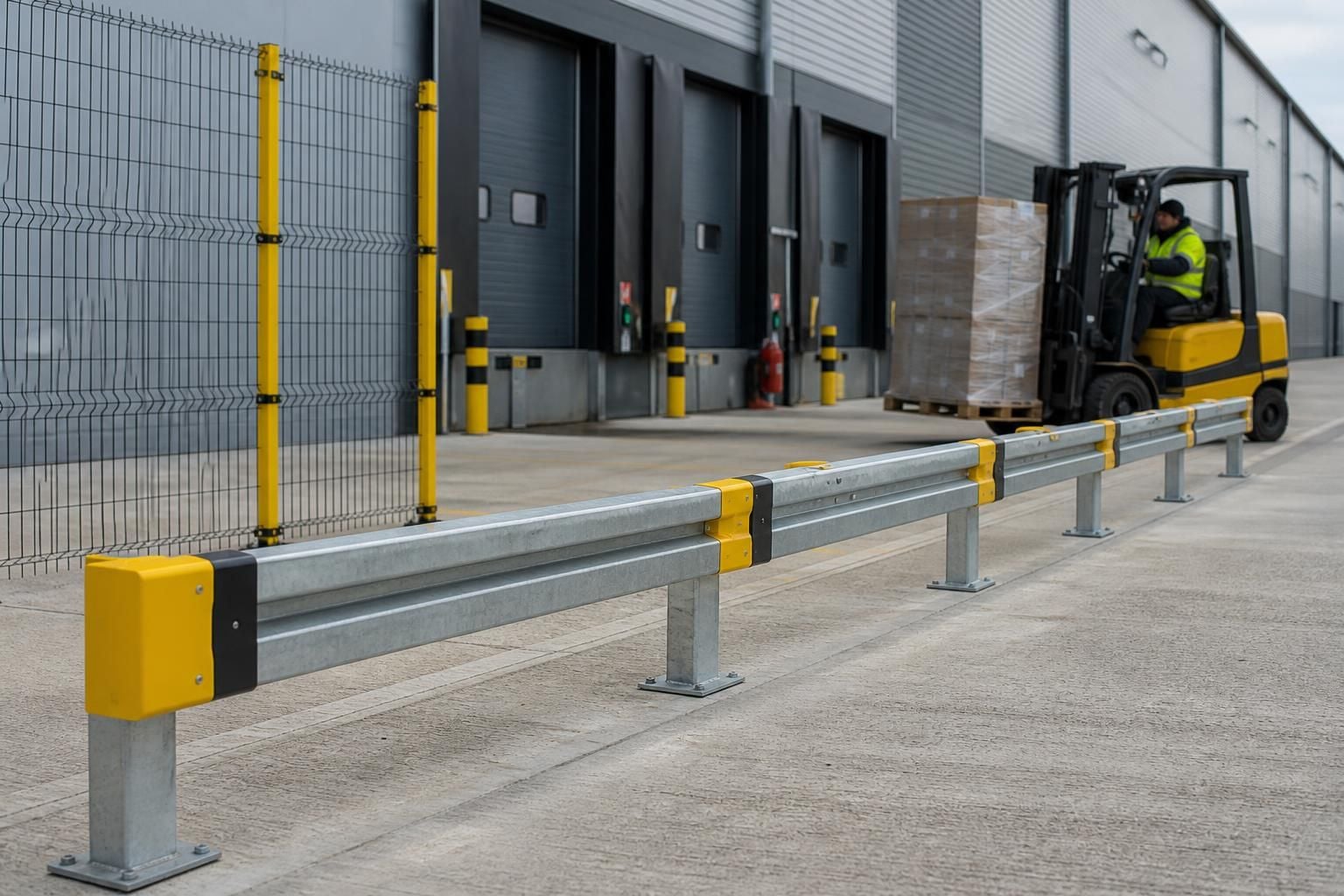
Vehicle Impact Barriers for Safer Sites
Vehicle impact barriers help protect warehouse and industrial areas from vehicle movements, marking traffic routes and vulnerable points. We plan and install traffic barriers to support safer operations, clearer separation and better protection for people, stock and equipment.
Choosing Vehicle Impact Barriers for Your Site
Available space affects barrier positioning, vehicle turning areas and access around doors, aisles and equipment. A site survey helps relate vehicle impact barriers to the existing layout and working clearances.
Consider vehicle types, likely impact points and the items or people needing separation. Industrial guardrails, bollards, dock door safety barriers and end of aisle protectors address different protection requirements without obstructing essential access.
Allow for planned changes, additional storage and altered traffic routes when setting out traffic barriers. A no-obligation consultation may lead to written proposals and working drawings, helping you assess future requirements before installation.
Comparing Vehicle Impact Barrier Options
How do steel, polymer and concrete traffic barriers compare?
Rigid steel barriers suit fixed vehicle routes and impact exposure, while flexible systems accommodate changing layouts. Bollards protect individual points; guardrails create continuous separation. Select after checking access and installation constraints.
Which vehicle impact barrier suits changing traffic routes?
Flexible or retractable traffic barriers suit changing routes because teams can reposition or open access when needed. Fixed guardrails offer stronger permanent separation but restrict planned future layout changes.
Which vehicle barriers protect dock doors without restricting forklift access?
Dock door safety barriers protect loading points while leaving forklift approaches clear when positioned outside operating envelopes. Removable or impact-flexible designs can maintain access, subject to confirmed site clearances first.
Which vehicle impact barriers protect columns without narrowing forklift routes?
Column protection barriers and bollards shield structural supports from vehicle strikes, while guardrails protect longer edges. Set them beyond forklift turning paths, confirming clearance, visibility and fixing conditions before installation.
What affects the price of vehicle impact barrier systems?
Price depends on barrier material, dimensions, quantity, fixing method and installation complexity. A site assessment identifies these requirements, allowing us to prepare a written quotation for suitable vehicle protection systems.
Vehicle Impact Barrier Features for Safer Operations
Vehicle impact barriers should match the risks around loading areas, routes and vulnerable structures. We set out protection with suitable barrier types, visibility and access in mind, helping you separate vehicle movements, protect assets and maintain workable circulation.
Physical separation
Vehicle impact barriers create a clear buffer between moving vehicles, people, stock and fixed structures.
Defined traffic routes
Barrier positioning gives vehicle routes clearer boundaries, supporting orderly movement through loading and storage areas.
Visible protection points
High-visibility barrier placement makes vulnerable corners, access points and separation zones easier to recognise.
Protection for structures
Industrial barriers help protect doors, racking, walls and workplace infrastructure from vehicle contact.
Planned clearances
Measured barrier layouts retain suitable access around aisles, equipment and operational areas.
Adaptable site planning
Working drawings can account for planned storage changes and altered vehicle routes before installation.
Questions to Ask Before Choosing Vehicle Impact Barriers
Do vehicle impact barriers need planned maintenance after installation?
We can discuss required protection, vehicle movements and site constraints during consultation, then provide written proposals and working drawings. Confirm installation responsibilities, access arrangements and maintenance requirements before work begins.
What installation method minimises disruption when fitting vehicle impact barriers?
Ask whether installation can be phased around operational priorities, with agreed access routes, protected work areas and clear responsibilities. Confirm sequencing before work starts, limiting unnecessary interference with vehicle movements.
What site information is needed to specify vehicle impact barriers?
Provide site plans, dimensions, floor details, vehicle types, impact risks, traffic routes, loading points and vulnerable assets. Note operating constraints, access requirements and proposed changes, so specifications match existing conditions.
What compliance requirements apply to vehicle impact barriers?
Ask which workplace safety duties, risk assessments and site controls inform the specification. Confirm documentation, responsibilities and inspection arrangements, ensuring barrier selection supports separation without treating installation alone as compliance.
What visibility features should vehicle impact barriers have on busy warehouse routes?
Use high-contrast colours and reflective markings where routes need clearer recognition. Position barriers so they remain visible without obscuring signs, lighting or escape routes. Confirm visibility requirements during site survey.
Discuss Your Vehicle Impact Barrier Requirements
Discuss your vehicle impact barrier requirements with us. We can review site conditions, traffic movements and protection priorities, then prepare a suitable specification and clear quotation for the safety barriers your warehouse or industrial site needs.



