


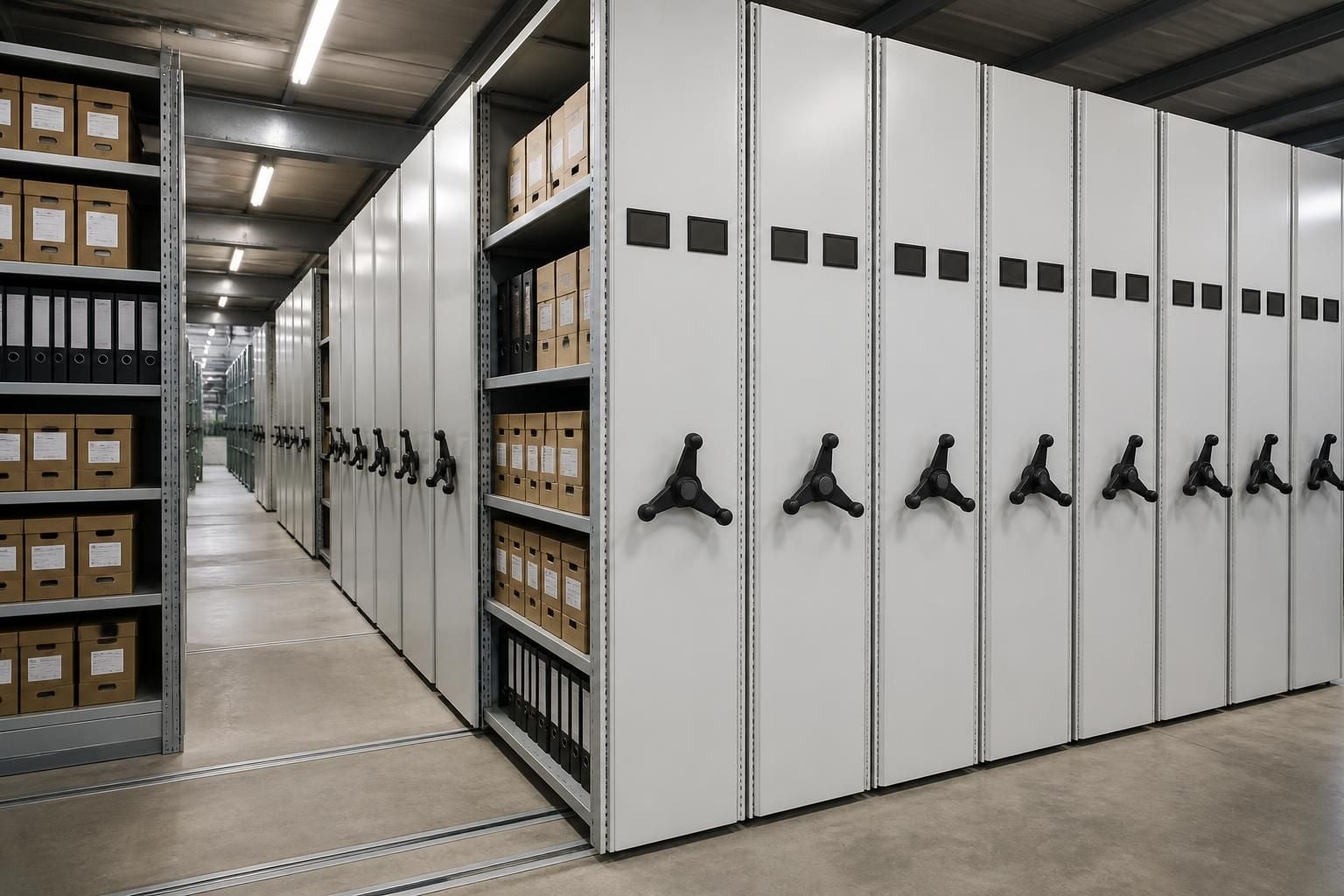
Mobile & High-Density Shelving for More Space
Limited floor space can make stock difficult to organise and access. Industrial high-density shelving, including mobile shelving systems, brings storage together while preserving usable aisle access, helping you increase capacity within existing premises without relocating.
Choosing High-Density Shelving for Your Space and Workflow
Start with available floor area, clear height and floor condition. These factors help determine whether mobile shelving or fixed units suit the layout.
Review stock dimensions, load requirements and retrieval frequency alongside staff access. Mobile high-density shelving can bring units together, while planned aisles preserve access where people work.
Consider future stock growth, changing workflows and any need to expand storage within the existing building. Our consultation can include a site survey, written proposal and working drawings.
Comparing Mobile and Fixed Shelving Options
Is mobile shelving suitable for heavy or frequently accessed stock?
Mobile shelving usually costs more initially because tracks and moving mechanisms add complexity, but it can reduce aisle requirements; fixed shelving often installs simply and suits frequent daily access to stock.
What affects high-density mobile shelving cost?
Cost depends on track length, shelving height, load capacity, floor preparation, controls and installation requirements. A site survey and working drawings clarify quantities, layout and project-specific pricing for project planning.
What floor requirements do mobile shelving systems have?
Mobile shelving needs a level, load-bearing floor with suitable track installation conditions. Surveyors check slab condition, gradients, joints and obstructions before drawings confirm alignment, clearances and anchoring details for installation.
Can mobile shelving adapt when warehouse storage requirements change?
Modular shelving can accommodate changing requirements through adjustable shelf levels, removable components and reconfigured bays. Confirm revised loads, clearances and access routes with the supplier before altering a mobile installation.
How does mobile shelving affect stock access?
Access depends on aisle position and retrieval frequency. Mobile units open a working aisle at the required location, while other bays remain compact. This suits controlled access, but frequent picking may favour fixed shelving.
Features for Safer, More Efficient High-Density Storage
Key features affect how mobile shelving operates day to day. Track layout, locking arrangements, adjustable components, load distribution and inspection access each contribute to controlled movement, practical maintenance and safer use in warehouse or office storage areas.
Defined Track Movement
A planned track layout gives mobile units a defined route, helping movement stay controlled within the storage layout.
Controlled Aisle Access
Locking controls help prevent unintended movement when an aisle is open, supporting safer access for staff retrieving stock.
Adjustable Shelf Levels
Adjustable shelf levels accommodate changes in stock height, helping use available vertical space without assigning every bay to one item size.
Considered Load Distribution
Evenly distributed loads support stable shelving use and clarify storage requirements during design and review.
Practical Inspection Access
Accessible tracks, frames and operating parts make condition checks more practical, supporting maintenance decisions as the installation remains in use.
Questions to Ask Before Choosing Mobile & High-Density Shelving
What compliance checks should mobile shelving include before installation?
Installation planning should record delivery routes, working zones, existing operations and access constraints. Agreeing a phased sequence helps coordinate assembly while limiting interference with warehouse or office activities on site.
How should mobile shelving maintenance be planned?
Plan inspections around moving parts, track condition, locking mechanisms and fixings. Record findings, assign corrective work, and restrict use where defects could affect movement or safe access until safely corrected.
What should a mobile shelving specification include?
A specification should record bay dimensions, shelf levels, clearances, track arrangement, locking controls, permissible loads, finishes and access points, giving installers and operators a shared reference for assembly and review.
What disruption should you expect during mobile shelving installation?
Disruption depends on access requirements, floor preparation and whether stock must move temporarily. A site survey can identify these issues, helping you judge operational impact before installation begins and coordinate activities.
How should mobile shelving be integrated with fire safety arrangements?
Coordinate mobile shelving with fire risk assessments, escape routes and firefighting access. Confirm aisle positions, travel paths and any required clearances with the responsible fire-safety professional before installation work begins.



