Can office furniture be adapted as your workplace changes?
Yes. Office furniture can be planned for changing layouts, team requirements and workflows, helping you adapt the workplace without moving premises.
We can review your site and requirements, then provide a written proposal and working drawings for the changes under consideration.
Office fit-outs, partitioning and adaptable office furniture can support workplace changes without replacing every item. The right approach combines movable elements with fixed features where stability, services or privacy matter.
Start with the activities the space must support. Consider desk-based work, meetings, storage, collaboration and quiet tasks. This shows which furniture should move easily and which areas need a more permanent arrangement.
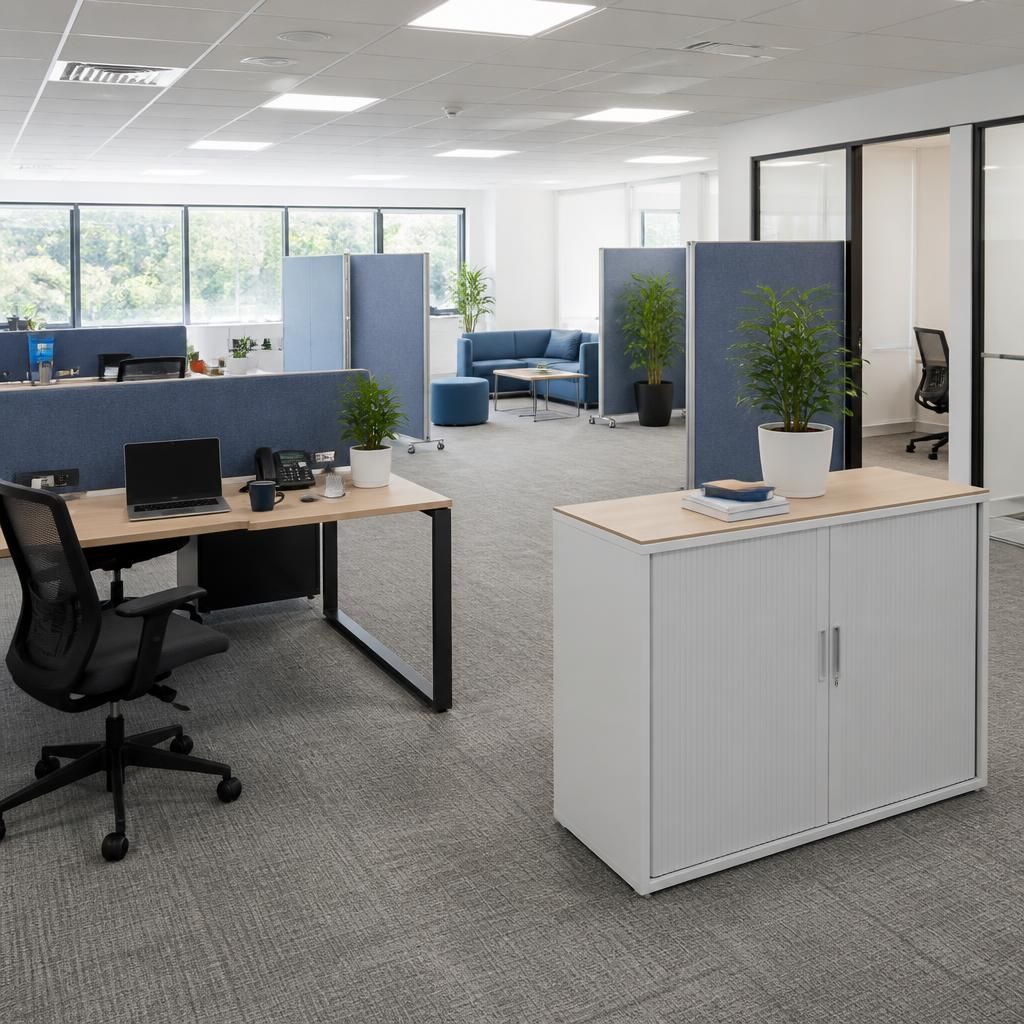
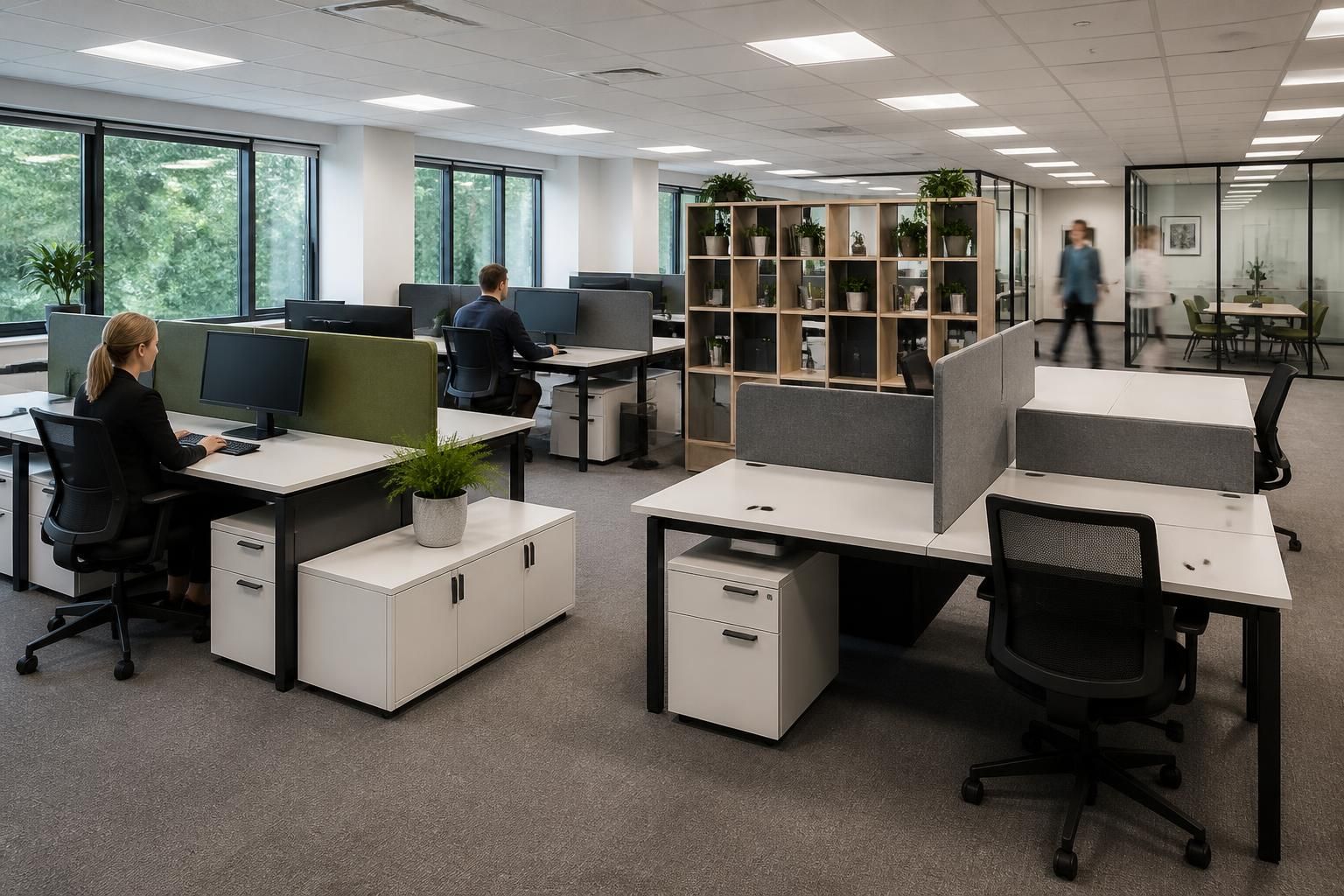
Freestanding desks, shared storage and movable screens can support changes in team size or working patterns. Fixed desks, built-in storage and partitioning may suit areas with consistent functions. A combination can provide flexibility without making the whole office dependent on movement.
Adaptability also depends on the building. The layout must account for room dimensions, access routes, doors, windows and existing services. Power, lighting, heating and data positions can restrict movement, even when furniture itself is easy to rearrange.
Storage needs should be considered alongside desk positions. Changes in staff numbers, paperwork, equipment or stock can affect circulation. Office furniture should leave practical access to storage and avoid creating congested routes between work areas.
We can discuss these points through a no-obligation consultation, including a site meeting and survey where appropriate. The findings can inform a written proposal and working drawings for the arrangement under consideration.
Working drawings can show the relationship between desks, storage, partitioning and circulation before installation. They also provide a clearer basis for reviewing possible future changes. If the project requires it, we can manage the work from proposal and tender stage through installation and final commissioning.
Before approving changes, ask whether the furniture can be moved without affecting access, services or the intended workflow. Also check what will happen to surplus items, stored documents and equipment during the change.
Adaptable office furniture is therefore most useful when flexibility is planned alongside practical limits. A considered office fit-out can give you room to change direction while keeping the workplace organised and usable.
Keep a simple furniture record as the workplace develops. Note each item’s dimensions, function, condition and intended location before changing the layout.
When office fit-outs or partitioning change, record which elements remain fixed, which can move and which need replacement. This gives you a clearer basis for phased decisions, without treating every workplace change as a complete refit.