


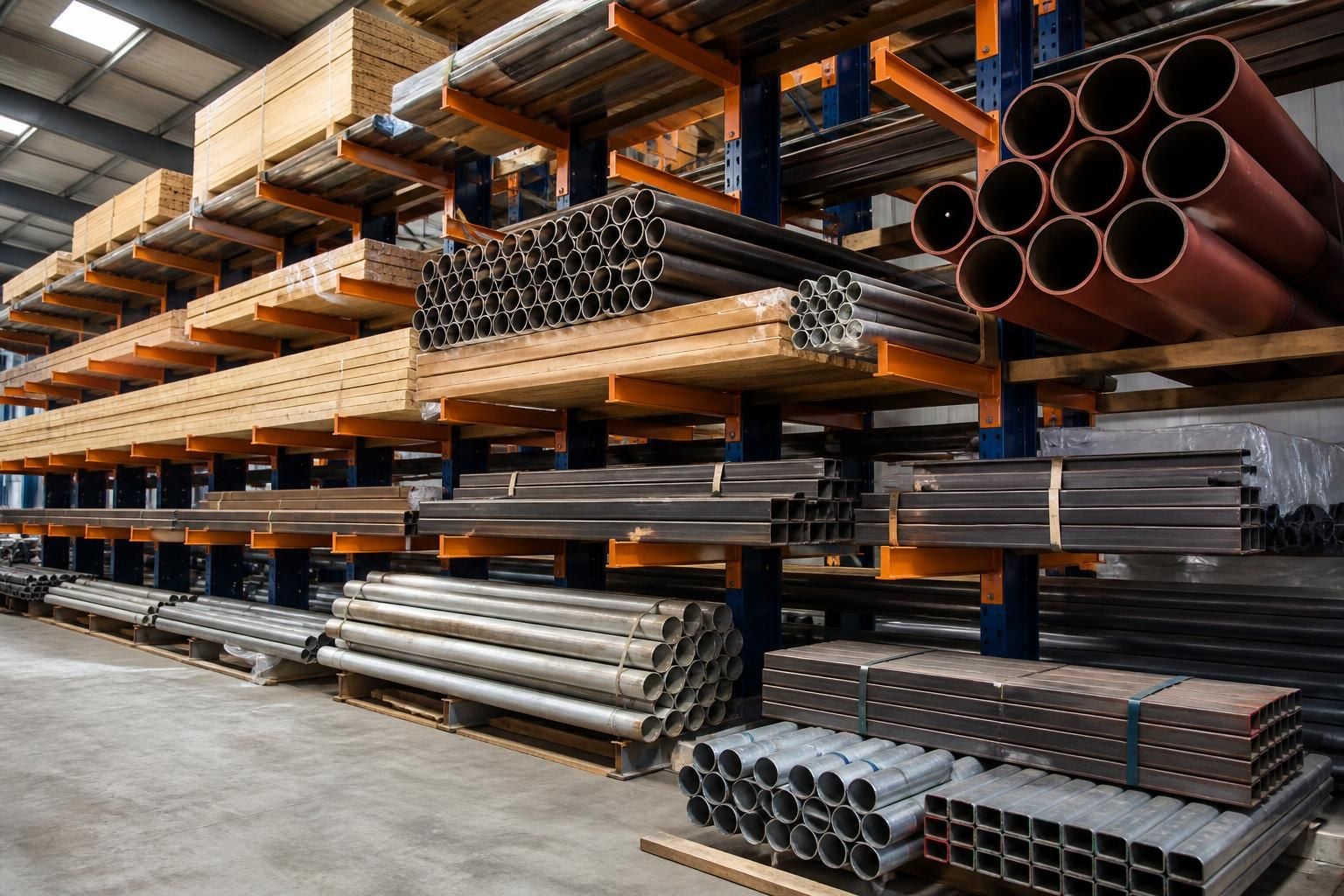
Can cantilever racking accommodate changing stock dimensions?
Yes—cantilever racking can accommodate changing stock dimensions when arm positions, clearances and load requirements match the materials you handle.
We can assess those requirements through a site meeting or survey, then provide written proposals and working drawings.
The key is to design cantilever racking around the stock range, rather than one standard item. This supports changes in length, width, diameter and weight without sacrificing orderly access.
Different lengths: Long materials need suitable support along their length. Shorter items can sit within the same bay when the arm layout prevents overhang from obstructing adjacent storage or working areas.
Different widths and diameters: Pipes, timber and sheet materials occupy space differently. Round stock may roll, while flat stock may lean or stack. The arrangement should leave enough separation for identification, retrieval and safe placement.
Changing heights: Cantilever levels can be arranged to suit the tallest items in each storage zone. This avoids unused vertical space while preserving clearance for lifting equipment and manual handling.
Changing weights: The heaviest intended items should influence the rack specification. Loading depends on factors including the number of arms used, the position of each load and how weight is distributed across the structure.
Do not assess suitability from stock dimensions alone. Consider how materials arrive, where they are inspected, and how staff or equipment remove them. A rack may hold several sizes but still create an inefficient layout if frequently used items sit behind less accessible stock.
- Group materials by length, diameter, weight or handling method.
- Keep irregular or oversized items in locations with suitable access.
- Allow separation between stock types where identification matters.
- Review clearances if packaging, bundling or protective wrapping changes.
- Check that future stock does not exceed the intended loading arrangement.
End stops, dividers or other retention measures may also affect how changing stock is stored. Their suitability depends on the material profile and the way loads are placed on, or removed from, the arms.
Stock changes should be considered before installation, not after the available space has been fixed. We can use the stated stock range, handling method and site constraints to develop the rack arrangement. Written proposals and working drawings provide a reference for the intended levels, clearances and loading requirements.
If the stock profile changes later, compare the new materials with that documented arrangement. Do not assume that a different size or heavier bundle is suitable because it fits physically. Reassessment may be needed where loading, access or protection arrangements have changed.
This approach helps you use existing warehouse space for varied stock while keeping storage organised. It also gives future layout decisions a clear basis, rather than relying on available gaps between existing loads.
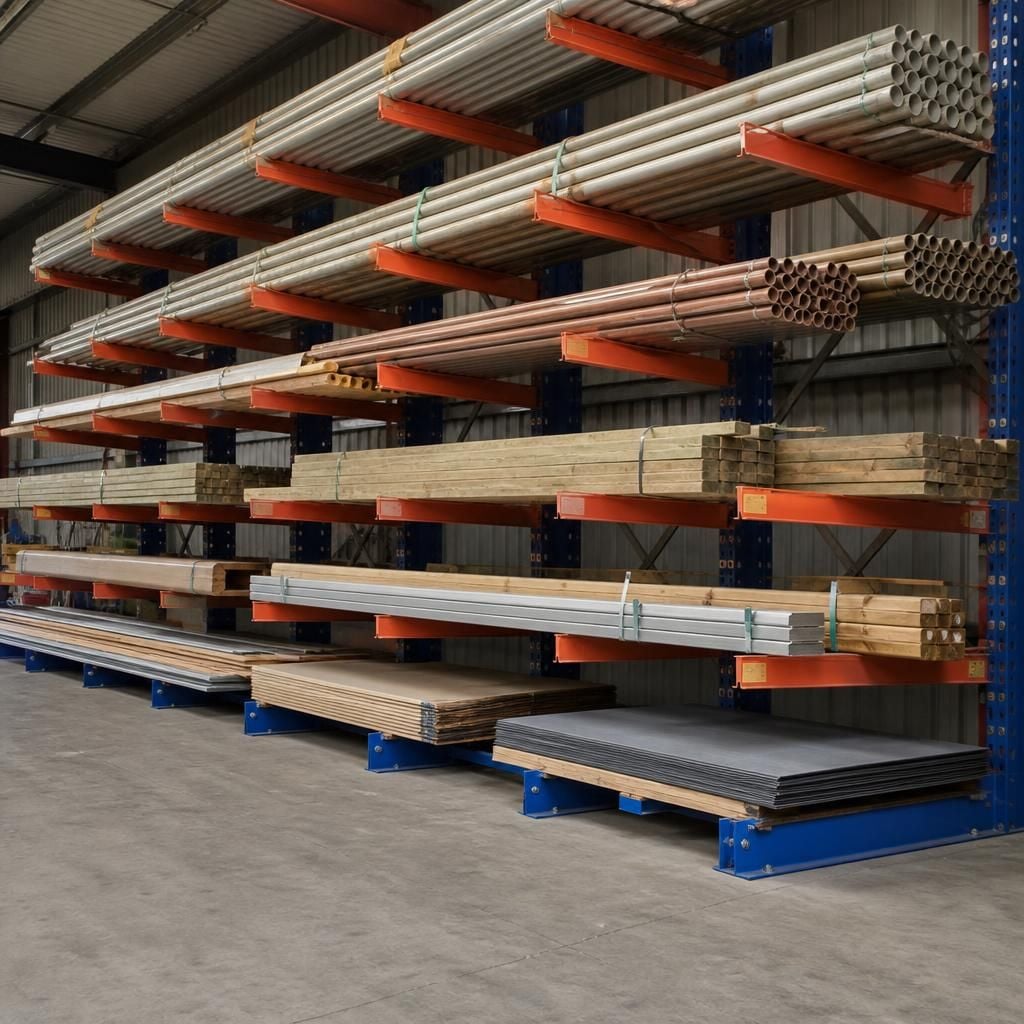
Changing stock dimensions can alter how loads are presented to the rack. If bundles become longer or are handled differently, review the approach route and lifting sequence alongside the storage position.
Keep the revised stock profile linked to bay identification and loading instructions. This gives warehouse teams a clear reference when products change, rather than relying on visual fit alone.



