


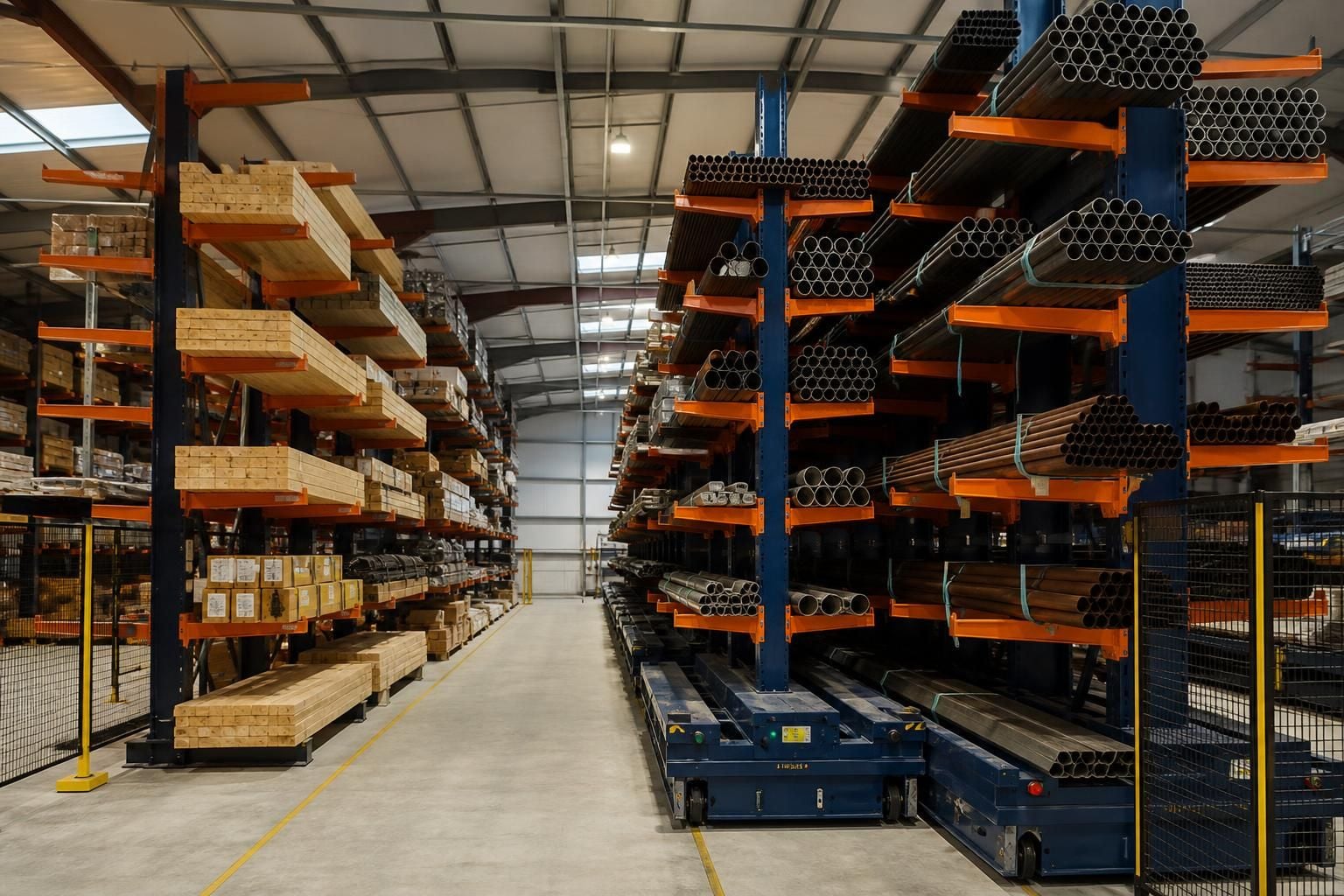
Should you choose fixed or mobile cantilever racking?
Choose fixed cantilever racking for a stable layout and direct access; choose mobile cantilever racking when flexible access and space use matter more. We assess your stock, floor space and workflow before recommending the option that fits.
Fixed cantilever racking usually suits dedicated long-stock storage, while mobile cantilever racking suits sites where floor area must serve several purposes. The right choice depends on stock weights, handling methods, access frequency, floor construction and the available layout.
Fixed cantilever racking uses stationary frames positioned in set rows. It gives each storage position a defined location and keeps the equipment mechanically straightforward. This can suit timber, pipes, sheet materials and other long loads handled regularly from known positions.
Fixed systems can also support a clear warehouse routine. Forklift routes, loading points and pedestrian areas remain easier to mark around a permanent arrangement. That can help when several people need predictable access to different storage rows.
Mobile cantilever racking mounts the frames on powered or manually operated bases. The bases move along rails, allowing selected aisles to open when access is needed. Closing other aisles can reduce unused gaps between rows, subject to safe operation and suitable floor conditions.
This arrangement can release floor area for other warehouse activities. It may suit a site storing long materials that need regular access, but not from every row at the same time. The access process must fit forklift movements, picking routines and emergency arrangements.
Cost comparison
Fixed cantilever racking normally has a simpler installation scope because it does not require mobile bases, operating equipment or floor rails. Its initial cost may therefore be lower, although the final quotation depends on the required capacity and layout.
Mobile cantilever racking includes additional mechanical and floor-related components. The installation may require more detailed preparation, and the floor must accommodate concentrated loads and rail arrangements. These requirements can increase the project cost.
Price alone does not show which option offers better value for your site. We consider the storage capacity gained, the access pattern, floor work, installation requirements and the likely effect on daily operations. A site survey and written proposal provide a clearer basis for comparison than a general price guide.
Capacity and stock handling
Both systems can be designed for long, heavy or awkward materials. Capacity depends on the frame, arms, spacing, load distribution and the characteristics of the stored stock. The design must also reflect the equipment used to place and remove loads.
Mobile equipment adds the weight of moving bases and stored materials to the floor loading. That makes a floor assessment particularly important. We review the site conditions before recommending mobile cantilever racking, rather than assuming that an existing slab is suitable.
Fixed racking can be easier to extend or rearrange within a defined storage zone, subject to the original design and available space. Mobile racking can concentrate more storage into the same footprint, but changing the arrangement may involve rails, operating clearances and revised working procedures.
Workflow and access
Choose fixed racking when your operation benefits from several permanently available aisles and frequent access across the whole storage area. It can suit high-throughput handling where opening and closing aisles would interrupt the normal sequence.
Choose mobile racking when access can be controlled through selected open aisles. It may suit storage areas with less frequent retrieval, valuable floor space or a need to preserve room for other activities.
Forklift dimensions, turning movements, load lengths and pedestrian separation must be checked for either system. Long materials need room for safe placement and removal. The racking arrangement should not force operators to work around obstructed routes or unsafe clearances.
Installation and project planning
We begin with a no-obligation consultation that may include a site meeting and survey. We then prepare a written proposal and working drawings showing the intended arrangement. Where required, project management can continue from proposal and tender stage through installation and final commissioning.
For fixed cantilever racking, planning focuses on frame positions, aisle widths, loading areas, protection and access routes. For mobile systems, the review also covers rails, floor tolerances, operating controls and the effect of movement on surrounding activities.
Neither option should be selected from storage capacity alone. We compare your stock, handling equipment, floor conditions and workflow before setting out the practical differences. This helps you choose cantilever racking that supports the building and the operation without requiring a move.
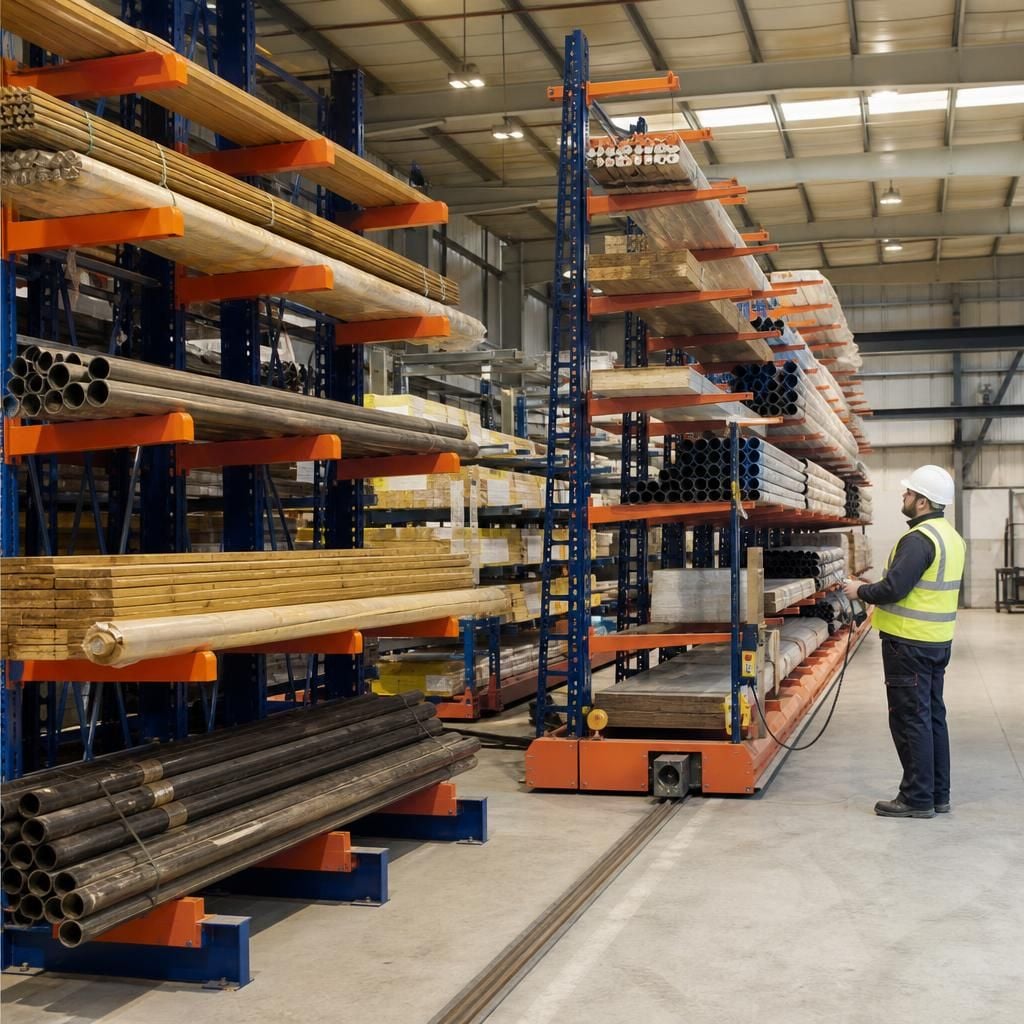
Include inspection and aftercare when comparing fixed and mobile cantilever racking. Fixed frames and mobile bases require different checks during ongoing use.
We provide racking inspections and aftercare, helping you keep the selected arrangement under review as storage requirements develop.



