


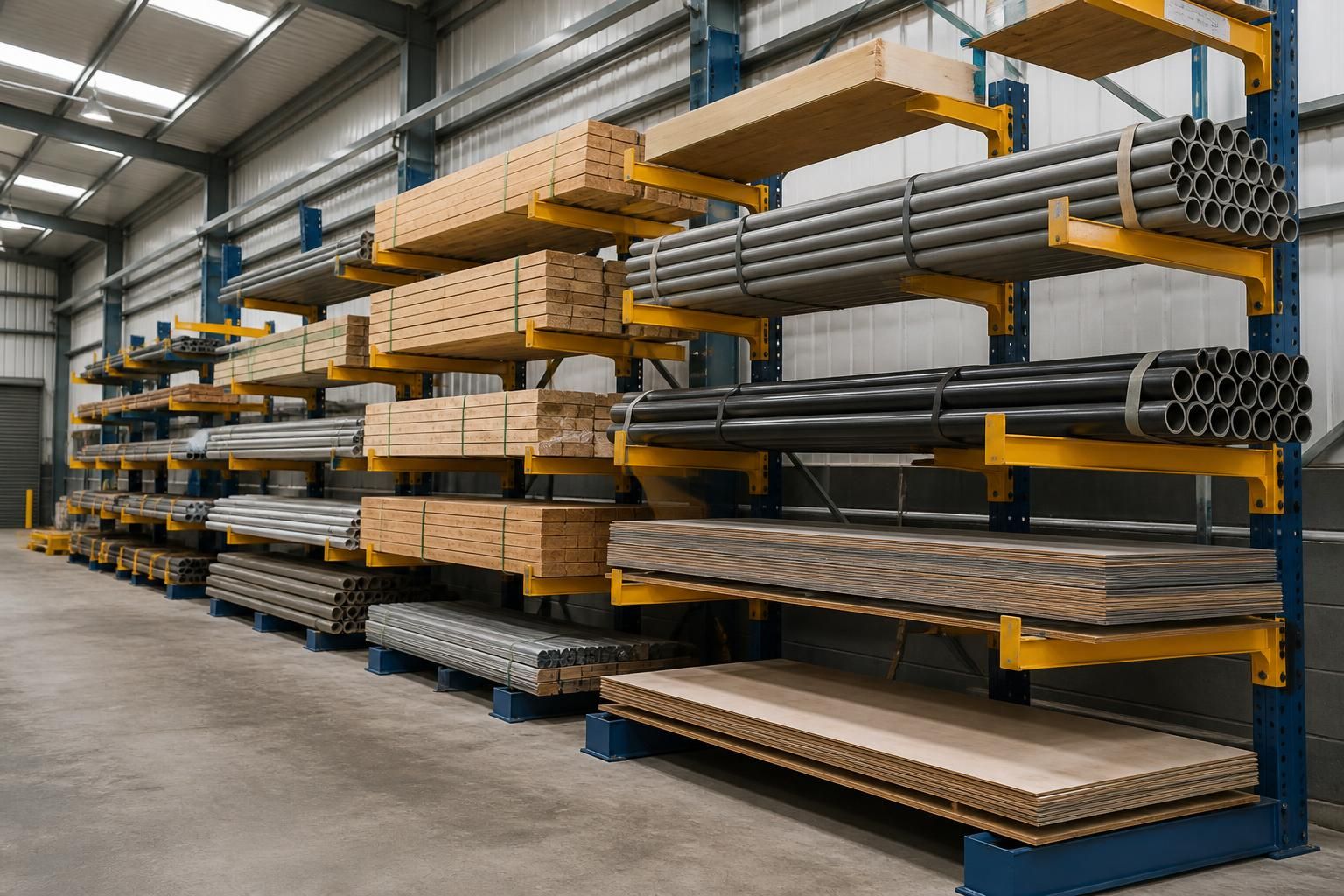
Is cantilever racking suitable for mixed pipes, timber and sheet storage?
Cantilever racking can suit mixed pipes, timber and sheet storage when the design reflects each stock type, load and access need. We review the stock and site layout before preparing a suitable arrangement.
Yes, cantilever racking can accommodate mixed pipes, timber and sheet materials. It needs separate consideration for each stock type, including weight, shape, length, stability and handling method.
Cantilever racking uses upright columns with arms projecting from one or both sides. The open front gives access to long materials without front posts blocking retrieval. This makes it suitable for stock that cannot sit efficiently on standard pallet racking.
Mixed storage works best when materials are grouped by their handling characteristics. Pipes and other cylindrical products need arrangements that reduce rolling. Timber may need level spacing that supports bundles without excessive overhang. Sheets need broad, even support to reduce movement and damage during handling.
A single bay can sometimes hold different materials, but every level still needs a clear purpose. Combining products without considering their differences can create poor access, uneven loading or unsafe stock movement. Separate bays, arm levels or storage zones may therefore be more suitable.
Consider these points before selecting an arrangement:
- Load: Identify the weight of each bundle, pack or individual item. The racking arrangement must account for the loads placed on each arm and level.
- Dimensions: Record lengths, diameters, widths and heights. The largest items often determine the required spacing and clearance.
- Support: Check how much of each item needs support. Flexible or easily damaged materials may require closer support points.
- Retention: Consider how pipes, narrow sections or loosely grouped items will remain positioned on the arms during storage and retrieval.
- Access: Allow enough room for the chosen handling equipment and for operators to place or remove materials safely.
- Stock changes: Review how often dimensions, weights and quantities change. The arrangement should reflect the stock you expect to store, not only today’s largest order.
Sheet materials need particular attention because they can be awkward to lift and may extend beyond their supports. Their storage position should allow controlled handling, clear visibility and suitable separation from longer round products.
Pipes can behave differently from timber or sheet goods during loading. Their shape, surface and bundle formation affect how they sit on the arms. End stops or other retention measures may need consideration where items could move towards the aisle.
Timber storage also varies considerably. Individual lengths, loose pieces and strapped packs place different demands on access and support. Storing them together does not remove the need to assess each load type separately.
The available building space matters as much as the stock. The layout should account for aisle positions, columns, doors, existing equipment, floor conditions and movement through the warehouse. It should also consider where people stand while loading or collecting materials.
Forklift access may suit heavier bundles, while some smaller items may need manual handling. The proposed arrangement should match the equipment and working method already used on site. Changing the racking without reviewing those movements can create avoidable congestion.
We can review the stock, handling methods and available space during a no-obligation consultation. This may include a site meeting and survey, followed by written proposals and working drawings for the planned arrangement.
Where required, project management can continue from proposal and tender stage through installation and final commissioning. This gives you a defined basis for checking bay positions, storage levels and access before work begins.
After installation, racking inspections and aftercare can help you review its condition as stock and working practices change. Any inspection should consider damage, altered loading, missing components and changes around the racking.
Mixed pipes, timber and sheets are therefore not automatically unsuitable for cantilever racking. The deciding factors are the individual loads, the support and retention needed, the access method and the warehouse layout.
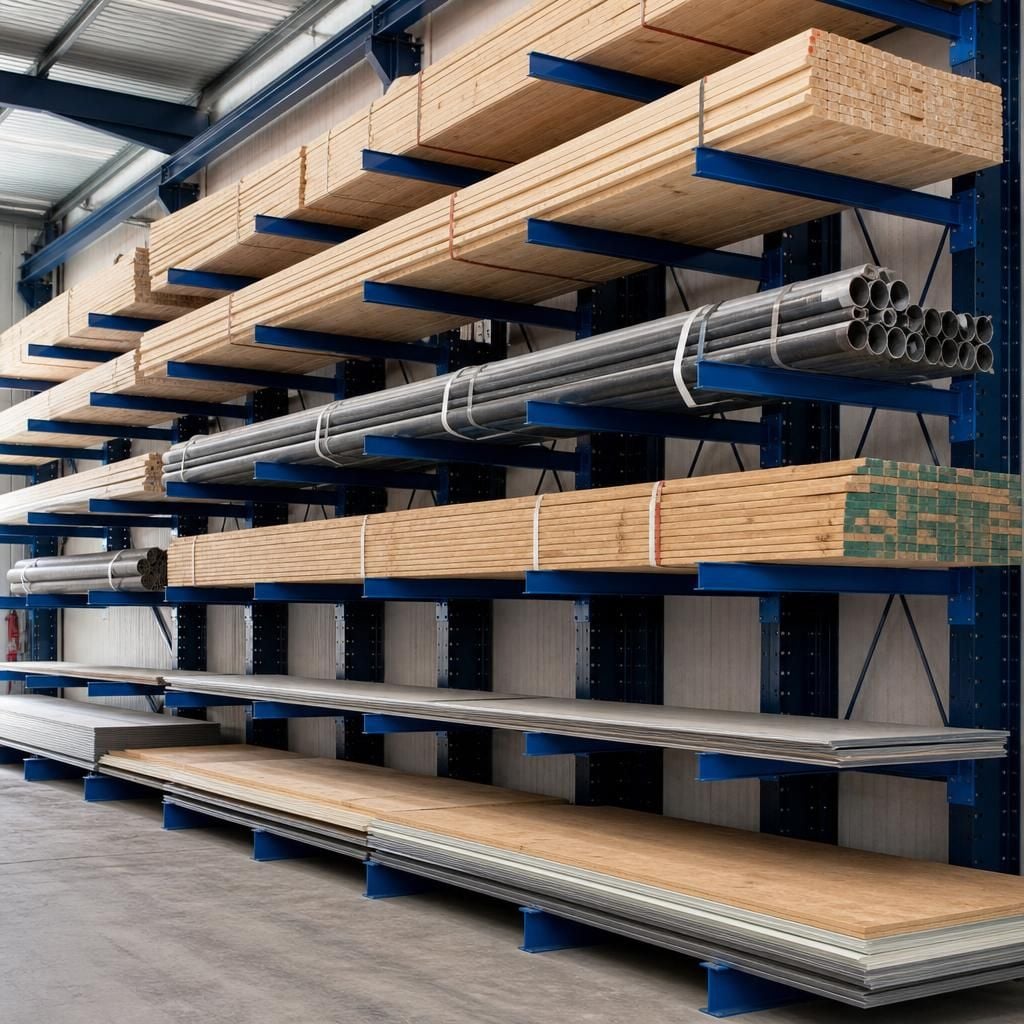
Mixed stock should not be treated as interchangeable simply because it fits within the same rack. Assign each storage position to a defined material group and handling method. This makes the intended use of each area clear during loading, retrieval and stock checks. It also helps you identify when a new product needs a separate assessment instead of being placed wherever space appears available.



