


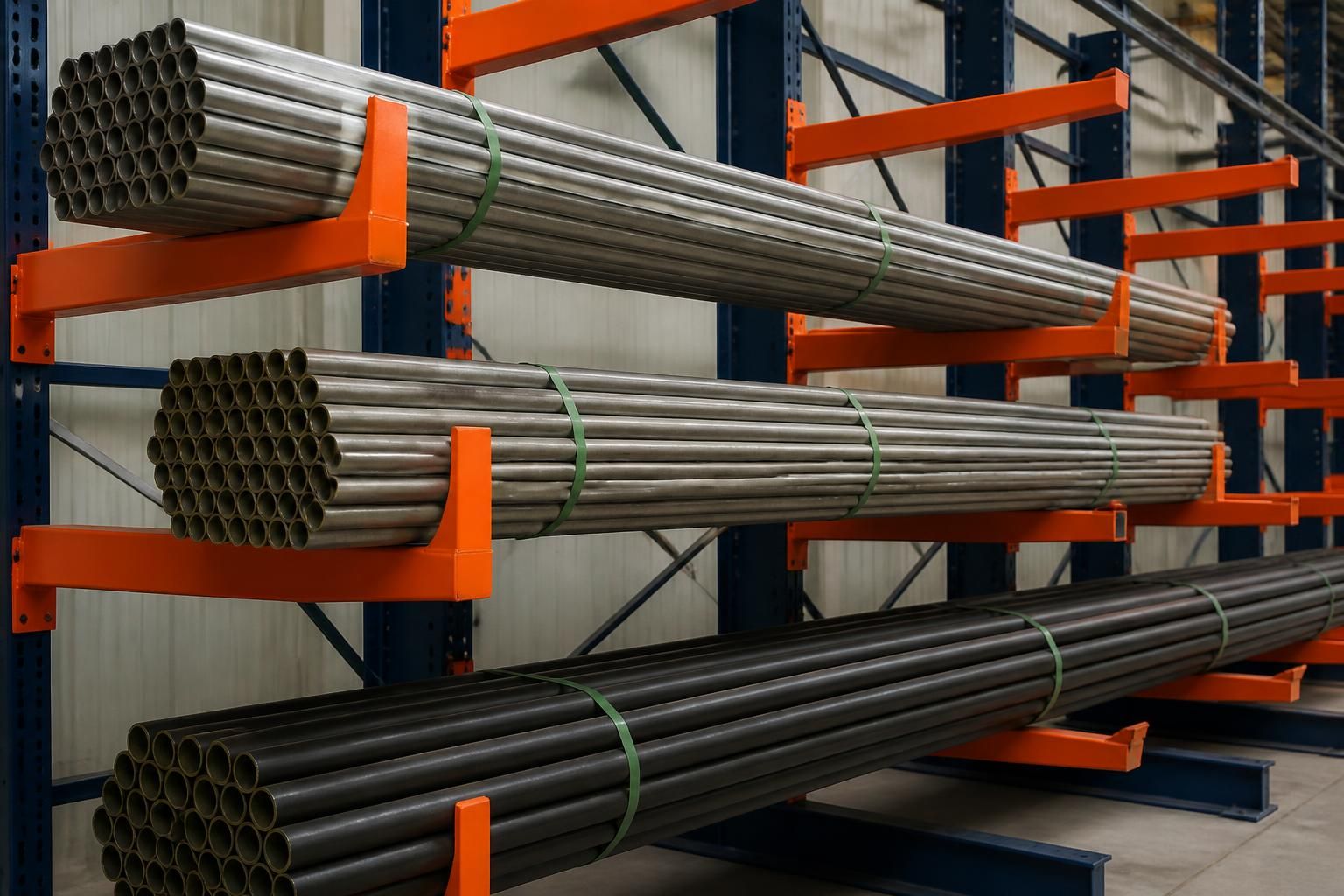
Are end stops needed for cantilever racking storing pipes?
End stops are often advisable for cantilever racking storing pipes, helping prevent round stock from rolling or sliding off the arms. Their need depends on pipe size, load arrangement, handling methods and the proposed racking design, so assess these before installation.
End stops should normally form part of the cantilever racking specification for pipe storage. They add a defined boundary at each arm end, but they do not replace correct loading, handling and inspection arrangements.
Their suitability depends on how pipes are stored and removed. Loose lengths, smooth surfaces, mixed diameters and uneven bundles can create different movement risks. Pipes stored in stable, restrained bundles may need a different arrangement from individual lengths handled separately.
End stops should be positioned to retain the stock without obstructing safe access. Their height, shape and fixing method must suit the pipe diameter and the arm design. A stop that is too low may not retain the load effectively. One that is too high may interfere with lifting equipment or manual handling.
Consider these points when specifying end stops:
- Pipe diameters, lengths, weights and surface condition.
- Whether stock is loose, bundled, strapped or placed in cradles.
- How operators load and remove pipes from each level.
- The clearance needed for forklifts, cranes or other handling equipment.
- Whether stock changes often enough to require adjustable or removable components.
- The position of stops in relation to walkways, working areas and adjacent loads.
End stops should not be treated as a way to increase the stated capacity of cantilever racking. The arms, columns, bracing and floor fixing still need to suit the applied loads. Loading pipes against a stop can also create forces that the design must accommodate.
For loose or difficult-to-control pipes, other control measures may be appropriate. These can include separators, cradles, retaining bars or bundling arrangements. The correct choice depends on the stock and handling process. Adding a stop without reviewing the complete arrangement may restrict access or encourage unsafe removal methods.
Working drawings should show the proposed end stops, arm levels, clearances and loading arrangement. A site meeting and survey can identify obstacles, handling routes and working constraints before installation. We can then provide a written proposal based on the required storage arrangement.
End stops also need checking after installation and during racking inspections. Look for looseness, distortion, damage, corrosion, missing fixings or changes that affect their position. Stock should not remain in a location where damaged components cannot retain it as intended.
Where pipe dimensions or handling methods may change, review the arrangement before altering the racking. Do not move, remove or add end stops without confirming compatibility with the design. A revised drawing or assessment may be needed when the stock profile changes significantly.
For West Midlands warehouses, Spartan Direct can coordinate consultation, drawings, installation and project management where the project requires these stages. The aim is to establish a controlled storage arrangement that supports access, separation and safe stock handling.
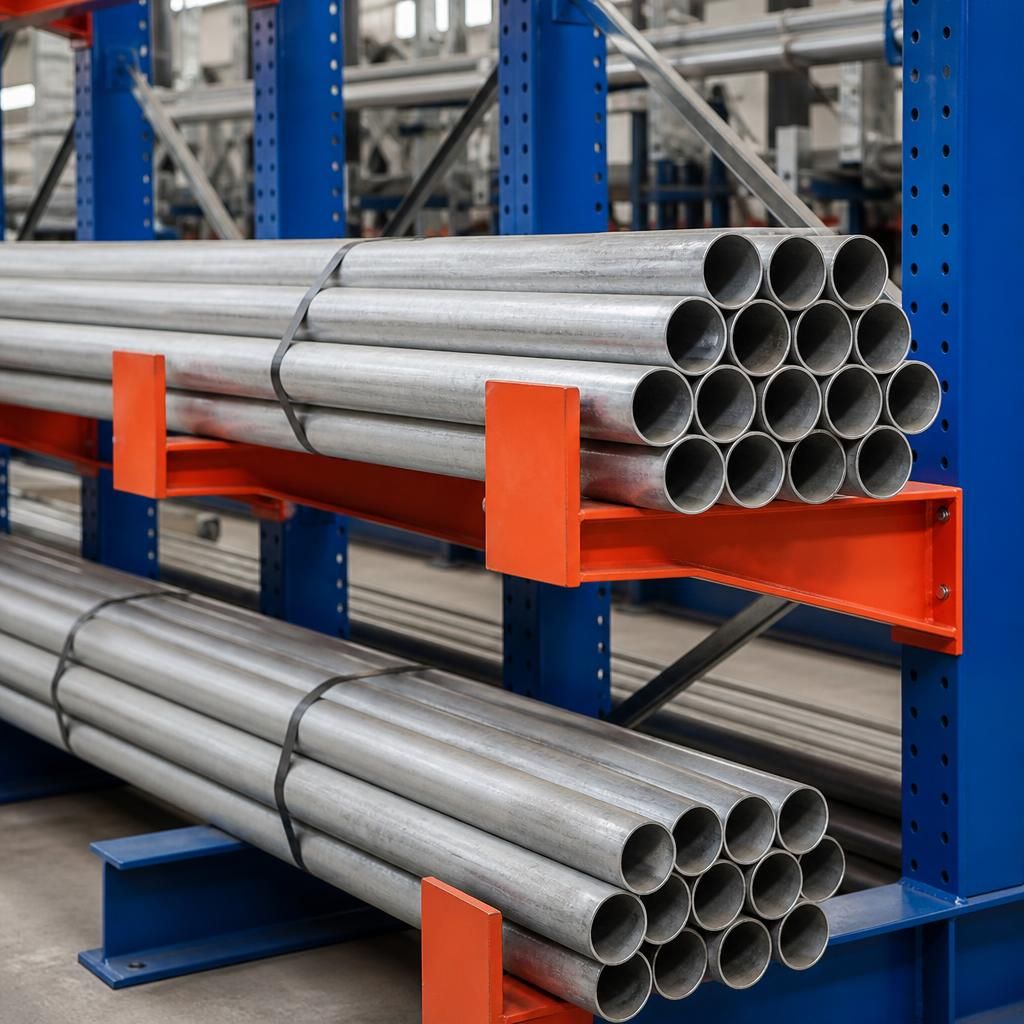
End stops must work with the removal method, not simply contain the pipes. Review a representative pick before approving the arrangement.
Check that operators can lift or extract stock without striking the stop, twisting the load or reaching into an unsafe position. If handling requires an awkward approach, revise the arm layout or retention arrangement before installation.



