What load capacity does cantilever racking need for timber, pipes and sheet?
Cantilever racking needs a rated capacity that safely exceeds the heaviest timber, pipe or sheet load stored at each level, allowing for load distribution and handling method. We establish the required capacity from your stock dimensions, weights, storage pattern and site conditions before preparing proposals and working drawings.
There is no universal load rating for cantilever racking. The correct capacity depends on the complete load case, including the rack layout, arm position, stock condition and handling method.
Start with the actual load unit. Establish how much material will rest on each arm, arm pair and storage level. Then consider how many levels may be loaded at once. A rating for one arm does not necessarily represent the capacity of a complete bay.
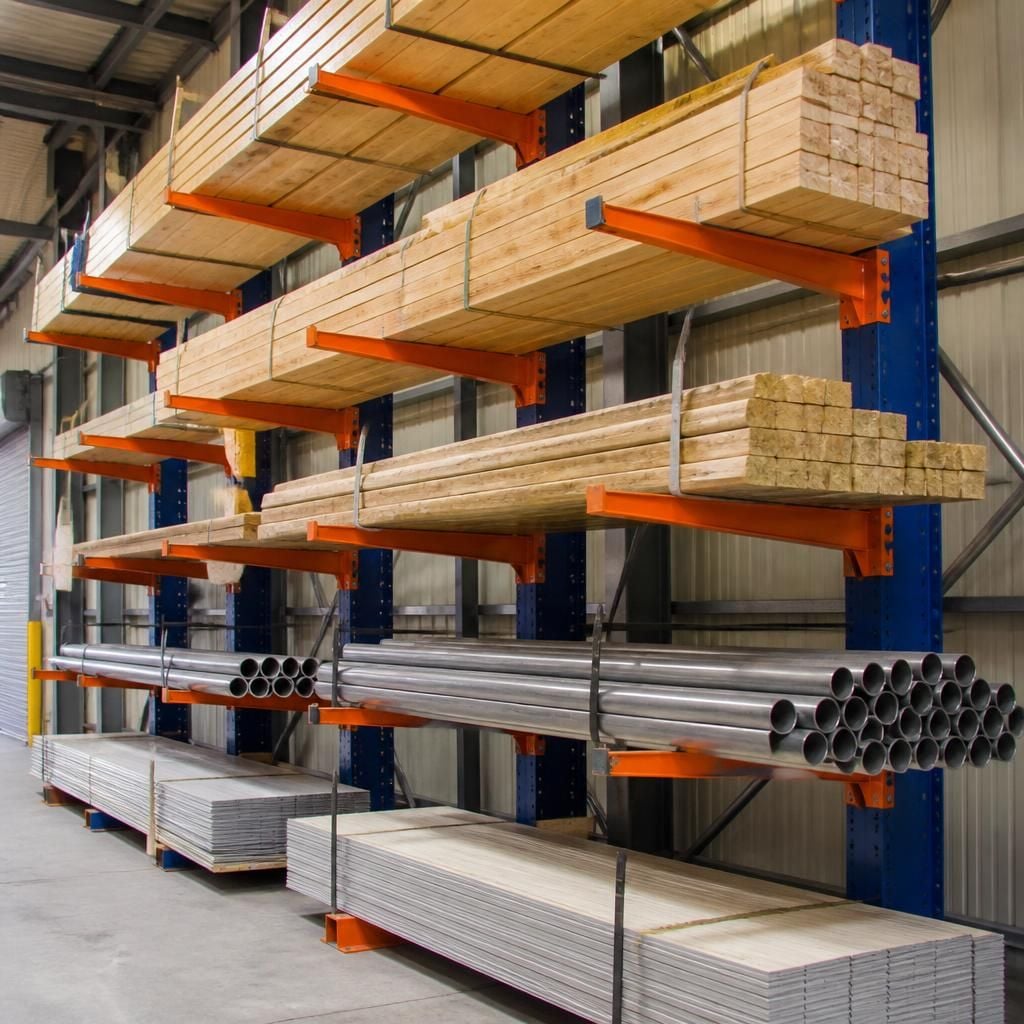
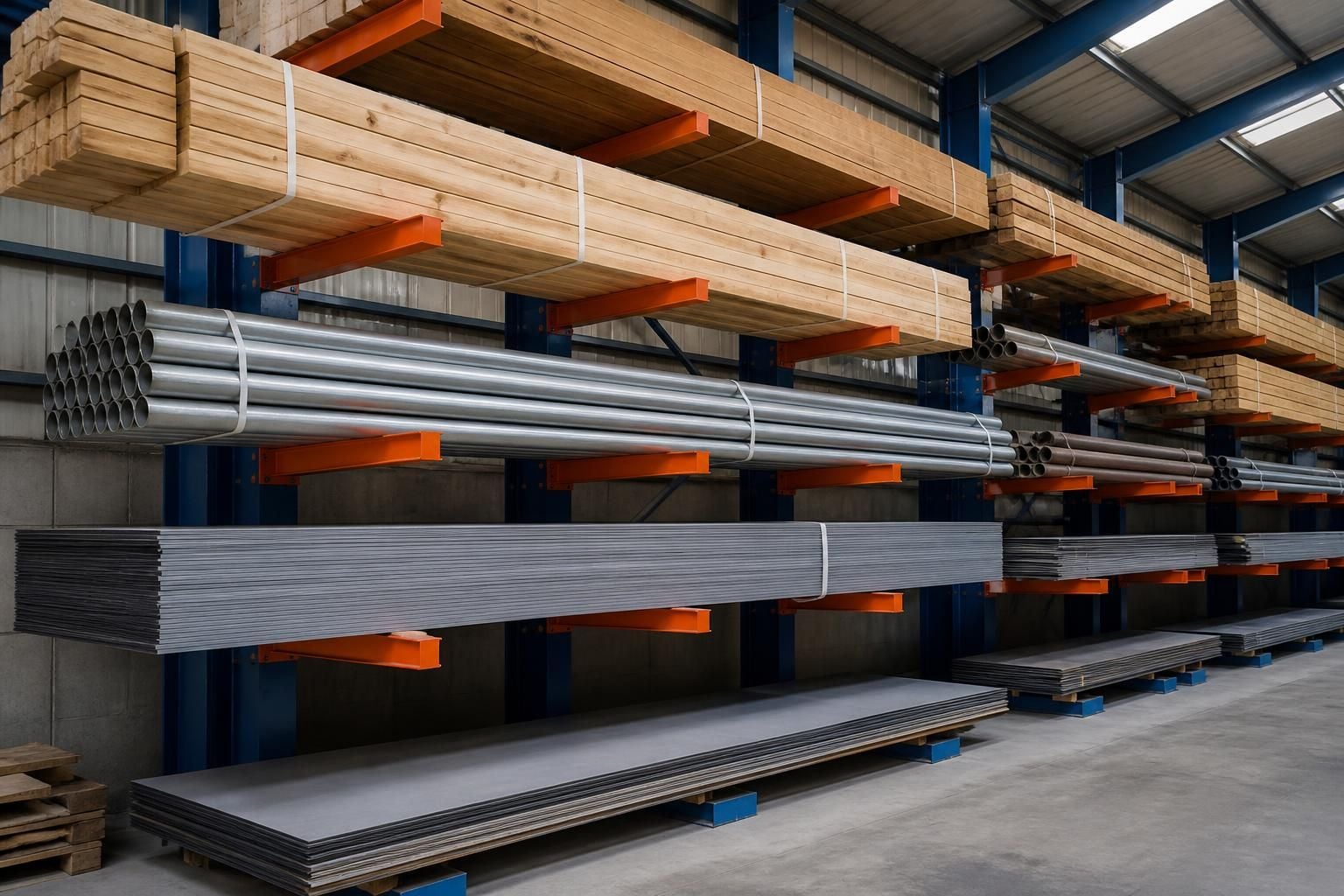
- Timber: Bundles may distribute weight well when supported evenly. Long or flexible lengths can still create uneven pressure between arms.
- Pipes: Bundled pipes can concentrate weight near the front or roll against the arm. The rack may need suitable retention and load positioning.
- Sheet materials: Sheets can form dense, concentrated loads. Their size may also affect how far the load projects beyond the arms.
Record the heaviest normal load, not only the average bundle. Include the number of pieces, bundle dimensions, length, centre of gravity and any packaging. Note loads that arrive wet, strapped, loose or unevenly stacked.
Check what the stated rating means. Rack information may refer to an individual arm, a pair of arms, a level, a bay or the whole structure. These descriptions are not interchangeable. The supporting frame, base, arm spacing and load position all affect the usable rating.
Do not add separate arm ratings together without confirming how the manufacturer defines them. The rack must also suit the intended number of loaded levels. A design based on one loaded level may not apply when several levels carry material simultaneously.
Allow for the handling method. Forklifts can place loads differently from cranes, hoists or manual handling. A load set down heavily or pushed along the arms may impose forces that static weight alone does not show. Forklift access also affects the required aisle arrangement and protection measures.
Consider the load’s position on the arm. Loads placed close to the upright create a different demand from loads projecting towards the arm tip. Long stock may also span several arms unevenly. Working drawings should show the intended support points and storage arrangement.
Capacity is only one part of the assessment. The floor must support the imposed loads through the baseplates and anchors. The proposed height, bay spacing and arm length must suit the available building space. Clear access must remain for loading, retrieval and normal warehouse movement.
Changing stock can alter the required rating. A rack selected for light sheet packs may not suit later bundles of dense timber or steel pipe. Discuss planned changes before selecting the structure. This helps avoid treating the heaviest future load as an afterthought.
For mixed storage, assess each load type and storage position separately. The limiting case may be a short, dense bundle rather than the longest item. It may also be a partly loaded arm with weight concentrated at one point.
Use documented ratings rather than estimates. The proposal should identify the intended loads, storage levels and handling assumptions. It should also make clear any restrictions on arm loading, bay loading or stock placement. If those details are missing, the capacity cannot be judged safely from appearance alone.
Our consultation can include a site meeting and survey, followed by written proposals and working drawings. These documents allow the rack arrangement to be reviewed against stock, building constraints and warehouse workflow before installation.
Spartan Direct has designed and installed storage systems for companies of different sizes across the UK since 1982. We apply that practical background when reviewing how timber, pipes or sheet materials will be stored and handled.
After installation, keep the rated information available to the people loading the rack. Loads should remain within the agreed arrangement. Damage, altered storage patterns or changes to handling equipment should prompt a review rather than an assumption that the original capacity still applies.
For a site in the West Midlands, we can assess the proposed cantilever racking against the stock schedule, floor conditions and operating layout. The resulting capacity recommendation should reflect the loads you actually need to store, not a generic figure.
A capacity label only protects stock and structure when the loading arrangement matches the information behind it.
Ask for the rating to link to a clear bay arrangement, including arm positions, storage levels, load centres and permitted placement. This gives supervisors practical information to compare with incoming bundles, rather than relying on appearance or one headline figure.
Review unusual loads before placing them in the rack. A denser pack, longer sheet bundle or changed support position can alter the load case, even when the stated weight seems familiar.