


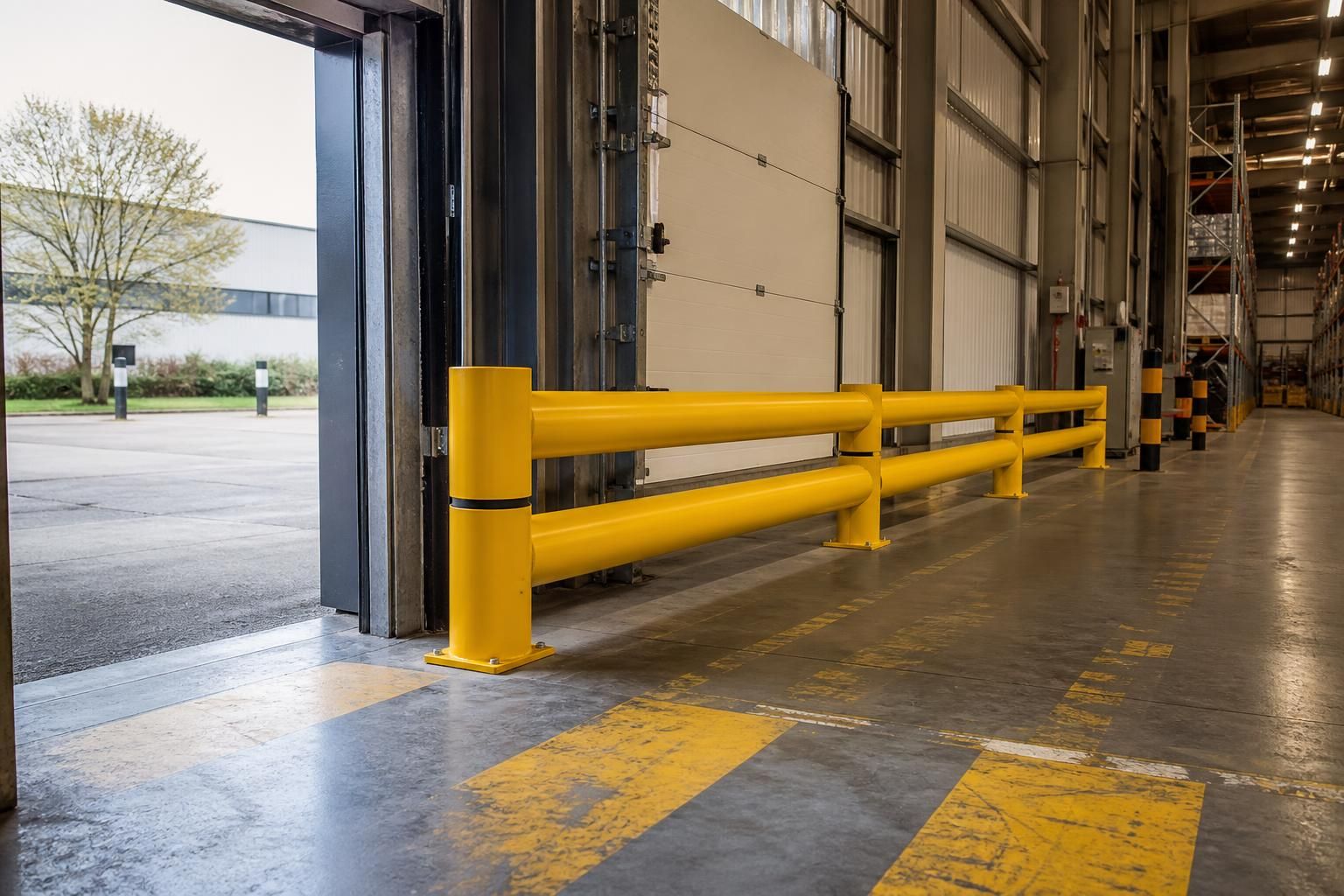
What compliance requirements apply to vehicle impact barriers?
Vehicle impact barrier compliance depends on a documented risk assessment, suitable specification, secure installation and planned inspections for your site’s traffic routes. We can survey the layout and provide proposals and working drawings for the required safety barriers.
Vehicle impact barriers must suit the risks, loads, traffic routes and building conditions at your site. UK law does not provide one universal approval mark for every barrier system. Compliance depends on selecting suitable protection, installing it correctly and demonstrating that you manage the remaining risk.
Safety barriers and vehicle impact barriers should form part of a documented workplace transport arrangement. The main requirements usually involve the following areas:
- Risk assessment: identify vehicle routes, reversing areas, turning movements, pedestrian crossings, dock approaches and vulnerable structures.
- Suitable protection: specify barriers for the vehicle types, weights, speeds and likely impact directions on the route.
- Safe layout: keep protection clear of escape routes, fire equipment, access doors, loading areas and required operating clearances.
- Structural suitability: check the floor, slab, edge distance, fixings and surrounding structure before installation.
- Inspection and maintenance: check barriers for damage, movement, loose fixings, corrosion and changes to the surrounding layout.
- Records: retain the assessment, specification, drawings, installation details, inspections and remedial actions.
The Management of Health and Safety at Work Regulations require employers to assess workplace risks and arrange appropriate controls. Workplace transport guidance also expects employers to separate vehicles and pedestrians where practicable, control traffic routes and maintain safe visibility.
HSE guidance in HSG136 Workplace transport safety and HSG76 Warehousing and storage can support this process. These documents provide practical guidance rather than a single product certification route for all vehicle barriers.
Do not treat a barrier as compliant simply because it is steel, brightly coloured or described as heavy duty. Its performance depends on the complete arrangement. This includes the barrier profile, dimensions, material, fixing pattern, substrate and the impact conditions used during specification or testing.
Ask for technical information that explains the intended use. Depending on the system, this may include impact performance, permitted vehicle conditions, anchor requirements, installation tolerances and restrictions on use. If a manufacturer provides test or performance data, compare it with the actual risks identified on site.
Installation also needs control. A barrier fixed into a damaged, thin or unsuitable slab may not provide the expected protection. Check for buried services before drilling, confirm the fixing locations and follow the specified installation method. Record the installed arrangement, including any changes made during the work.
Positioning can create a separate safety issue. A barrier that protects a column or door but narrows a forklift route may introduce collision, trapping or load-handling risks. Review turning space, pedestrian sightlines, door operation, pallet dimensions and emergency access before approving the layout.
Markings and visibility support the control but do not replace physical protection. Use suitable contrast, reflectivity or hazard marking where the traffic environment requires it. Keep routes, signs and markings visible after installing the barriers.
After an impact, take the affected barrier out of service until a competent inspection establishes whether it remains suitable. Check the posts, rails, welds, fixings, slab and nearby structure. Do not assume that a barrier has absorbed an impact safely because it still looks upright.
Planned inspections should reflect the traffic level, impact history, environmental conditions and consequences of failure. Record the inspection date, person carrying it out, findings, actions and completion status. Review the assessment when vehicles, routes, storage layouts or building use change.
Fire and emergency arrangements also matter. Protection must not obstruct fire exits, escape routes, fire doors, hydrants, alarm points or emergency equipment. Confirm the final layout with the person responsible for fire safety where barriers affect those areas.
For a project involving construction or significant installation work, establish the applicable duties before work begins. Site rules, contractor coordination, permits, segregation and control of drilling or lifting activities may form part of the project arrangements.
We can examine the traffic layout and site conditions, then prepare written proposals and working drawings for the required vehicle impact barriers. Where several work stages need coordination, project management may continue through installation and final commissioning.
For comparison purposes, the strongest compliance evidence is not a generic product description. It is a clear link between the assessed hazard, the chosen barrier, the fixing arrangement, the installed position and the inspection record.
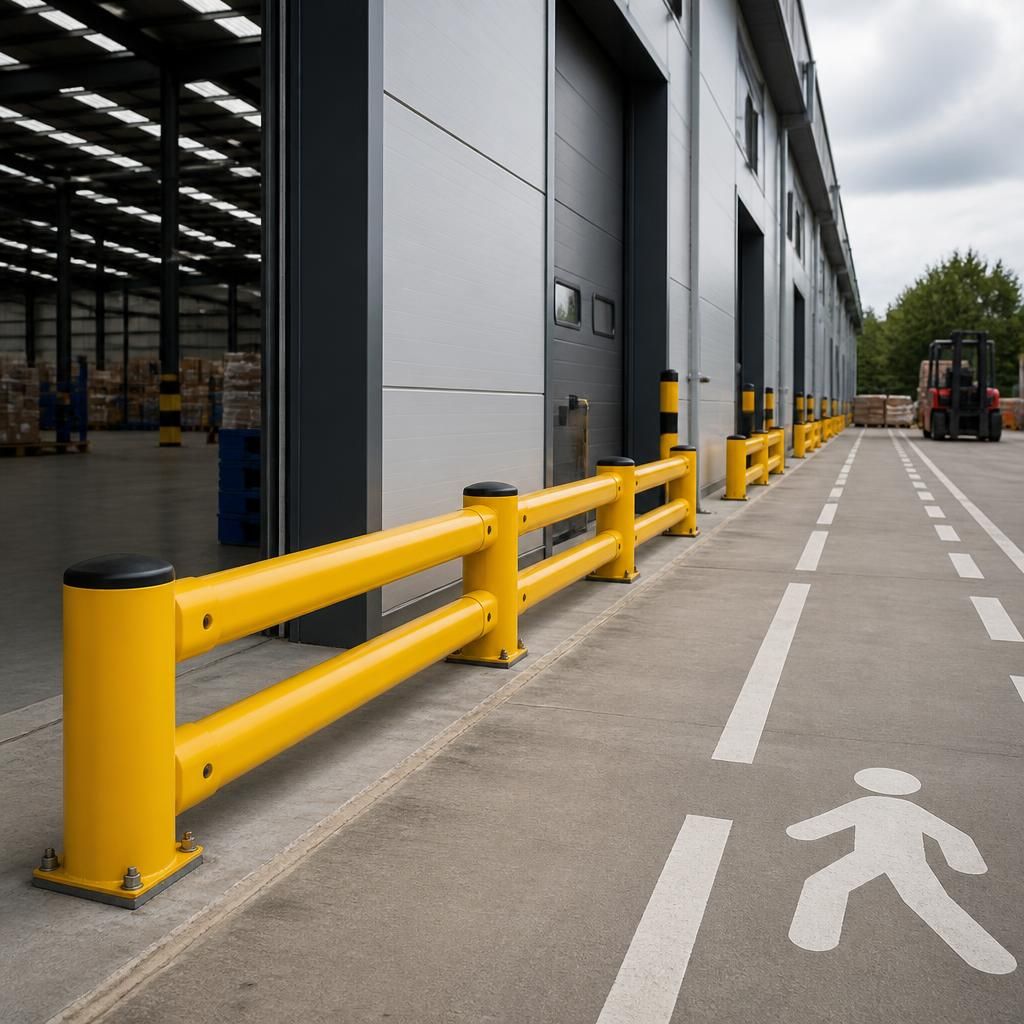
When comparing vehicle impact barrier quotations, check that each scope states its design assumptions and installation limits.
- Confirm which vehicle movements and impact conditions the proposal considers.
- Check that the quotation identifies the required slab condition, fixing method and installation tolerances.
- Ask how changes to the agreed layout will be recorded before work proceeds.
- Confirm who provides the final installation details and handover information.
This makes gaps between the selected barrier, the installation work and the site’s operating conditions easier to identify.



