What visibility features should vehicle impact barriers have on busy warehouse routes?
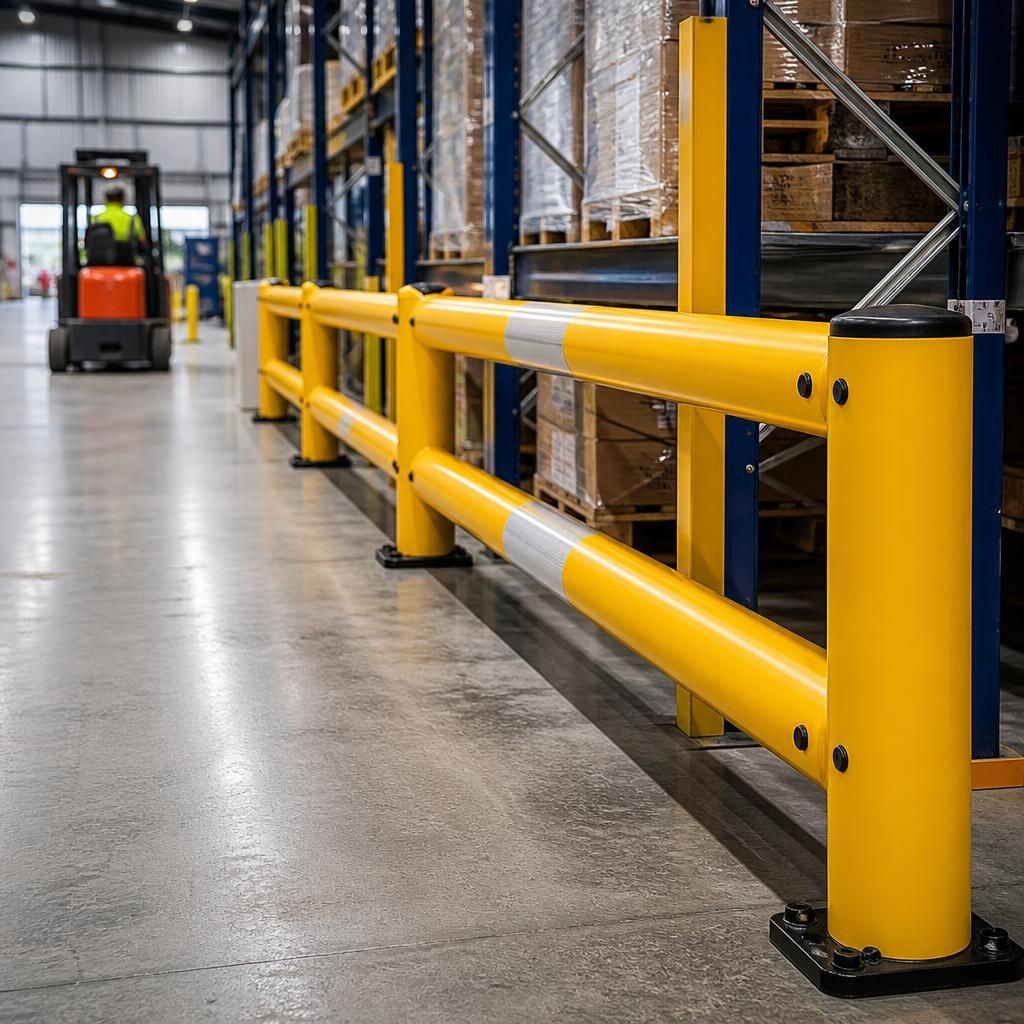
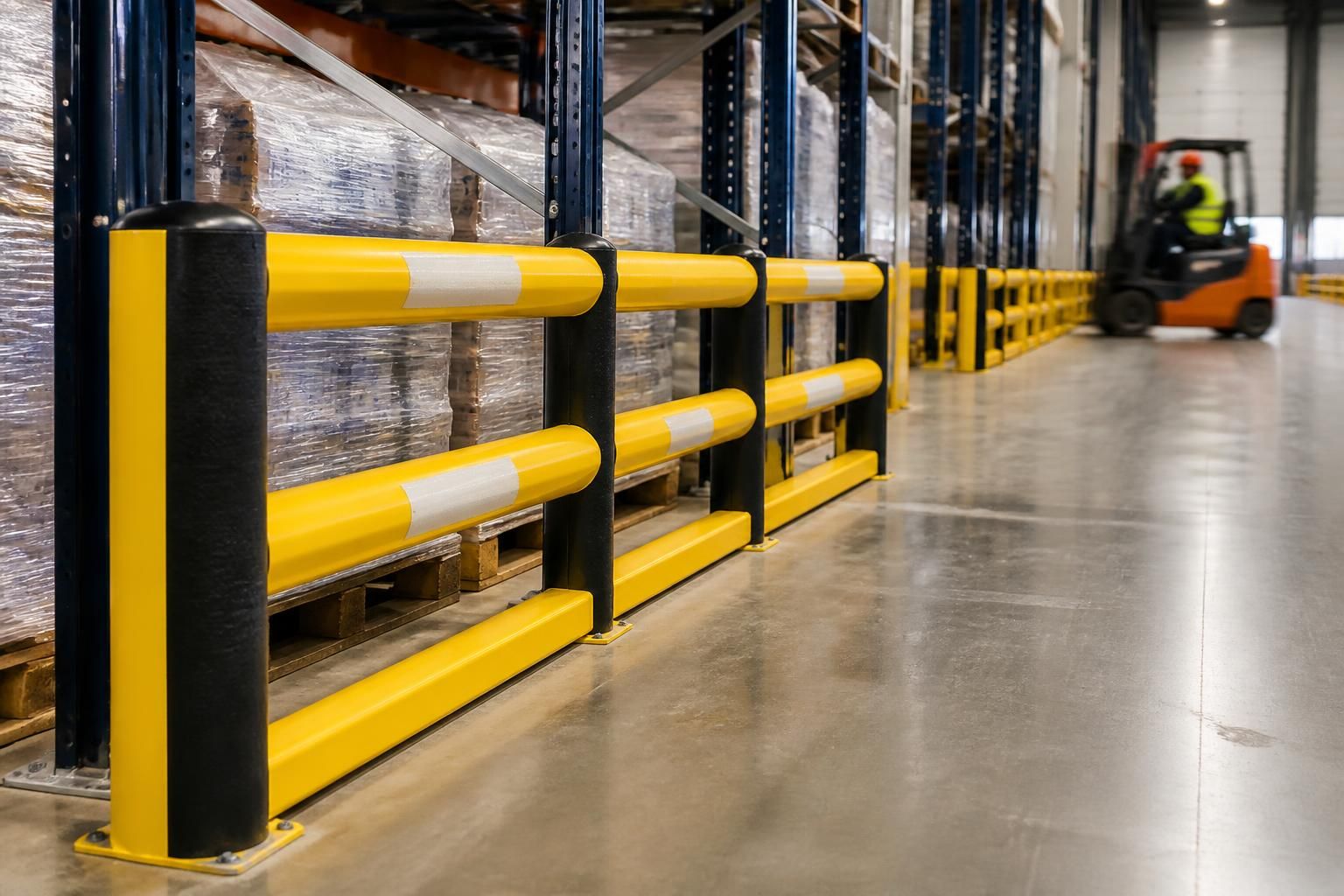
Vehicle impact barriers on busy warehouse routes should use high-visibility colours and reflective markings, making their position easier to recognise.
The most useful visibility system combines consistent marking, clear sightlines and regular checks. Vehicle impact barriers should remain easy to identify at junctions, crossings, turning points and loading areas.
Use a consistent visual layout
Apply the same visual treatment across barriers serving the same vehicle route. Consistency helps forklift drivers recognise protected edges without interpreting each location separately.
- Use matching colours across connected barrier runs.
- Keep markings aligned at similar heights.
- Make barrier ends and changes in direction visually clear.
- Avoid isolated sections that look unrelated to the wider protection system.
Visual differences can also identify changes in traffic conditions. For example, separate treatment may distinguish pedestrian crossings, restricted areas or temporary route changes.
Protect the most noticeable areas
Visibility features should continue around corners, posts, gates and barrier returns. Drivers often notice the main run first, then have less time to identify its end or change of direction.
Pay particular attention to:
- Barrier ends facing approaching vehicles.
- Inside corners where loads can obscure the post.
- Crossings between pedestrian and vehicle routes.
- Areas beside dock doors, racking and production equipment.
- Locations where vehicles turn before reversing.
Do not place signs, stored materials or equipment where they hide the barrier. A visible upper section cannot compensate for an obstructed approach.
Consider the background
A barrier needs contrast against its surroundings, including concrete floors, steel frames, stored goods and open loading areas. The same marking may stand out in one part of a warehouse but become less distinct elsewhere.
Review the background from the driver’s approach, rather than from a nearby standing position. Check both directions where vehicles can approach the protection.
Lighting also affects recognition. Assess barriers in the conditions that affect each route, including shadows from racking, glare from doors and changing daylight. Extra lighting may need separate consideration where the barrier remains difficult to distinguish.
Keep markings at a practical height
Place visual features where drivers can see them before reaching the protected point. Very low markings may disappear behind pallets, forks or floor-level equipment.
Very high markings may be hidden by vehicle structures or fail to identify the barrier’s actual position. The correct height depends on the barrier design, vehicle types, load dimensions and sightlines.
Working drawings can show the proposed position before installation. A site survey can then check whether columns, stock, doors or equipment affect visibility.
Plan for wear and contamination
Warehouse traffic can mark, dirty or damage visible surfaces. Dust, packaging, oil and impact damage may reduce the contrast that makes a barrier noticeable.
Include visibility in routine site checks. Look for:
- Damaged or missing marking.
- Dirty surfaces that need cleaning.
- New stock or equipment blocking sightlines.
- Route changes that leave barriers poorly positioned.
- Lighting changes affecting approach visibility.
Replace or restore affected features when their condition makes the barrier harder to recognise. Visibility checks should sit alongside checks of the barrier’s physical condition.
Match visibility with the traffic layout
Markings cannot correct a route that forces vehicles into blind turns or creates unclear priorities. Review barrier positions alongside vehicle movement, pedestrian access, loading activity and stock locations.
Spartan Direct can discuss these points during a no-obligation consultation. Site meetings and surveys can inform written proposals and working drawings for safety barriers and related workplace layouts.
High-visibility colour and reflective markings make vehicle impact barriers easier to recognise, but they do not determine impact performance.
Specify the barrier for the vehicle movements and protected asset first, then select visibility features that support recognition along that route. This keeps visual identification from being treated as a substitute for suitable physical protection.