How do steel, polymer and concrete traffic barriers compare?
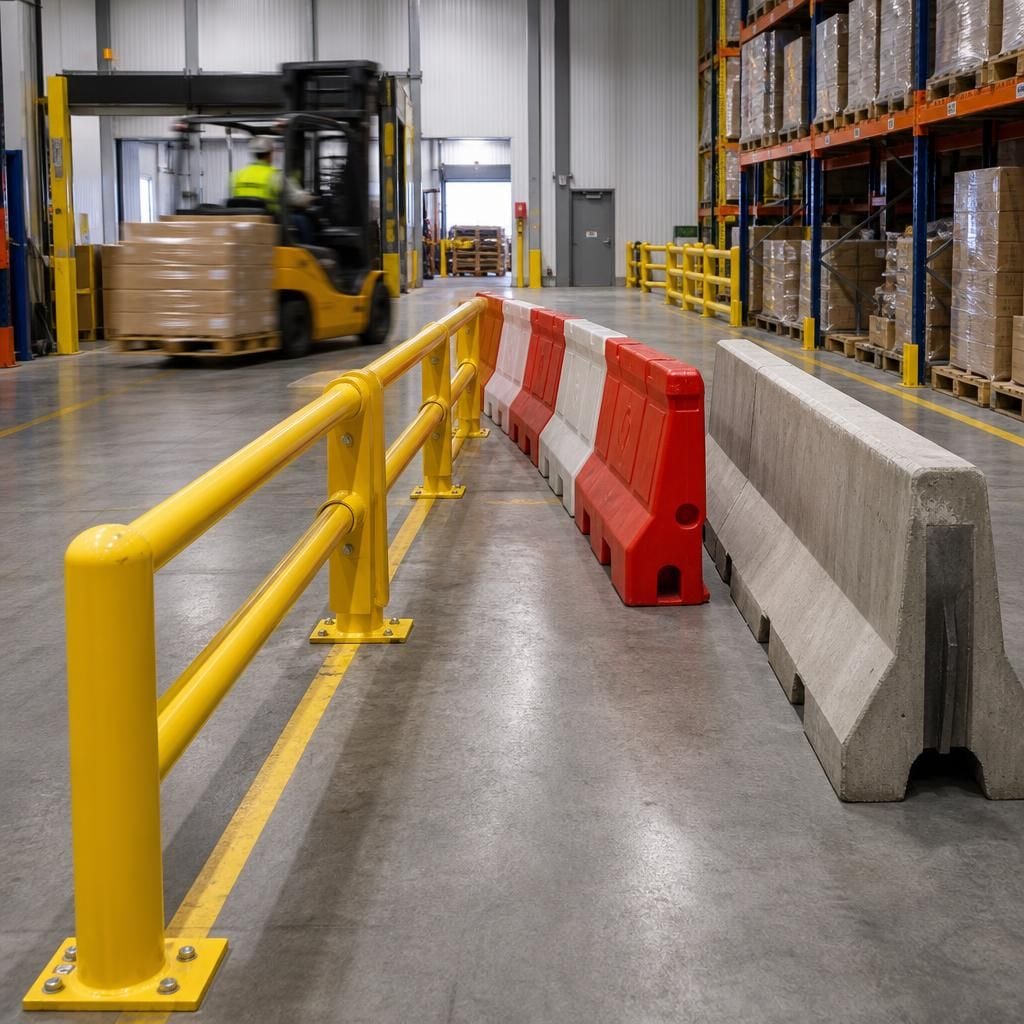
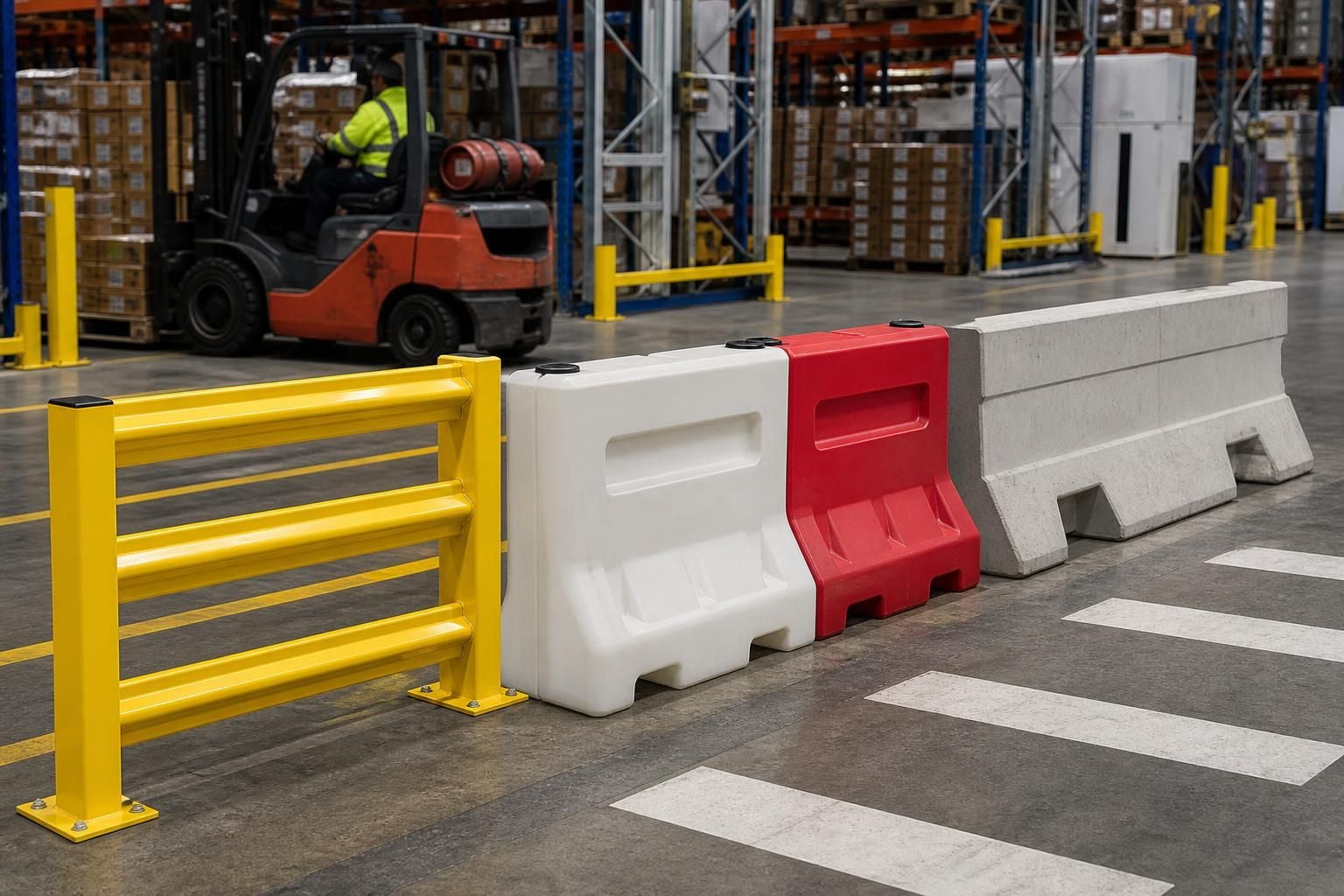
Steel traffic barriers suit high-load protection and fixed routes, while polymer barriers suit impact absorption and areas exposed to moisture. Concrete provides substantial, largely stationary protection, but its weight can restrict layout changes and access.
Steel, polymer and concrete traffic barriers each suit different hazards, routes and site constraints. Compare impact behaviour, access, installation, maintenance and future change before selecting a system.
Steel traffic barriers: Steel provides a rigid defence around vulnerable assets, corners, columns, machinery and fixed route edges. It suits locations where the barrier must hold a defined position and resist contact from vehicles or handling equipment.
Its rigidity can transfer impact forces into floor fixings and the protected structure. The floor condition, anchor arrangement and distance from the hazard therefore need careful assessment. A steel barrier can also occupy less space than a heavy protective block, helping preserve marked routes and working clearances.
After an impact, inspect the barrier, fixings and surrounding floor. A barrier that appears intact may still have damaged anchors or a distorted section. Replace or repair affected components according to the system specification.
Polymer traffic barriers: Polymer systems suit sites where controlled deflection is important. Their movement during contact can help manage the impact between vehicles, barriers and nearby building elements.
Polymer barriers also suit areas exposed to moisture, cleaning processes or corrosive conditions. Check the material specification, fixing method and operating environment rather than assuming every polymer system suits every location.
Their flexible behaviour can support busy routes where occasional contact is possible. However, the barrier still needs suitable positioning, visibility and anchorage. Review any impact before returning the route to normal use.
Concrete traffic barriers: Concrete relies mainly on mass and physical separation. It suits substantial, largely permanent protection where the site can accommodate its footprint, weight and access requirements.
Concrete can create a strong physical boundary around storage areas, vehicle routes or restricted zones. Its weight can make repositioning difficult, so it deserves more planning where traffic routes, stock locations or production layouts may change.
Check the floor capacity, delivery route, placement method and clearance around the barrier. A concrete unit may protect effectively but reduce turning space, pedestrian access or future layout flexibility.
Compare the three materials against the hazard:
- Choose steel when a rigid, fixed barrier suits the hazard and the floor can accept suitable anchors.
- Choose polymer when controlled movement, moisture exposure or reduced impact transfer is important.
- Choose concrete when substantial stationary separation matters more than easy relocation or compact access.
Material alone does not determine the right system. Consider vehicle type, travel direction, impact points, operating speeds, pedestrian movement, stock position and the consequences of access restrictions.
Also assess visibility. High-contrast finishes, reflective details or other visual features can help operators identify the barrier against the surrounding warehouse environment. The choice should support the site’s traffic plan without creating new obstructions.
Price comparisons need more than the barrier itself. Include transport, preparation, fixings, installation, route changes and possible replacement after impact. A lower purchase price may not represent the lower installed cost if it needs additional groundwork or restricts access.
For a site-specific comparison, we can discuss the hazard, review available space and carry out a survey where required. We then prepare written proposals and working drawings, with project management available through installation and final commissioning where needed.
Spartan Direct has designed and installed storage and workplace protection systems for companies of different sizes across the UK. That practical background helps us compare barrier materials against the way people, vehicles and stock move through your site.
One site does not necessarily need one barrier material. Compare each location separately, then check that the chosen systems work together across vehicle routes, pedestrian areas and restricted zones.
This approach can match protection to each hazard without applying the space, access or maintenance demands of one material everywhere.