


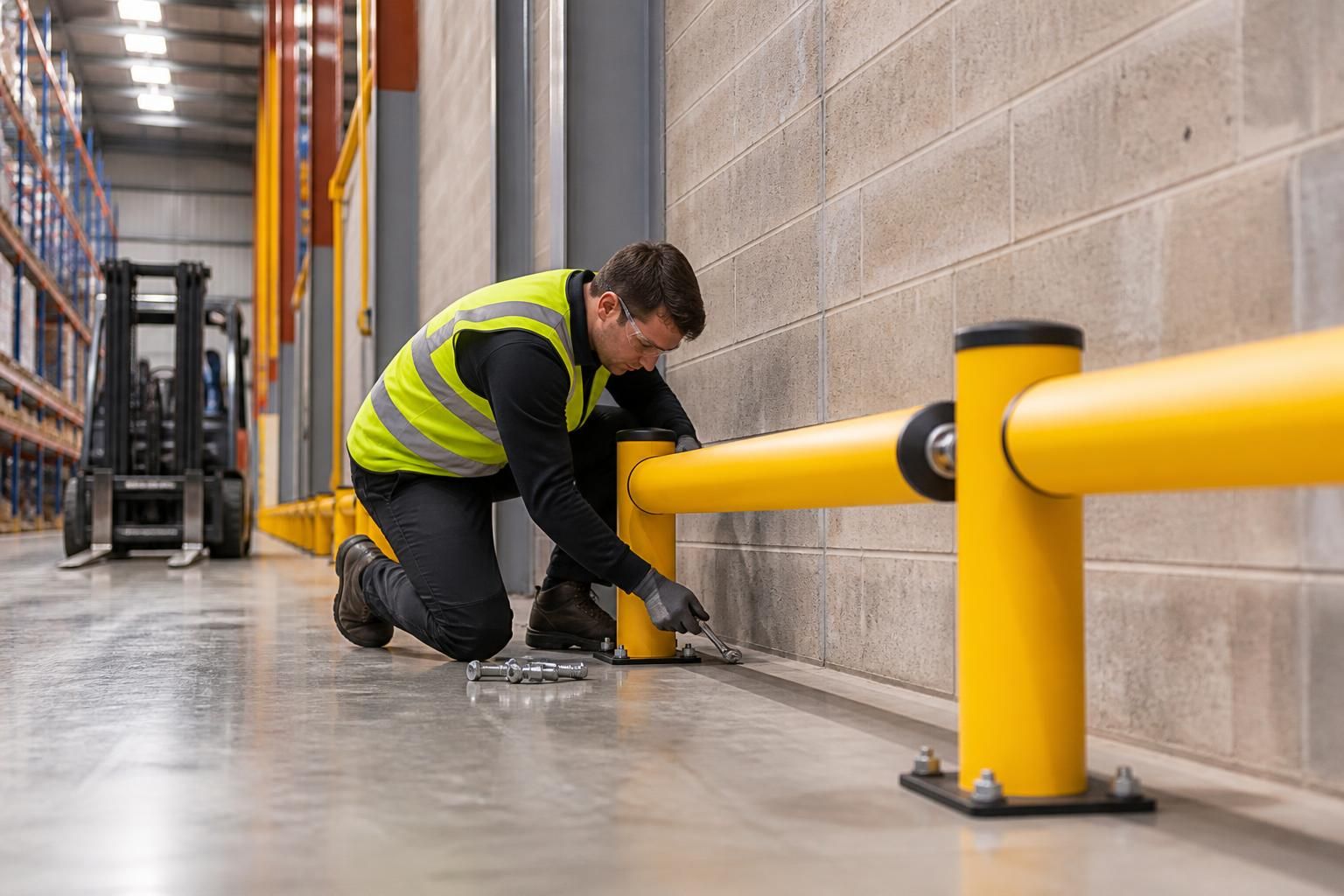
What installation method minimises disruption when fitting vehicle impact barriers?
A survey-led installation, planned around your site’s routes, stock and working areas, minimises disruption when fitting vehicle impact barriers. We follow site meetings and surveys with drawings and proposals, allowing installation and any required project management to be planned before work begins.
A phased, area-by-area installation usually minimises disruption when fitting vehicle impact barriers. It limits the work zone, keeps unaffected routes available and avoids closing the whole warehouse or workplace unnecessarily.
The method should be agreed around the site’s operating requirements, not selected as a standard package. Key considerations include forklift movements, pedestrian access, loading activity, stock positions, barrier locations and the floor conditions at each fixing point.
- Divide the work into sections. Install barriers in manageable zones, completing one area before moving to the next. This reduces the amount of space taken out of use at any one time.
- Protect the remaining routes. Maintain clear separation between the installation area and active vehicle or pedestrian movements. Temporary restrictions should be identified before work begins, rather than introduced unexpectedly.
- Sequence work around operational priorities. Areas protecting dock doors, columns, racking ends or other exposed points can be considered within the wider installation sequence. The order should reflect the risks and access requirements identified during the site review.
- Coordinate deliveries and installation activity. Materials, tools and access equipment should be brought into the relevant work area in a controlled sequence. This avoids unnecessary movement through operational parts of the building.
- Use a defined handover process. Each completed section should be checked before it returns to normal use. Final commissioning provides an opportunity to confirm the installed protection, route arrangements and any outstanding actions.
A full-area closure may still be appropriate where barrier positions sit across essential routes, where floor access requires more extensive work, or where safe separation cannot be maintained. The least disruptive method is therefore not always the shortest installation. It is the method that controls access while allowing the site to continue operating safely.
For larger projects, project management can coordinate the installation sequence from proposal and tender stage through to installation and final commissioning, where required. That gives you one documented plan for work areas, access arrangements and completion checks.
Our approach combines site information with written proposals and working drawings before installation begins. This helps you compare a phased installation with a single closure and choose the approach that fits the site’s layout, loads and workflow.
Spartan Direct Limited has designed and installed storage and workplace systems for companies of different sizes across the UK since 1982. For vehicle impact barriers, that experience supports practical planning around active warehouse and industrial environments, rather than treating access arrangements as an afterthought.
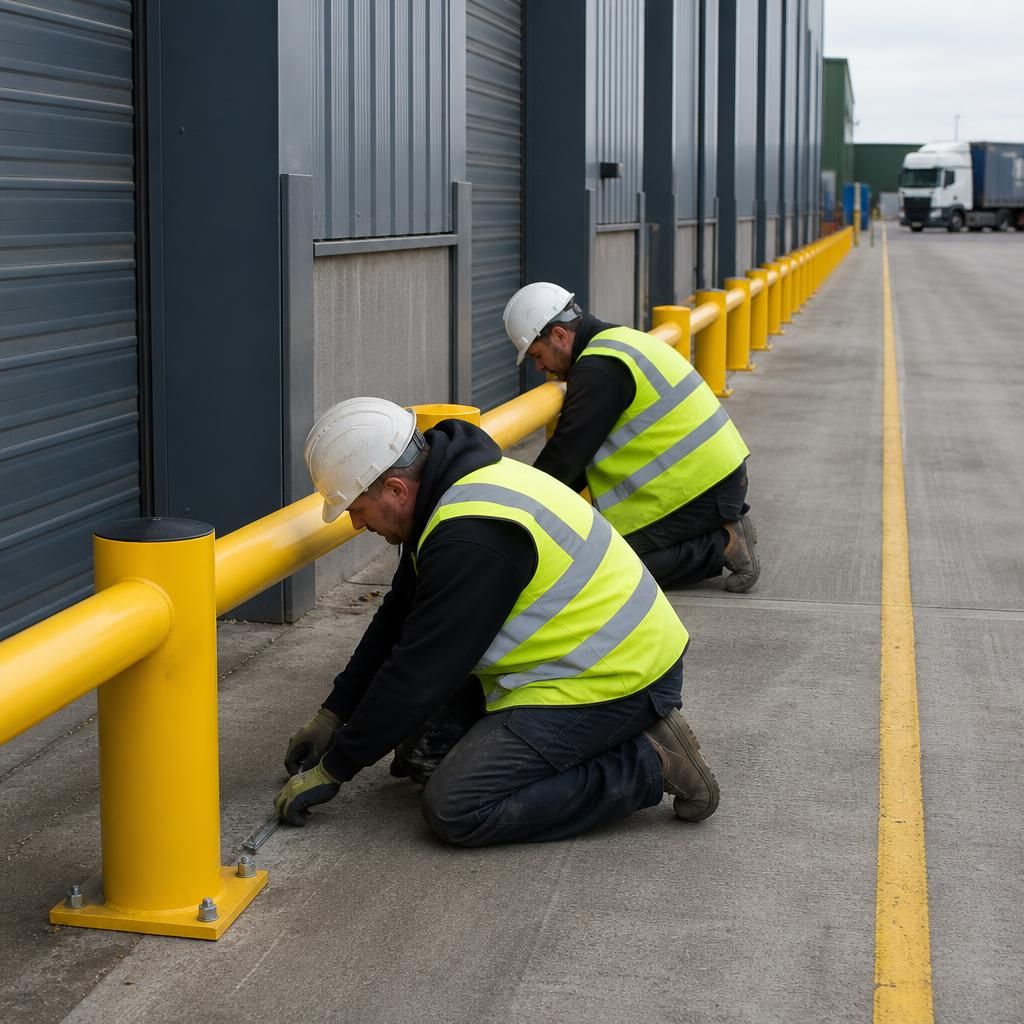
Accurate setting out helps reduce unnecessary disruption during vehicle impact barrier installation. We check barrier positions against the working drawings before fixing begins, including clearances around routes, doors, columns and equipment.
This allows access concerns or floor conditions to be addressed before installation work reaches each area. It also gives you a clear reference for checking completed protection during handover.



