Which vehicle barriers protect dock doors without restricting forklift access?
Dock door vehicle barriers protect door frames while keeping the forklift opening and turning route clear. We assess impact points, door dimensions and traffic movements before specifying and installing suitable protection.
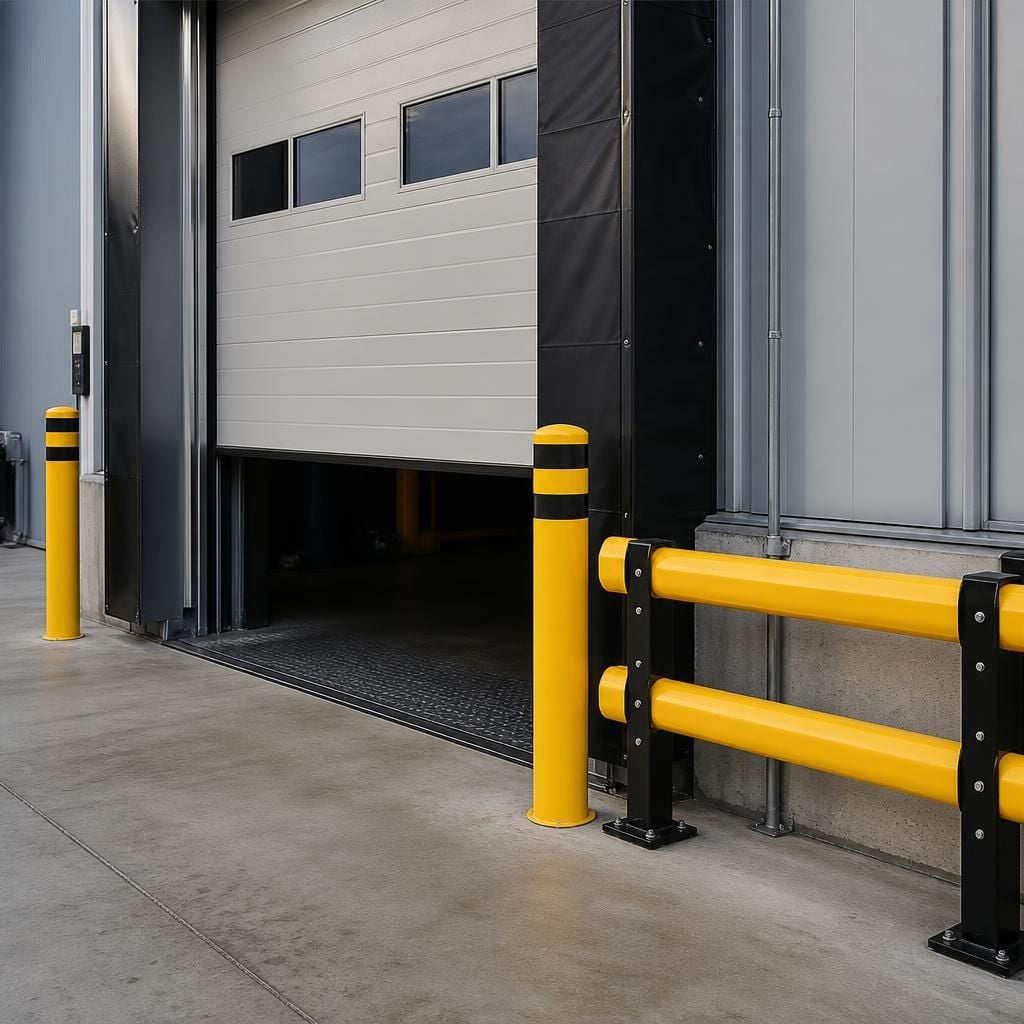
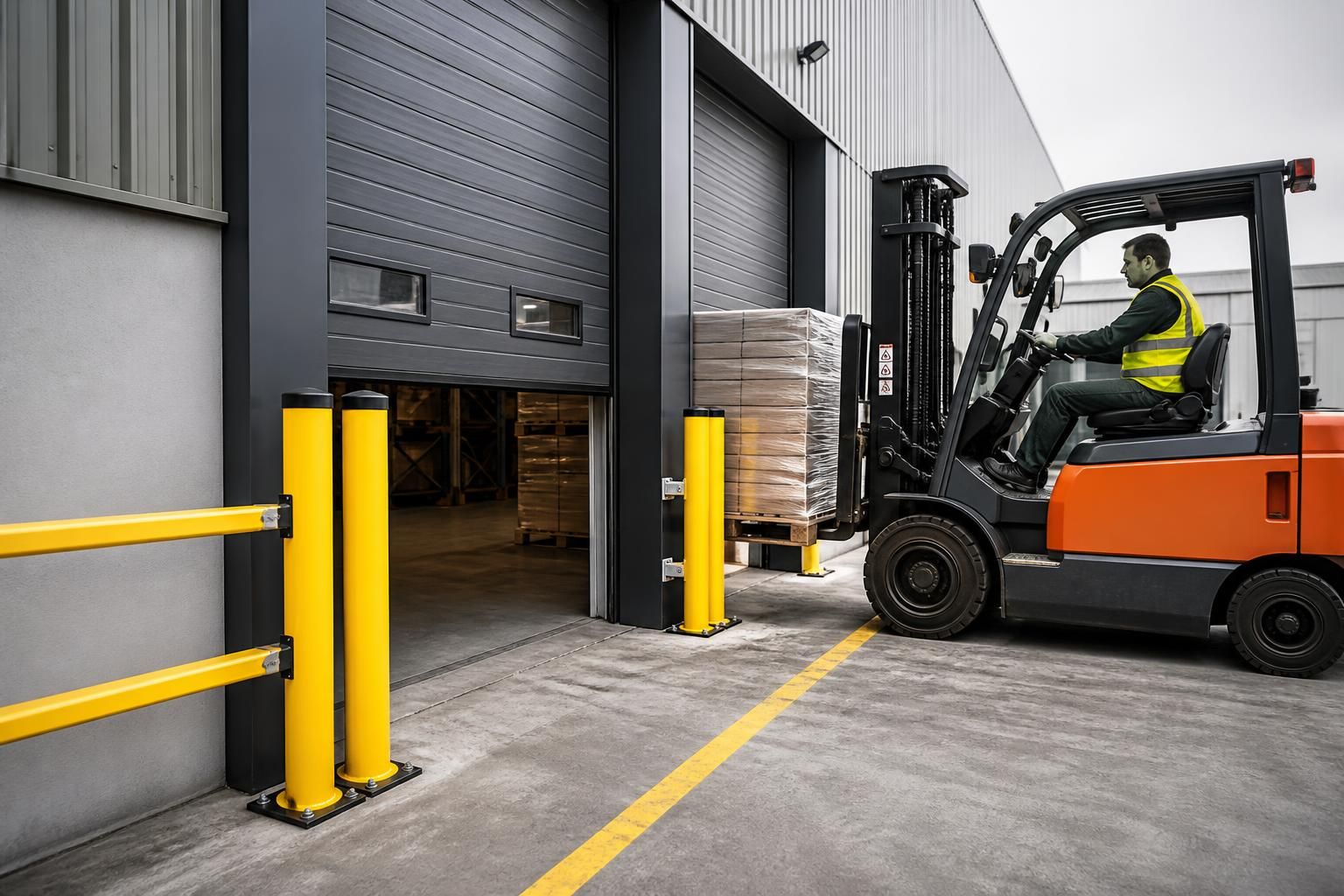
Safety barriers for dock doors should protect the door surround from side impacts, while leaving the operating opening and forklift approach unobstructed. In most layouts, that means placing protection beside vulnerable door edges rather than across the route. The correct arrangement depends on the door, vehicle envelope, loading activity and available floor space.
Side-mounted barrier protection suits dock doors where forklifts approach directly and need the full opening width. Barriers can protect jambs, corners and nearby structural points without creating a rail across the threshold. Their position must still allow the door to open, close and receive maintenance access.
Protective bollards can suit isolated door jambs, control points or exposed corners. They use less route width than a continuous rail, but spacing matters. A gap that looks clear from one direction may still expose the door to a turning forklift or a misaligned load.
Low-level guard rails may be suitable where impacts can come from a wider side approach. They provide a longer protected edge beside the dock door. The rail must sit outside the forklift’s swept path, including the rear counterweight and the load being carried.
Barriers across the entrance usually create the restriction you are trying to avoid. They can interfere with forklift access, pallet movement and the dock door itself. They may also introduce a trip or collision point for people working around the loading area.
The main specification checks include:
- Clear opening: record the usable door width and height, including space needed for the door mechanism.
- Forklift envelope: allow for the truck, load, turning movement and rear swing rather than measuring the truck alone.
- Impact direction: identify whether contact is likely during approach, turning, reversing or pallet placement.
- Door operation: keep tracks, guides, control equipment and access panels clear of the proposed barrier.
- Floor conditions: check the slab, fixing positions and any joints, edges or service routes before selecting an installation method.
- Pedestrian movement: prevent the barrier from narrowing walkways or forcing people into forklift routes.
- Loading sequence: consider how vehicles, pallets and handling equipment move through the area at each stage.
The best barrier position is not always the closest position to the door. Moving protection slightly away can preserve the opening and create room for a forklift to correct its approach. It must remain close enough to intercept likely contact before the door structure is reached.
Protection should also suit the loads handled at the dock. Long or unstable loads may extend beyond the forklift, while tall loads can affect visibility and steering. The barrier layout therefore needs to reflect stock, equipment and working practice, not just the doorway dimensions.
Where traffic routes change, fixed protection may need a different arrangement from a simple entrance guard. A survey can identify conflicts with adjacent racking, shelving, partitioning, pedestrian routes or other safety barriers. This helps you protect the dock door without transferring the collision risk elsewhere.
We can discuss the requirements during a no-obligation consultation, including a site meeting and survey where appropriate. We then prepare a written proposal and working drawings showing the proposed protection and access relationship.
For projects requiring several work stages, project management may cover proposal and tender work through installation and final commissioning. The installation approach should be planned around the working area, fixing requirements and the need to retain safe access during the works.
Spartan Direct provides safety infrastructure for warehouse and industrial environments, including barrier protection. Our work covers the West Midlands, with site information forming the basis for the proposed dock door arrangement.
In short, side protection, carefully positioned bollards or guard rails beside the opening usually preserve forklift access better than barriers spanning the dock door. A site survey confirms which arrangement protects the vulnerable points without reducing the clearance your workflow needs.
Dock door protection must allow the full loading cycle, not only a forklift’s approach. Check clearance with the door open, loading equipment positioned and pallets moving through the threshold.
A barrier can leave the main opening clear yet obstruct a dock leveller, trailer access point or maintenance route. Confirm these movements before fixing protection, so the guard prevents impact without creating a new loading obstruction.