


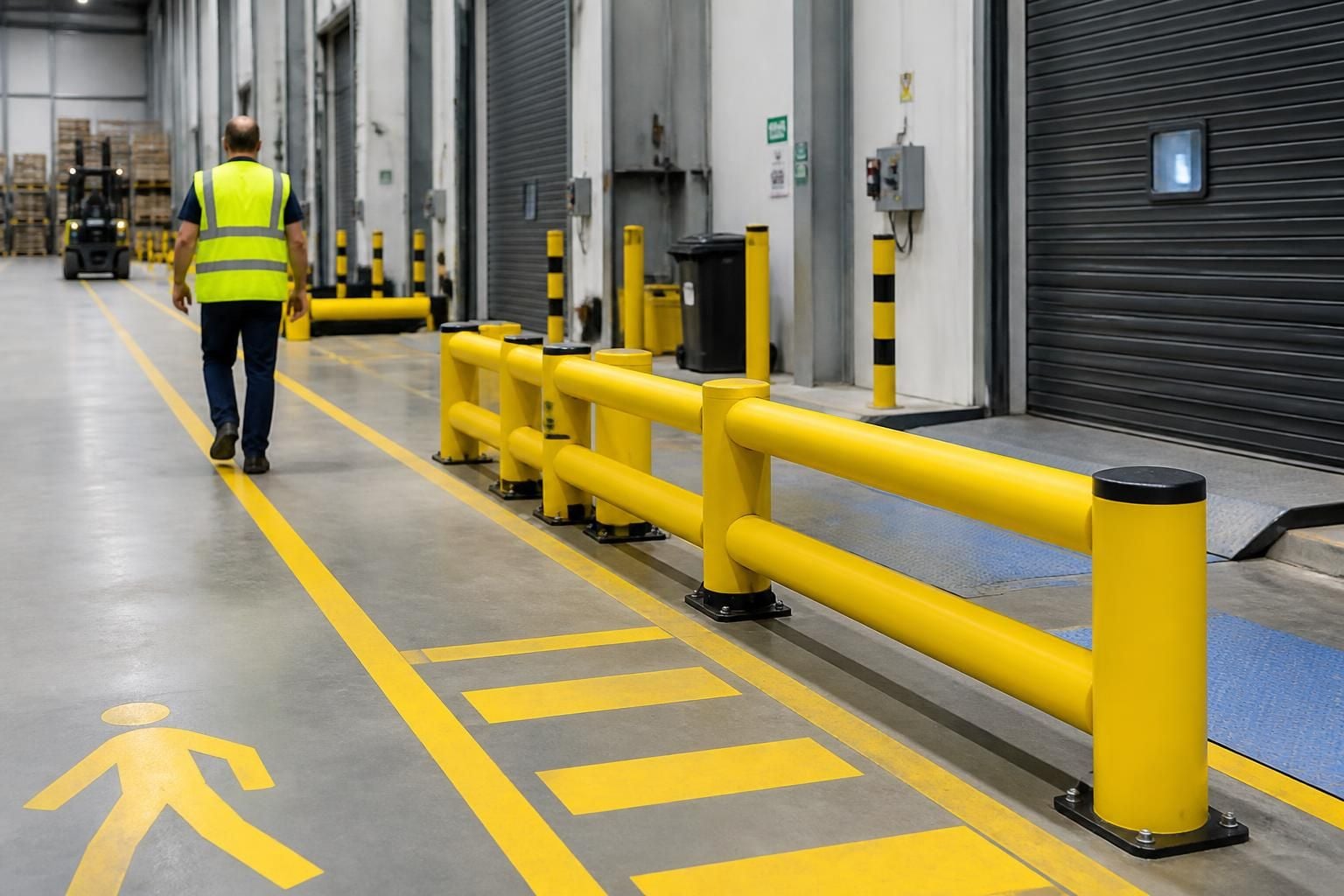
What affects the price of vehicle impact barrier systems?
The price of vehicle impact barrier systems depends on barrier size, materials, layout, installation requirements and protection required. We assess your site, traffic routes and requirements before providing a written proposal.
Vehicle impact barrier system pricing is driven by the quantity and complexity of protection required across the site. A lower unit price may not produce a lower project cost if extra sections, fixings or installation work are needed.
Barrier length and configuration
The amount of barrier required is an obvious factor, but the layout also affects the final price. Long, continuous runs generally require different planning from short sections protecting individual assets.
Corners, changes in direction, end treatments and access points can add components and installation time. Protection around dock doors, columns, racking ends or pedestrian routes may require different arrangements within one system.
A drawing helps identify these requirements before pricing. It also shows how the barriers interact with forklift routes, walkways, stock positions and vehicle manoeuvring areas.
Material and barrier specification
Steel, polymer and concrete barriers have different material and installation requirements. The suitable choice depends on the location, expected vehicle contact and protection required.
The barrier’s dimensions, construction and impact duty can affect the price. A system for occasional contact may not have the same specification as protection beside a busy vehicle route.
Choosing a lower-priced material without considering the operating conditions can create an unsuitable arrangement. We assess the traffic environment alongside the physical protection needed.
Fixings and floor conditions
The substrate beneath the barrier affects the fixing method, preparation work and installation time. Concrete condition, floor levels and existing obstructions may all need consideration.
Where the floor needs checking or preparation, this can influence the quotation. The proposed fixing arrangement must also work with nearby drains, joints, services and other installed equipment.
A site survey can identify these conditions before installation planning. It reduces the risk of pricing only the barrier while overlooking necessary site work.
Traffic routes and protection points
The price can change when a site requires separation between vehicles and pedestrians, or protection for several types of asset.
For example, a route may need protection at a turning point, beside a loading area and around a structural column. Each location may require different lengths, angles or connection details.
Existing traffic arrangements also matter. If barriers must preserve forklift access, maintain a turning route or protect a door opening, the layout needs careful coordination.
Installation requirements
Installation forms part of the project price, not an afterthought. Labour can vary with the number of sections, fixing points, floor conditions and access to each work area.
Site restrictions may also affect the method. Stock, machinery, active routes and restricted working areas can require additional planning before the installation begins.
We can discuss these constraints during a no-obligation consultation, including site meetings and surveys where appropriate. The written proposal can then separate the equipment and installation requirements.
Drawings, coordination and project management
Some projects involve one protective run. Others form part of wider warehouse or workplace changes. Coordination becomes more important when barriers sit alongside racking, partitioning, line marking or other safety infrastructure.
Written proposals and working drawings help define the scope before work proceeds. Where required, project management can cover proposal and tender stages, installation and final commissioning.
This coordination may affect the project price because it involves more than supplying barrier components. It provides a clearer basis for agreeing responsibilities, interfaces and site arrangements.
What to check in a quotation
- Which barrier type, dimensions and sections are included.
- Which fixings and floor preparation are allowed for.
- Whether protection for doors, columns, racking or pedestrian routes is included.
- Whether drawings, installation and project management form part of the scope.
- What site assumptions could change the price.
We use the consultation and survey findings to prepare a written proposal for the stated requirements. Working drawings can clarify the arrangement before you approve the work.
Our quotations remain valid for 14 Business Days from issue. Agreed dates are estimates, and the terms state that time is not of the essence.
The most useful comparison is therefore between complete scopes, rather than headline prices alone. A clear scope helps you assess the protection, access and installation work included.
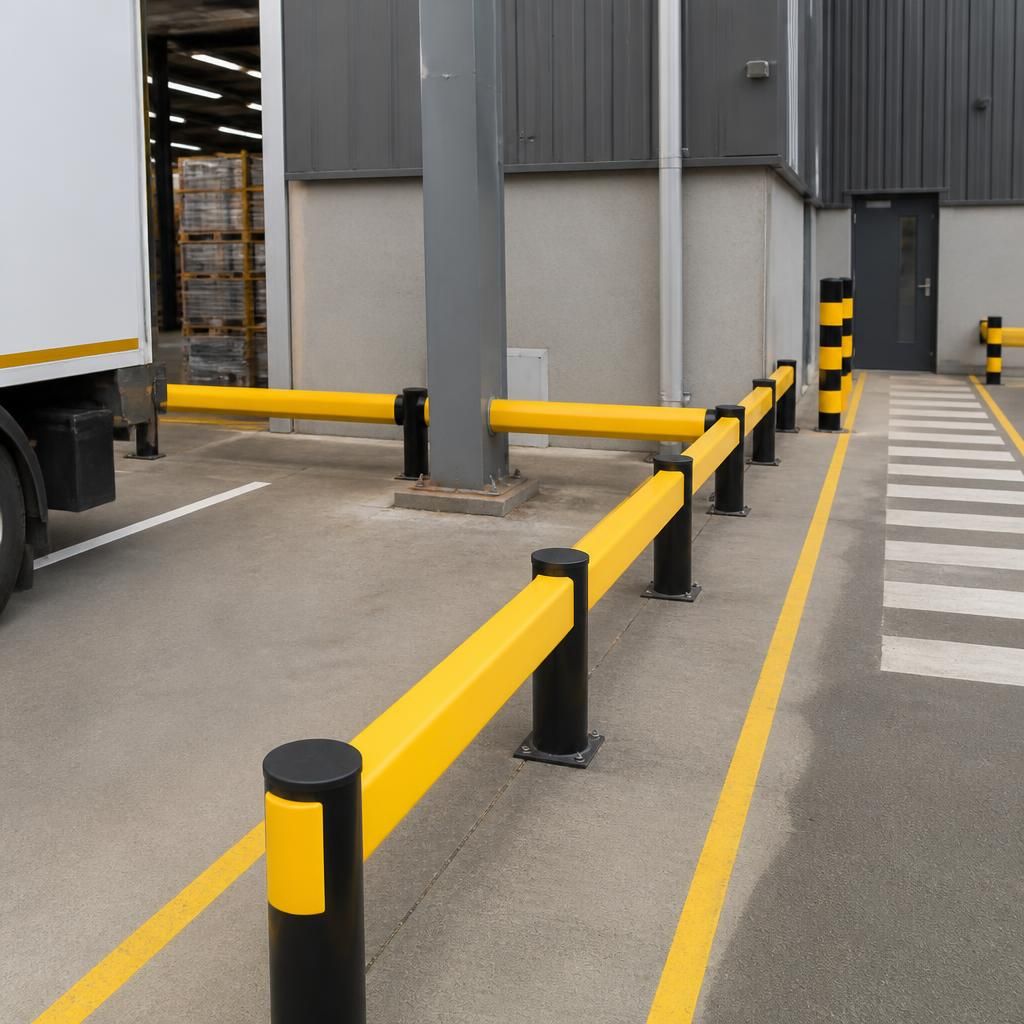
The certainty of the brief can also affect the price. Provisional barrier locations or quantities may change after site information, drawings or access requirements are confirmed.
Agreeing the protection points before approval gives the quotation a defined basis. If requirements change later, ask for the revised sections and installation work to be identified separately.



