Do vehicle impact barriers need planned maintenance after installation?
Yes—vehicle impact barriers need planned inspections after installation, alongside checks after collisions, to identify damage, loosened fixings or reduced protection. The inspection interval depends on traffic levels, impact risk and barrier condition, with repairs or replacement required when protection is compromised.
Planned maintenance keeps vehicle impact barriers ready to protect people, structures and equipment during normal warehouse activity. It should form part of your site safety arrangements, rather than begin only after visible damage.
A useful maintenance plan records each barrier’s location, purpose and condition. It should also identify the traffic route, nearby doors, columns, racking and pedestrian areas. This gives you a clear basis for checking whether protection remains suitable as the site changes.
What planned inspections should cover
- Check barrier posts, rails and frames for bending, cracking, distortion or other impact damage.
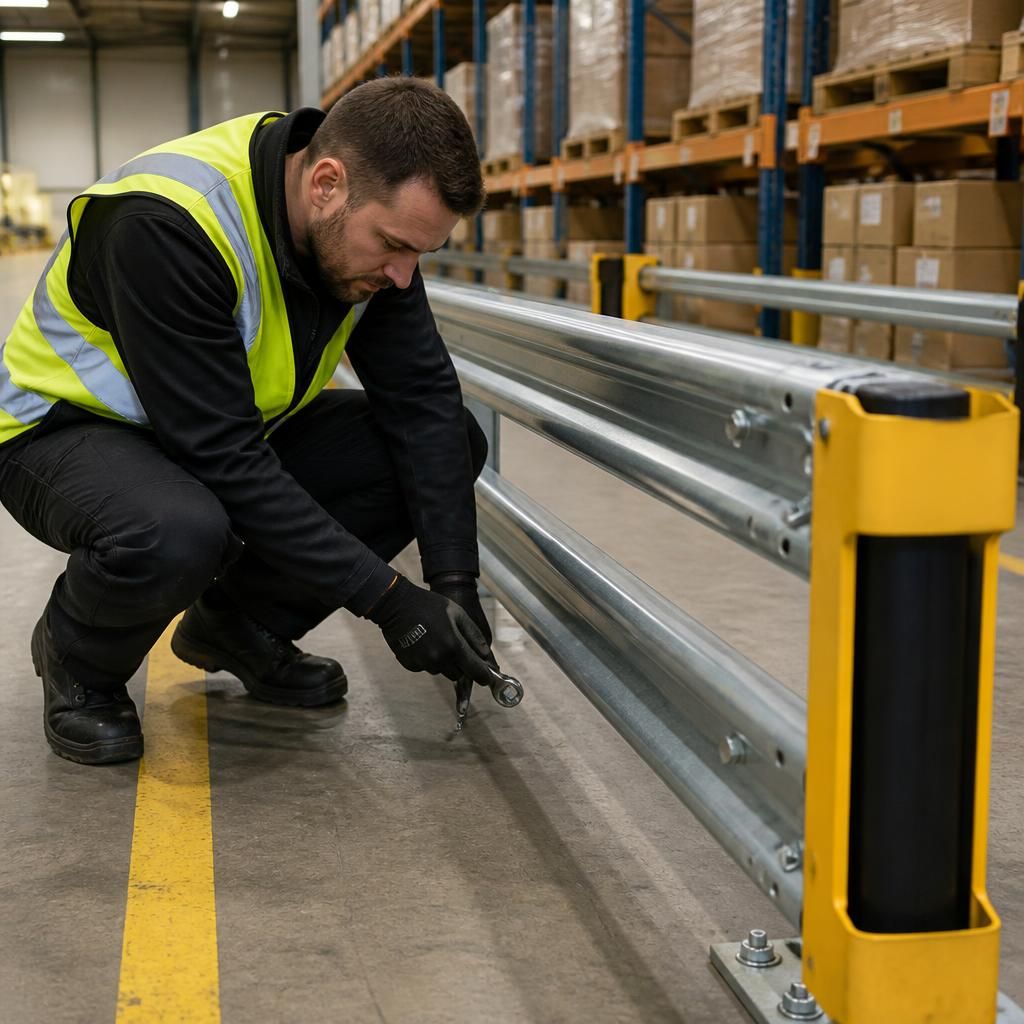
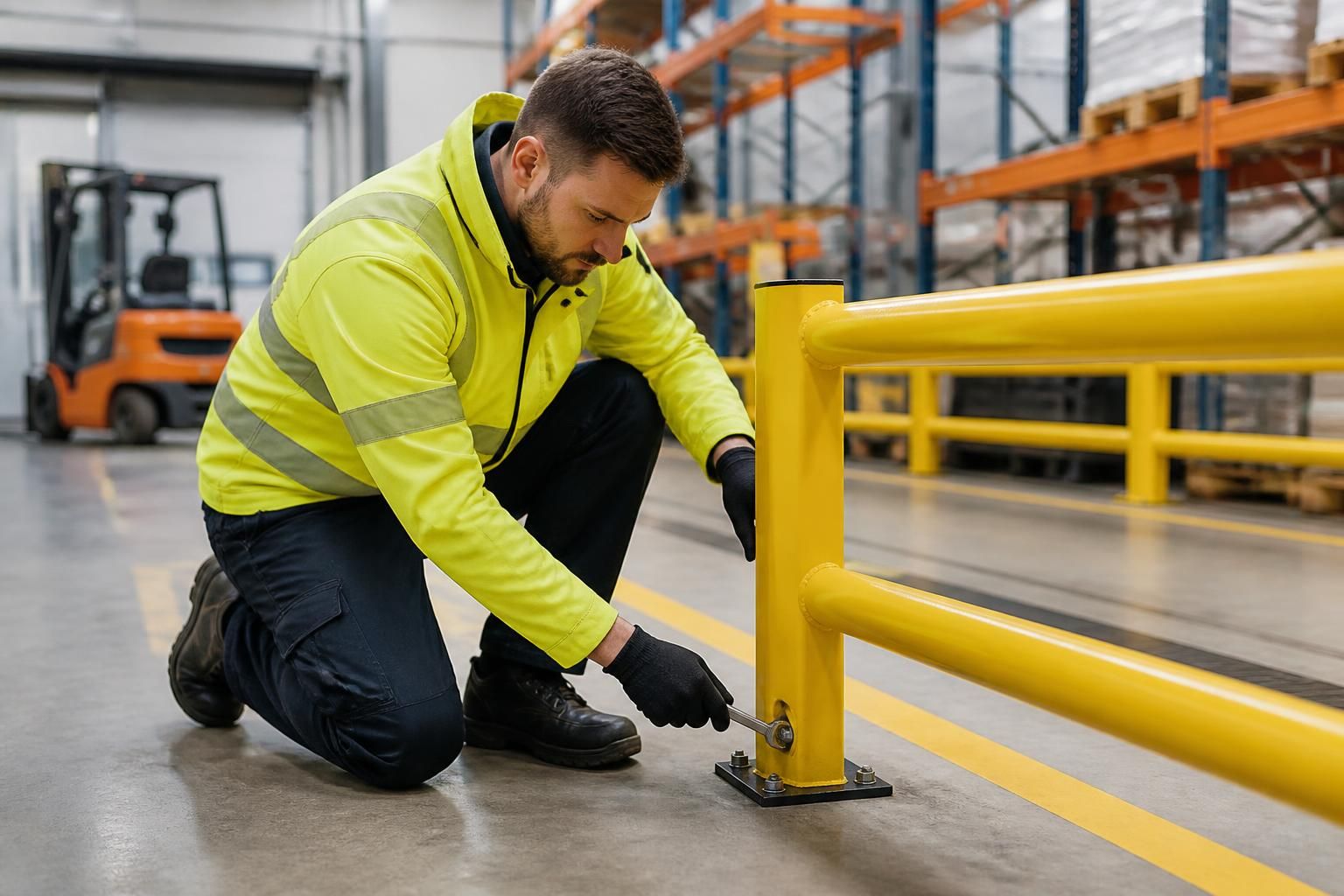
- Examine base plates, anchors and fixings for movement, looseness or damage.
- Inspect the floor around each fixing for cracking, breaking or other signs of movement.
- Check protective finishes for deterioration that could expose the material beneath.
- Confirm that barriers remain positioned correctly beside the assets or routes they protect.
- Check that the barrier does not obstruct forklift access, emergency routes or required working space.
- Review visibility, including markings and other features used to distinguish the barrier from its surroundings.
The inspection frequency should reflect vehicle movements, load-handling activity, previous collisions and the consequences of barrier failure. Busier routes and areas beside dock doors, columns or pedestrian crossings may need closer attention.
Record the inspection date, location, findings and action taken. Photographs can support the record where damage or movement needs monitoring. A simple status system can separate barriers that remain suitable from those needing attention.
Checks after an impact
A collision needs its own check, even when damage appears minor. Force can affect fixings, anchors, floor connections and nearby structures without leaving obvious distortion.
Keep the affected area controlled until someone has assessed the barrier. Do not treat repainting, straightening or tightening a fixing as proof that protection has been restored. The correct action may involve repair, replacement or a wider review of the protected area.
After repeated impacts, investigate the traffic route as well as the barrier. The route may need clearer separation, improved visibility or a different protection arrangement. Changes to racking, mezzanine floors, doors or production layouts can also alter the original risk.
When maintenance identifies a problem
Remove damaged protection from service where its condition could reduce containment or create an additional hazard. Mark the location clearly and prevent vehicles from relying on it until suitable action is complete.
Replacement is often more appropriate than repair when the frame, welds, anchors or floor connection have suffered significant damage. The decision should consider the barrier’s role, the impact involved and the loads it must resist.
Review the maintenance plan after repairs, replacements, route changes or changes in vehicle use. This keeps the inspection process linked to the way your site actually operates.
We can discuss safety barriers as part of a wider warehouse layout review. A site meeting and survey can inform written proposals and working drawings where changes are needed. For projects requiring several work stages, project management may continue through installation and final commissioning.
Planned maintenance does not remove the need for operator awareness and sensible traffic management. It gives you a documented way to find deterioration, respond to impacts and decide when protection needs further work.
Vehicle impact barriers should be assessed against the protection they provide, not simply their appearance. A barrier can look intact while its position, fixing arrangement or surrounding layout no longer suits the traffic route. Planned maintenance should therefore include a clear decision: retain the barrier, investigate its suitability, or specify a revised arrangement.