Is drive-in pallet racking suitable for your warehouse layout?
Drive-in pallet racking may suit your warehouse if you need to maximise storage capacity within existing premises and can plan access around your stock requirements. We assess the layout, stock and workflow through consultation and a site survey before preparing written proposals and working drawings.
Drive-in pallet racking suits a warehouse layout when high-density storage matters more than immediate access to every pallet. It works best with uniform pallets, repeat stock and planned forklift movement through storage lanes.
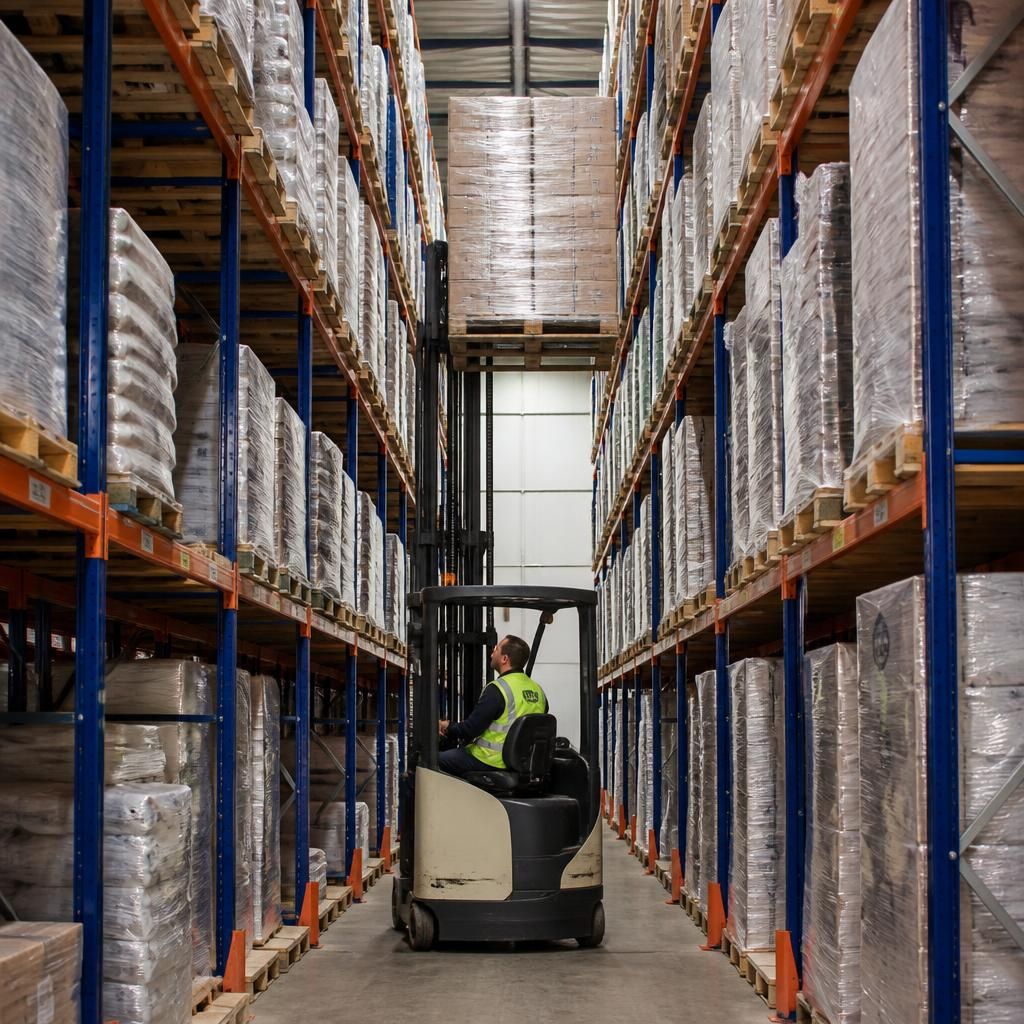
Drive-in racking supports pallets on rails inside each lane. A forklift enters the lane to place or retrieve pallets, rather than serving every position from a separate aisle. This arrangement reduces aisle space and can increase storage capacity within an existing warehouse.
Stock rotation is a key consideration. Drive-in racking normally follows a last-in, first-out sequence. The newest pallet enters the lane after earlier pallets, so it may be retrieved first. This suits stock where strict first-in, first-out rotation is not essential.
It can be suitable when you store several pallets of the same product. Fewer product changes mean less movement between lanes and simpler location planning. The layout becomes less suitable when you handle many individual stock keeping units with frequent picking.
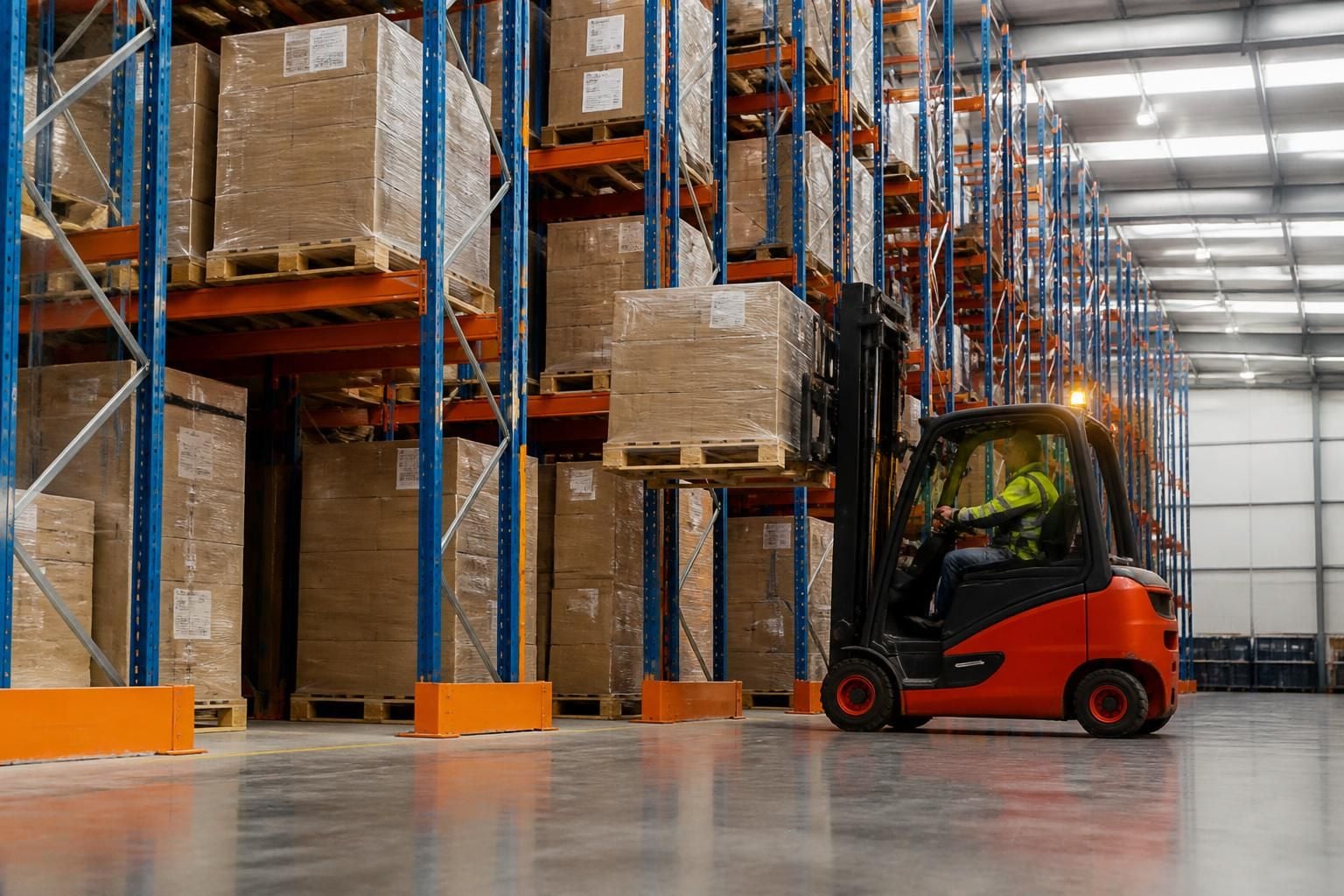
Access requirements can determine the outcome. Forklifts need suitable clearance to enter lanes, position pallets and leave safely. The layout must also allow sensible movement between receiving, storage and despatch areas. A high-density arrangement should not create unsafe access or obstruct essential workflow.
Consider drive-in pallet racking carefully if you need:
- regular access to individual pallets throughout the storage area;
- first-in, first-out stock rotation;
- many product lines stored in small quantities;
- rapid picking across several locations; or
- frequent changes to stock types, pallet sizes or handling methods.
Selective pallet racking may suit these requirements better because each pallet position has direct aisle access. A different arrangement may also be appropriate where stock changes often or picking speed takes priority over density.
Load and building conditions also matter. The design must account for pallet weights, pallet dimensions, storage height, floor conditions and available clearance. These details affect lane arrangement, working levels and forklift movement.
We use the information gathered about stock, handling and workflow to prepare written proposals and working drawings. This gives you a clearer basis for comparing drive-in pallet racking with other storage arrangements before installation decisions are made.
Spartan Direct Limited has worked on commercial and industrial space since its formation in 1982. That experience supports practical discussions about storage density, access and the way a proposed layout fits daily warehouse activity.
In summary, drive-in pallet racking is most suitable for dense, block-stored stock with predictable movement. It is less suitable where every pallet needs direct access, stock rotation is strict or product variety changes frequently.
High-density storage does not mean every part of the warehouse becomes storage space. Lane entrances, loading areas, pedestrian routes and building obstructions still need room.
A suitable layout balances pallet capacity with safe movement around the system. We assess the available floor area and clearances before preparing working drawings, so the proposed drive-in pallet racking fits the warehouse’s usable space and daily operation.