What maintenance does drive-in pallet racking require?
Drive-in pallet racking maintenance requires regular visual checks, formal racking inspections and prompt attention to damage, loose components or loading issues. We can inspect the system and advise on repairs or replacement materials, helping you maintain safe access and effective storage.
Drive-in pallet racking maintenance should protect the structure, guide components, pallets and forklift access points. A planned routine helps identify wear before it affects storage or safe operation.
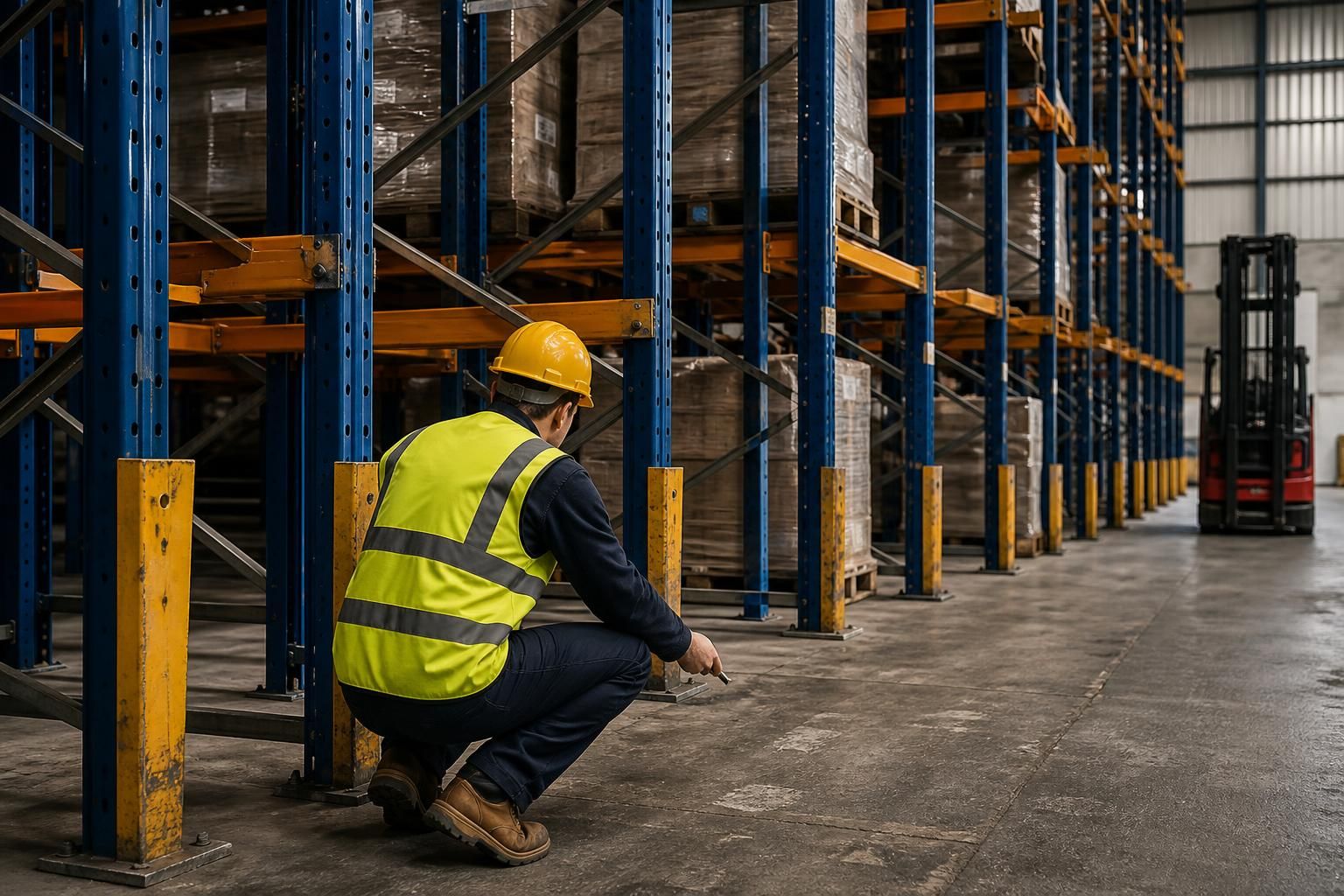
Check the rack structure and protection. Pay particular attention to uprights, horizontal rails, support arms, bracing, guide rails, entry guides and floor fixings. Look for bent steel, missing components, displaced parts, damaged anchors or signs that the rack has moved.
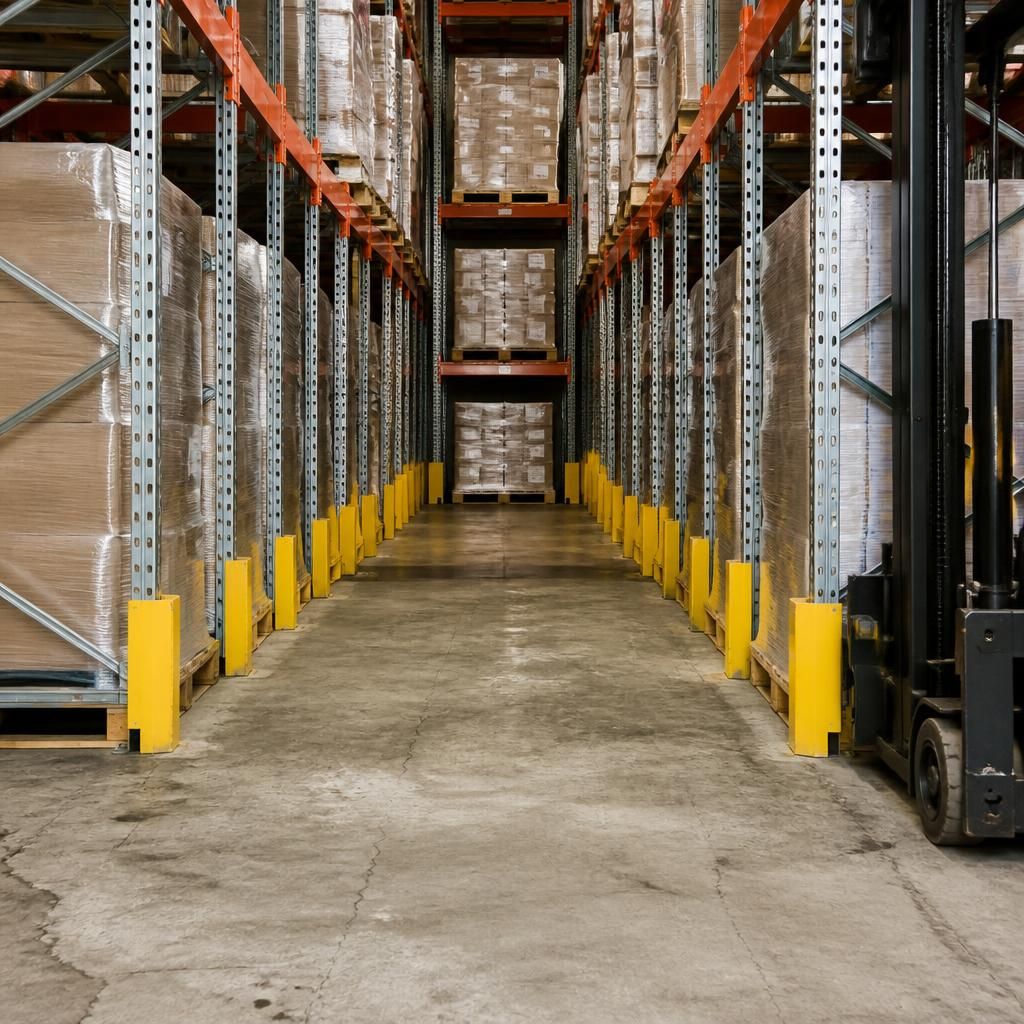
Entry points often receive the greatest impact from forklift activity. Check guide rails, upright protectors and floor-level components for damage. Keep rack lanes clear of debris, loose packaging and damaged pallets that could obstruct loading.
Review pallets and stored loads. Pallets should remain suitable for the load and the drive-in channels. Check that loads are stable, correctly positioned and not protruding into forklift routes. Remove damaged pallets from service rather than placing them back into the rack.
Loading practice forms part of maintenance. Forklift operators should enter channels with suitable clearance and avoid contact with rails, arms and frames. Loads should remain within the specified capacity and position for the system.
Record issues by location. A useful maintenance record should identify the affected bay or channel, describe the defect, note the immediate action and confirm when the issue was resolved. Photographs can support communication where several bays require attention.
If damage could affect stability or access, isolate the affected location until it has been assessed. Do not straighten, weld, drill or remove structural parts without suitable technical advice. Unplanned alterations can change how loads pass through the system.
Arrange periodic racking inspections. Inspection frequency should reflect forklift traffic, stock weights, operating conditions, previous damage and changes to the warehouse. A formal review can identify defects that routine housekeeping may miss.
Our racking inspections can assess the condition of the system and identify repairs or replacement materials. We can also discuss aftercare requirements when storage practices, vehicle movements or stock profiles change.
Review the system after changes. New pallets, heavier stock, different forklift equipment or altered channel use can affect the original arrangement. Ask for the storage requirements and working layout to be reviewed before making changes.
For a clear maintenance plan, we can discuss the site, inspect the installation and provide written advice. Where required, project management can continue through repair work and final commissioning.
Include the floor beneath and around drive-in pallet racking in maintenance checks. Cracks, settlement or damaged concrete can affect alignment, fixings and forklift access.
Note changes in floor condition alongside rack defects. We can assess the installation and advise whether repair or replacement materials are appropriate.