


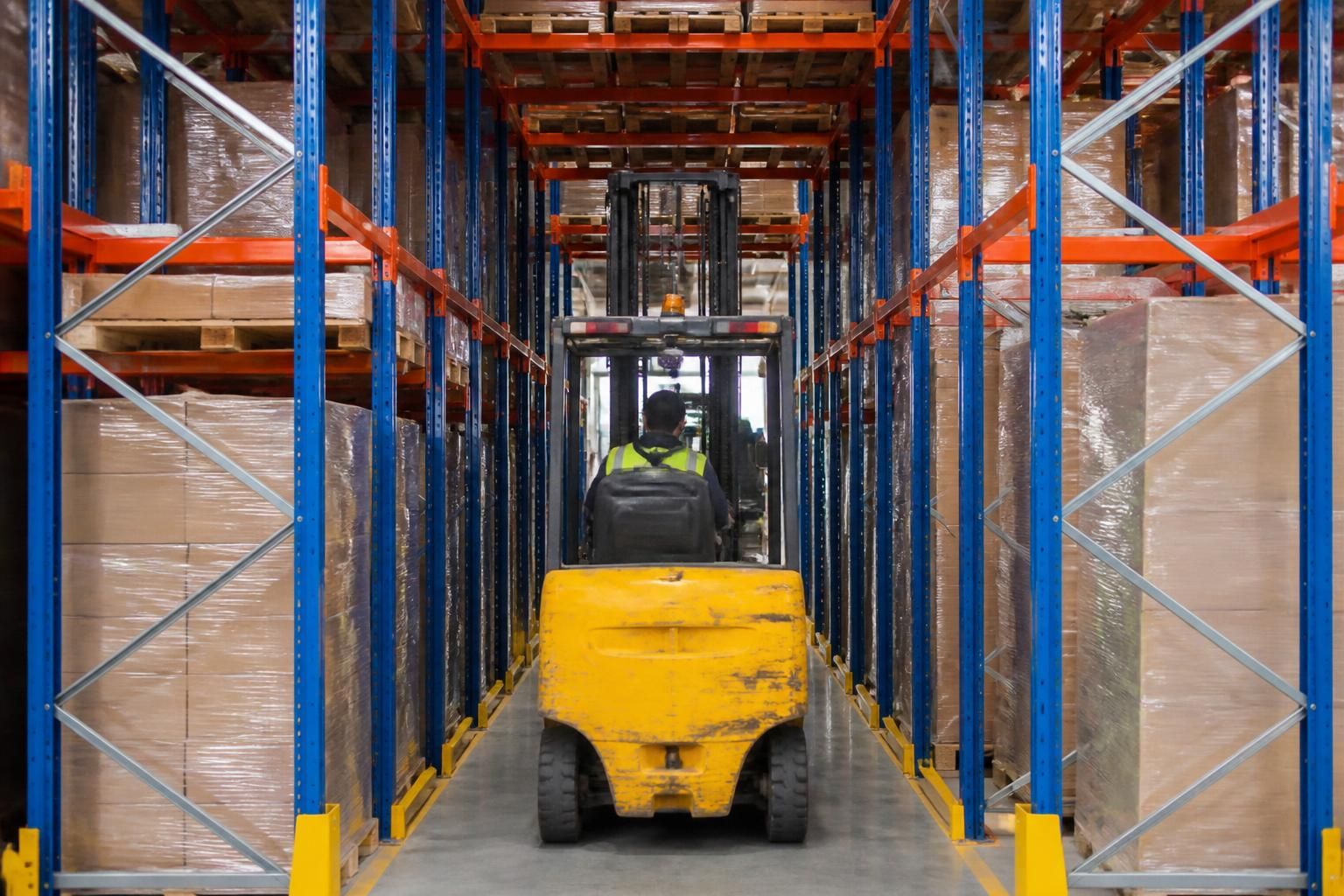
When is drive-through pallet racking a better choice?
Drive-through pallet racking is often the better choice when forklifts need access from both ends and stock must move through the system. It suits warehouses requiring first-in, first-out stock rotation, provided the layout, loads and forklift movements support access from both ends.
Drive-through pallet racking is the better choice when stock must move through storage in a planned sequence. It suits operations with receiving and despatch areas positioned on opposite sides of the racking.
This arrangement can support a clear flow from loading to unloading. It may also reduce the need to handle pallets through the same access point repeatedly.
Drive-through racking is worth considering when you have:
- Regular movement of similar pallets through defined storage channels.
- Stock requiring a planned loading and despatch order.
- Separate goods-in and despatch areas on opposite sides of the storage zone.
- High pallet volumes that do not require individual access at every position.
- A layout with enough space for safe forklift travel beyond both racking faces.
The system works best when warehouse activity follows a consistent pattern. It may be less suitable when operators need immediate access to many different pallets.
Selective pallet racking may suit mixed stock with frequent individual picking. Drive-in racking may suit storage using one operating face and longer-term pallet holding.
Available floor space also affects the decision. Drive-through racking needs suitable access at both ends, together with clear routes around the structure.
We consider doors, columns, pedestrian routes, loading areas and emergency access during the planning stage. These details determine whether the proposed layout supports safe movement.
Load information matters just as much as the warehouse footprint. We assess pallet dimensions, weights, heights and stability before preparing the racking arrangement.
Forklift characteristics must also match the system. Mast height, truck dimensions, turning requirements and travel clearance can affect channel use and aisle planning.
Operators need enough visibility and control when entering, positioning and removing pallets. Workplace procedures should define forklift routes and pedestrian separation around the racking.
A site survey helps establish whether drive-through pallet racking fits the building and operating method. We can discuss your stock movement, measure relevant areas and identify practical constraints.
Following the survey, we can provide written proposals and working drawings for consideration. Where required, project management can continue through installation and final commissioning.
Drive-through pallet racking is therefore a better choice when controlled stock movement matters more than unrestricted access to every pallet. The right decision depends on your layout, loads, equipment and workflow together.
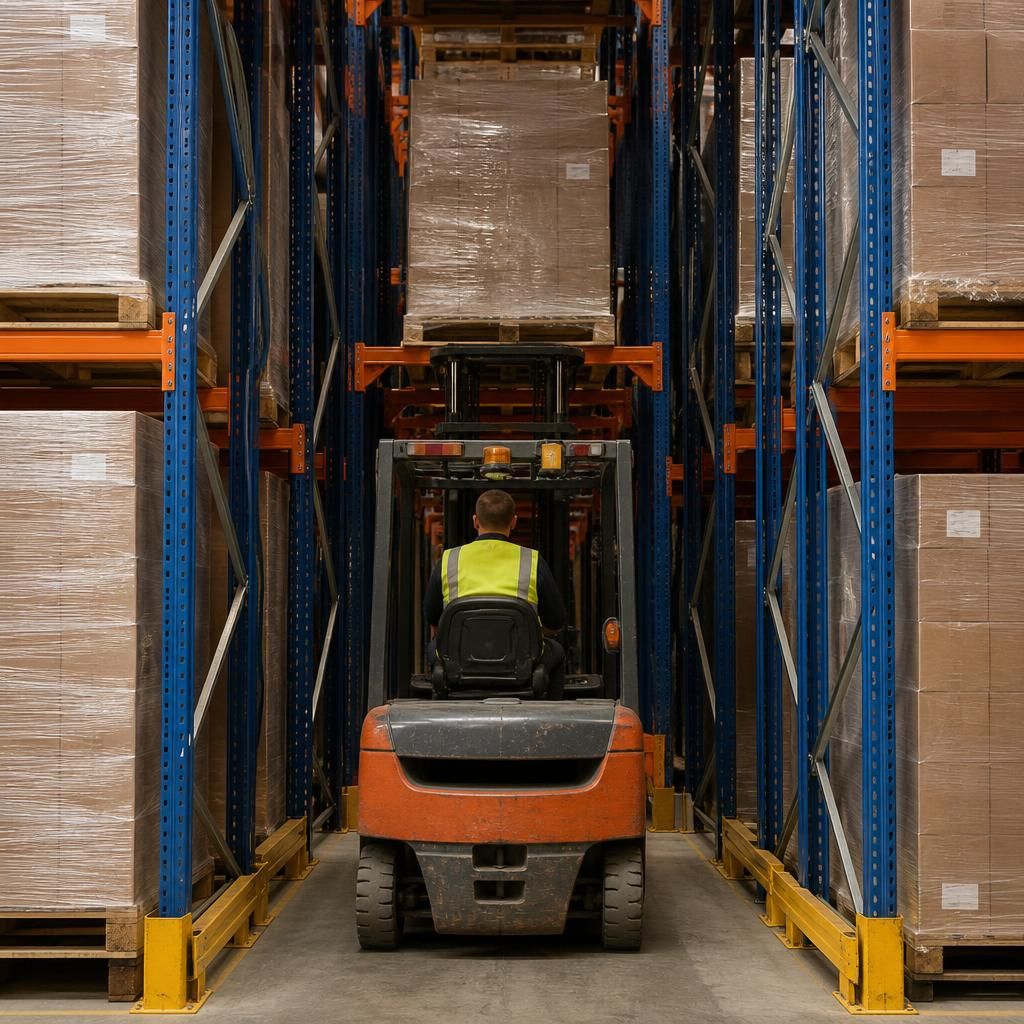
Drive-through pallet racking suits stock with a clearly defined journey through the warehouse. Allocate each channel according to product, movement sequence or despatch requirements.
This approach gives operators a consistent method for loading and removing pallets. It also makes the system easier to assess when stock profiles or handling routines change.



