


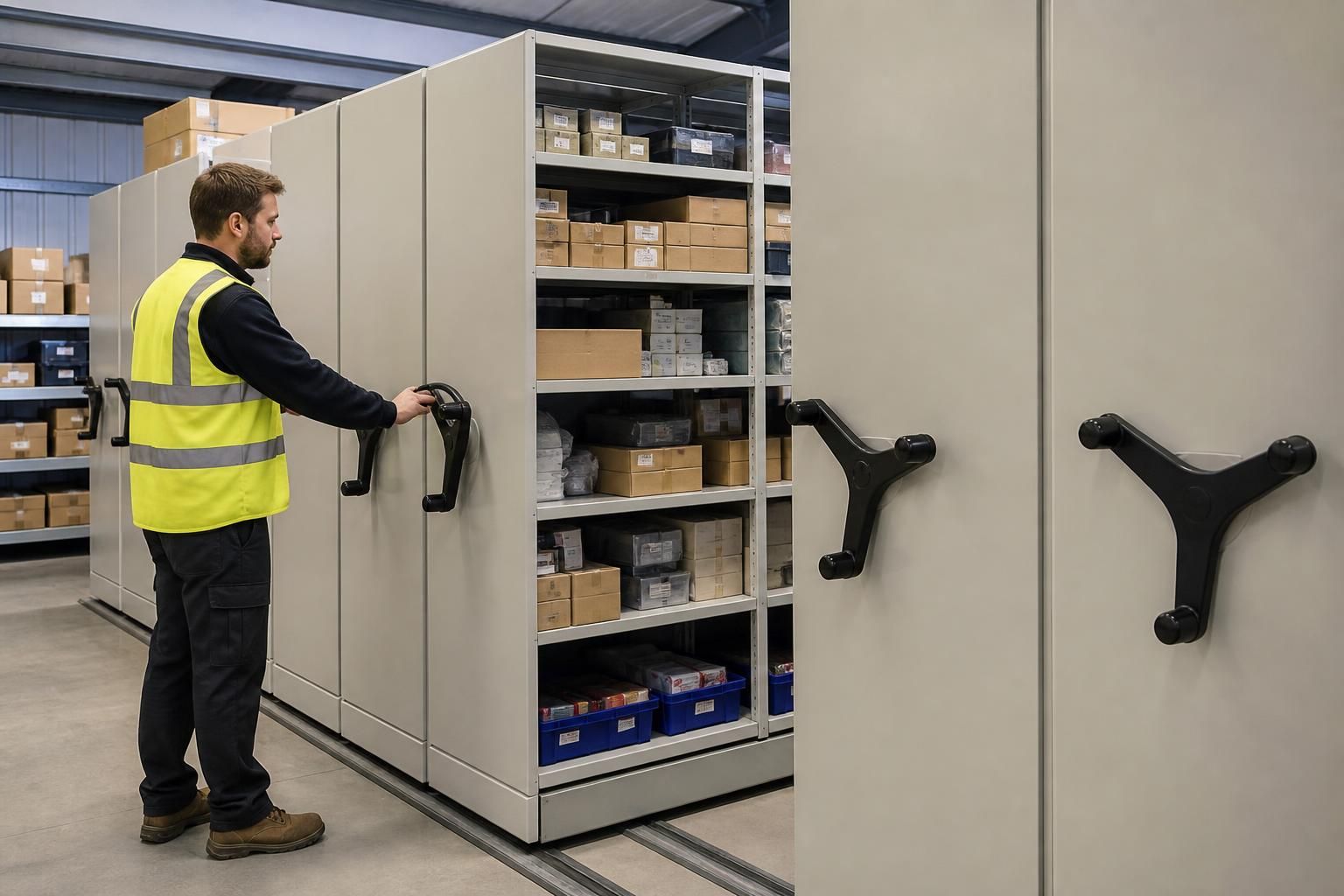
Is mobile shelving suitable for heavy or frequently accessed stock?
Mobile shelving can suit heavy or frequently accessed stock when the system, floor and operating method match the loads and access pattern. A site survey and working drawings can show whether mobile shelving is appropriate, or whether fixed pallet racking or shelving offers safer access.
Mobile shelving can suit heavy or frequently accessed stock, but only when the shelving, floor and handling method match the demand. Heavy stock does not automatically require pallet racking. However, weight, dimensions, frequency of access and handling equipment all affect the right choice.
For heavy stock, assess more than shelf capacity. Each shelf, bay and mobile carriage must support the intended load without overloading. The specification should record the weight, size and distribution of stored items. Dense loads can create different demands from bulky loads with the same total weight.
Stock should sit evenly on the shelves, with heavier items positioned at a suitable working height. This can reduce awkward handling and help keep the mobile units stable during use. The operating method must also match the stock. Hand access, trolleys and lifting equipment create different aisle and clearance requirements.
Frequently accessed stock needs a clear access plan. Mobile shelving normally concentrates access through an opened aisle rather than leaving every aisle open at once. That arrangement can use less floor space, but staff may need to move or close units before reaching another location.
This matters where several people pick stock at the same time. A busy warehouse may need an operating sequence that prevents conflicting movement. An office archive may have a different pattern, with fewer users and longer gaps between retrievals. The suitable arrangement depends on the actual workflow, not access frequency alone.
Mobile shelving is more likely to suit stock that is organised, identifiable and accessed in planned locations. It may be less suitable where teams need simultaneous access to multiple aisles. It may also be unsuitable where loads must move continually through the area using handling equipment.
Fixed shelving can offer simpler access for regularly handled smaller items. Pallet racking can provide a more suitable arrangement for palletised goods, heavy unit loads or operations using mechanical handling equipment. The choice should reflect how stock enters, leaves and moves through the space.
Consider these points before selecting mobile shelving:
- Load: confirm the weight and dimensions of each stored item, including the proposed storage medium.
- Access: establish how often items are retrieved and whether several users need access together.
- Handling: identify whether staff, trolleys or lifting equipment will load and remove stock.
- Clearances: allow sufficient working space for loading, retrieval and safe movement around the system.
- Layout: check that the proposed positions work with doors, columns, work areas and other warehouse equipment.
- Floor: confirm that the floor can accommodate the system and the concentrated loads created by moving carriages.
- Stock changes: consider whether future items will have different weights, dimensions or access patterns.
Access requirements can change the number of mobile units, aisle positions and control arrangements. A system that suits occasional archive retrieval may not suit continuous picking. Similarly, a system selected for boxed products may need review before storing denser or heavier items.
We can discuss the stock profile and operating method during a no-obligation consultation. A site meeting and survey can examine the available layout and practical constraints. We then prepare a written proposal and working drawings for the agreed requirements.
For a project involving several storage or workplace elements, project management may cover proposal and tender stages through installation and final commissioning. This helps keep the storage arrangement connected with the wider workplace layout where required.
The useful question is not simply whether mobile shelving carries heavy stock. It is whether the system provides suitable support and access without obstructing the way people work. Where the load or workflow points towards another arrangement, fixed shelving or pallet racking may provide a clearer fit.
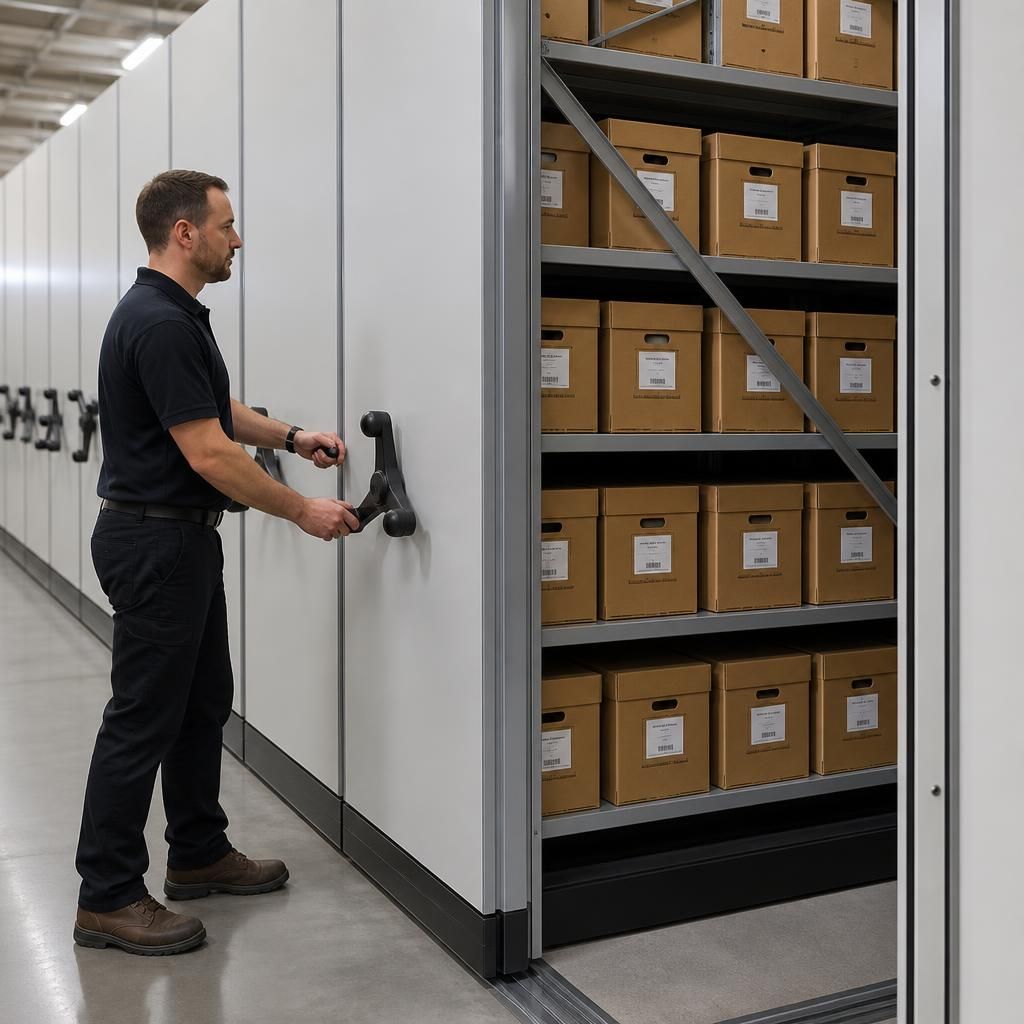
For frequently accessed stock, the operating routine matters as much as the storage capacity. Record who may move each carriage, how access is requested, and how staff confirm the aisle is clear before movement.
This gives you a practical basis for deciding if mobile shelving suits the work. If retrieval depends on constant, unrestricted movement through several aisles, an open-access layout may be more appropriate.



