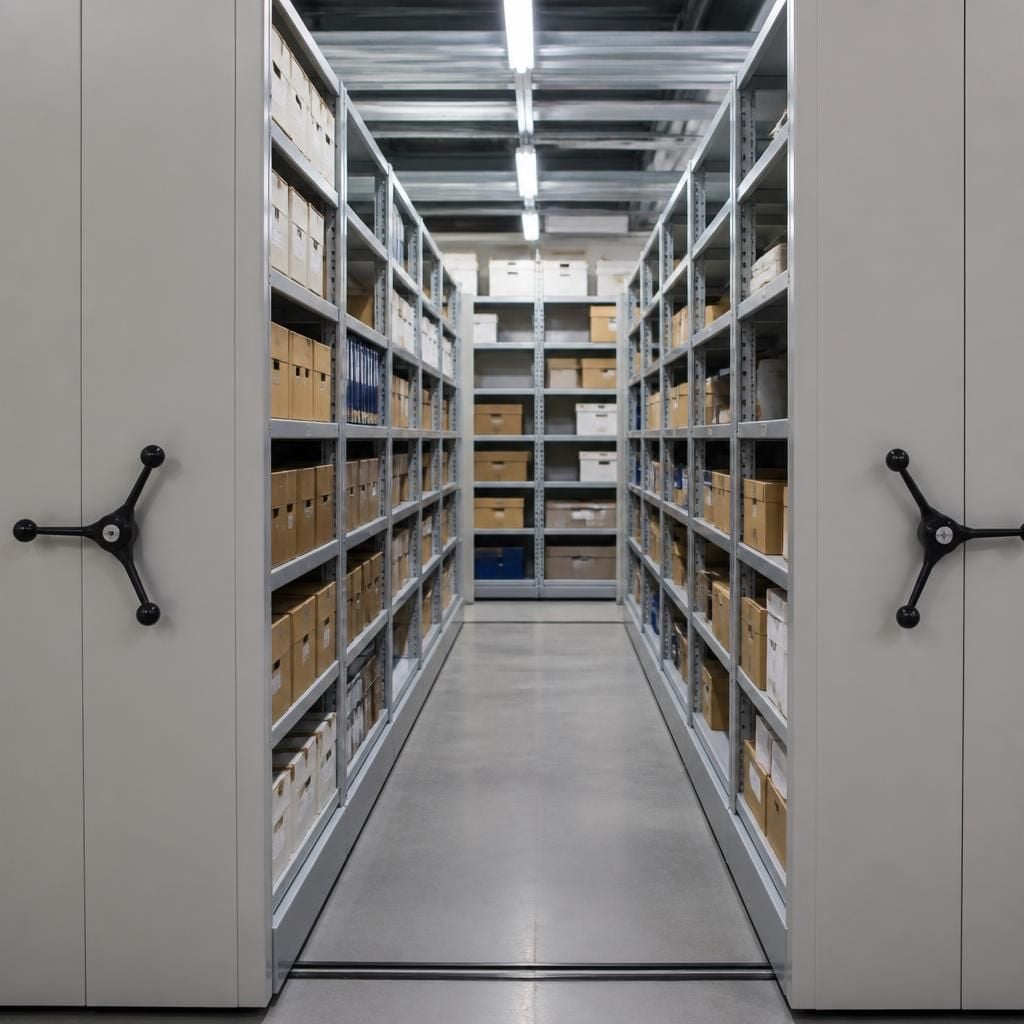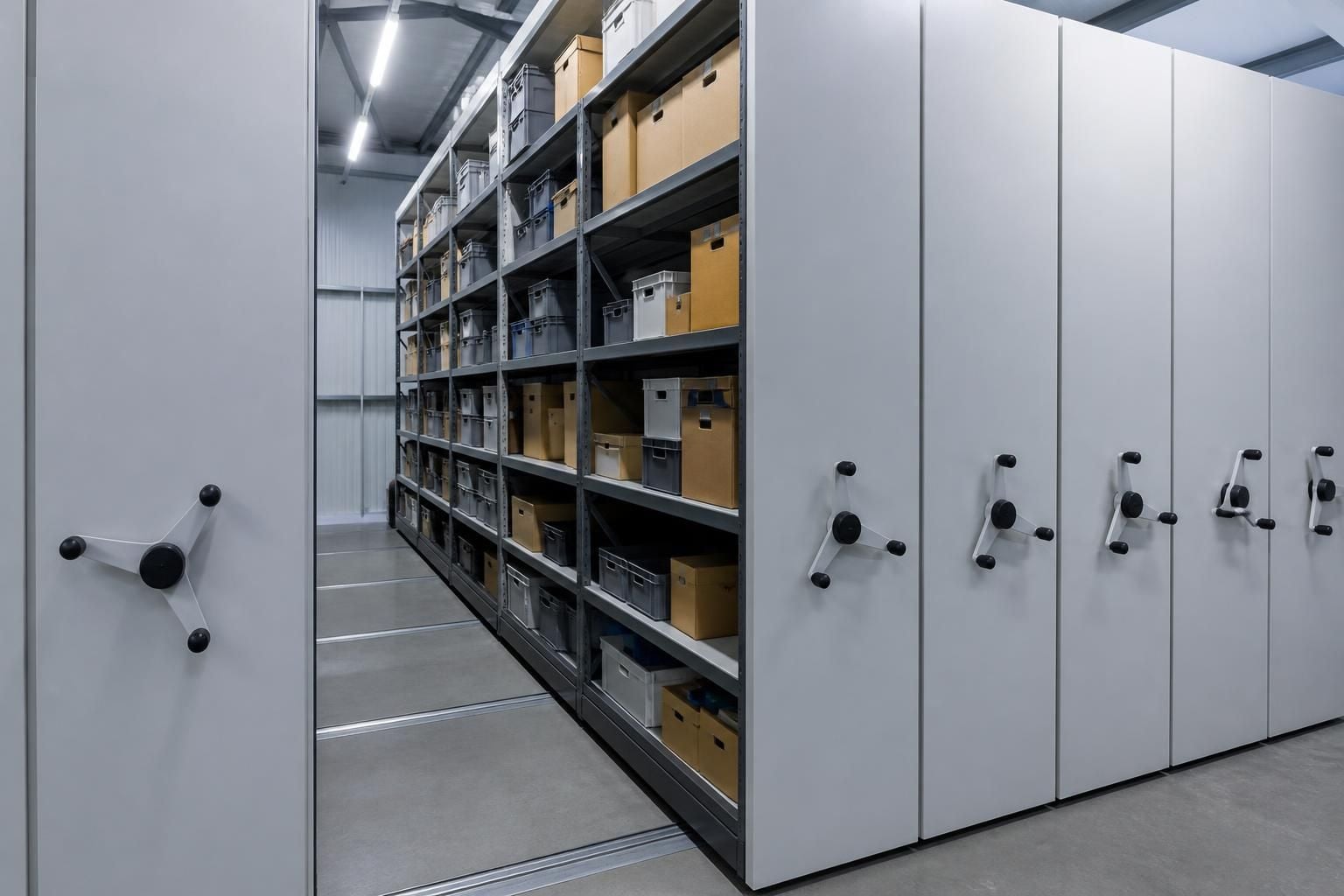
Can mobile shelving adapt when warehouse storage requirements change?
Yes—mobile shelving can adapt as stock, access and workflow requirements change. A site survey, written proposal and working drawings can establish a suitable arrangement for the space.
Mobile shelving can accommodate changing requirements, provided the system remains suitable for the stock, floor and working methods. Its adaptability comes from changing how bays, shelves and access aisles are used as warehouse priorities develop.
Stock profiles can change. Different products may need different shelf heights, bay arrangements or handling clearances. A configuration designed for uniform cartons may need review when stock becomes larger, heavier or more varied.
- Adjustable shelf positions can help accommodate changing item heights.
- Different shelf arrangements can separate product categories and improve identification.
- Unused vertical space may become useful when stock volumes increase.
- Access aisles can be considered around picking frequency and handling methods.
These changes are not automatic. The shelves, carriages and operating arrangements must suit the loads placed on them. Any proposed alteration should consider unit weights, load distribution, shelf dimensions and the way people handle stock.
Changing access requirements also affect the layout. Frequently picked goods may need convenient positions near the working area. Less frequently accessed stock may suit denser storage, provided planned access remains practical and safe.
Mobile shelving usually concentrates access into selected aisles rather than keeping every aisle open. If picking patterns change, the operating arrangement may need review. That review should consider pedestrian movement, equipment use, emergency access and the space needed to handle stock without unsafe congestion.
Growth within the same building may be possible, but available capacity has limits. Additional bays, altered shelf levels or a different aisle arrangement may support changing needs. The existing floor area, floor condition, structural loading, clearances and fire safety arrangements still determine what can be introduced.
A denser arrangement should not compromise routes, visibility or access to building safety equipment. Changes near doors, escape routes, sprinklers or other fire provisions require coordination with the relevant arrangements for the building.
Adaptation can also involve a change of use. A shelving area may move from archive storage to parts storage, stock holding or order preparation. Each use brings different expectations for access frequency, labelling, shelf configuration and manual handling.
Review the system when stock dimensions, weights, volumes or handling equipment change. Also review it when the warehouse layout changes, picking activity increases or more people use the same storage area.
We can assess these factors through consultation and develop a documented arrangement for the available space. Written proposals and working drawings can show the intended bay layout, access points and clearances before installation work begins.
Where a project requires coordination across installation and final commissioning, project management may also be offered. This helps keep the agreed storage arrangement connected with the wider work taking place on site.
Mobile shelving is adaptable, rather than unlimited. A suitable review should establish what can change, what must remain fixed and when a larger alteration becomes necessary. That approach supports informed decisions before stock, access or workflow changes create pressure on the warehouse.
Successful adaptation depends on keeping a clear record of the approved shelving arrangement. Record bay references, shelf levels, load information and access rules with the warehouse documentation.
When requirements change, this information gives operators and installers a shared starting point. It also identifies alterations needing fresh assessment, rather than treating every adjustment as interchangeable.