What disruption should you expect during mobile shelving installation?
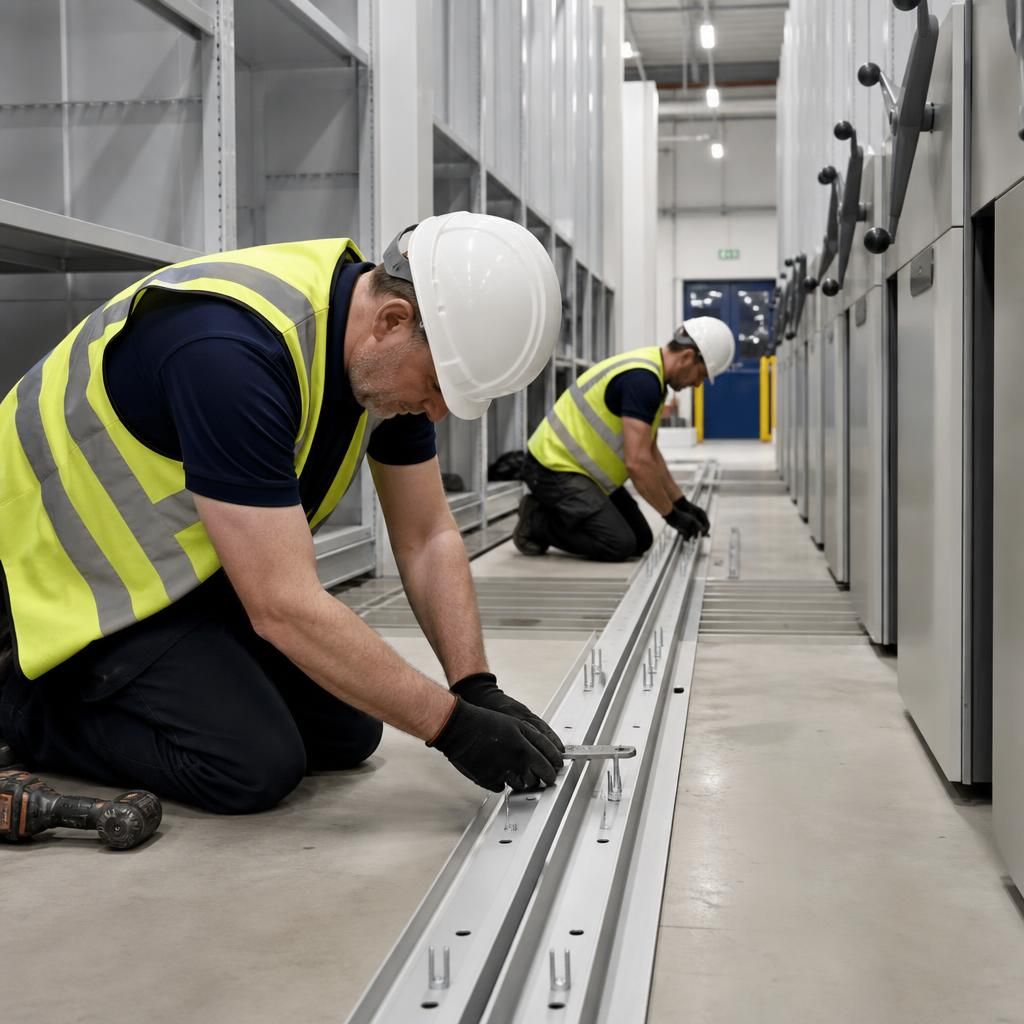
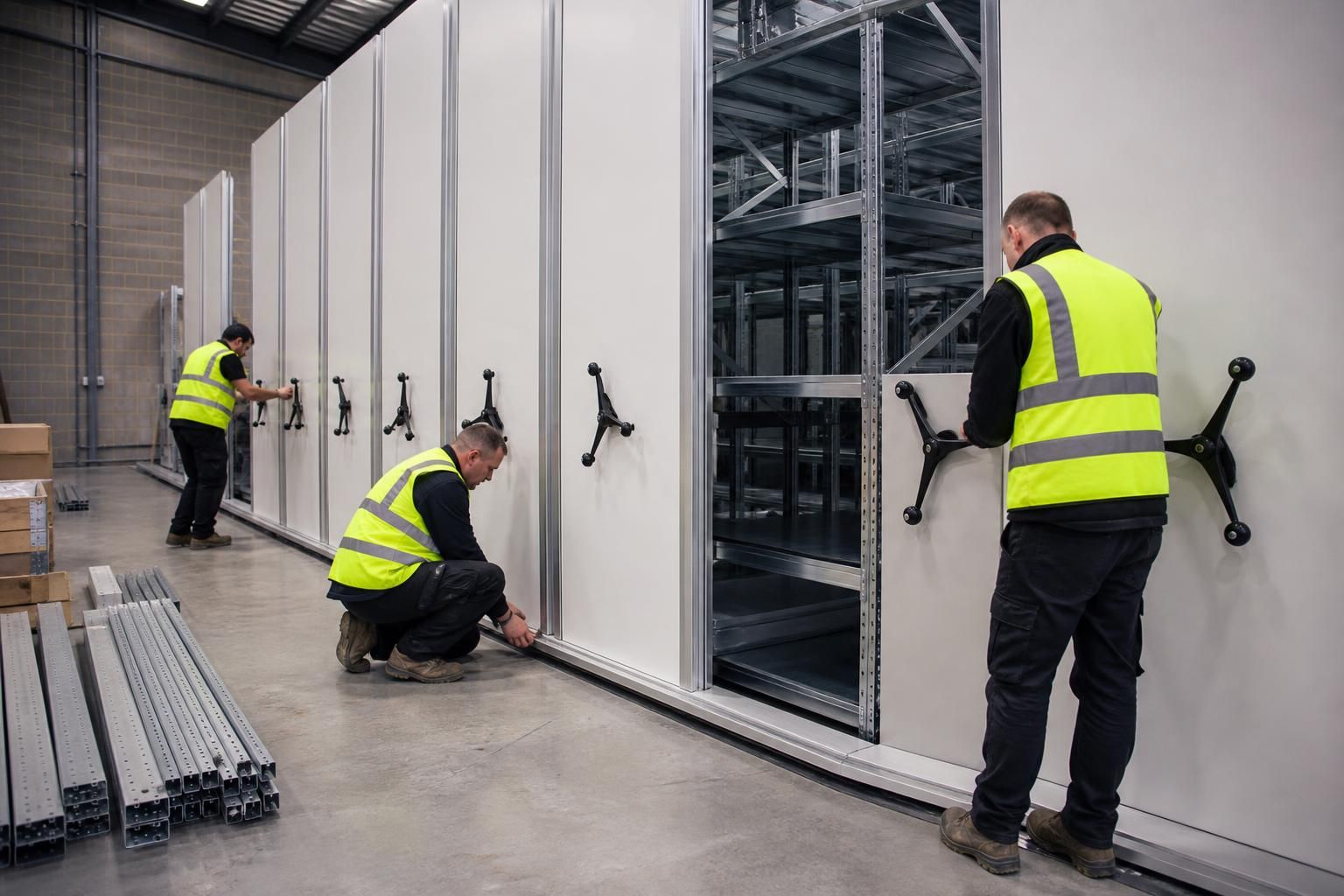
Expect temporary disruption around the installation area, including restricted access while mobile shelving is assembled, aligned and commissioned.
A site survey, written proposal and working drawings can identify affected routes and help plan the work around your stock and workflow.
Mobile shelving installation usually causes localised disruption rather than closing an entire workplace. The main effects are temporary loss of use around the work area, altered movement routes, deliveries and installation activity.
The extent depends on the number of shelving runs, available working space, floor condition, stock position and how closely the area connects with daily operations. A site survey and working drawings help identify these constraints before work begins.
What disruption can occur?
- Temporary loss of storage access: Stock within or beside the installation area may need moving before work starts. You may also need to restrict access to nearby aisles during parts of the project.
- Changes to pedestrian and vehicle routes: Installers need safe working space for materials, equipment and assembly. This can affect warehouse walkways, forklift movements, loading areas or office circulation.
- Delivery and handling activity: Components must reach the installation area and may require controlled movement through the building. This needs coordination with receiving, dispatch and production activities.
- Noise and general site activity: Assembly, positioning and adjustment can create noise and movement that affects nearby staff. Offices beside the work area may need a temporary change to their normal working arrangements.
- Temporary stock changes: Removing stock from the affected area can create short-term pressure elsewhere. Plan clearly labelled holding areas so items remain identifiable and accessible where necessary.
- Reduced flexibility during final checks: Keep the area available while the system is checked and prepared for use. Returning stock too early can obstruct the remaining work.
How long does installation take?
There is no fixed timescale that applies to every mobile shelving project. The programme depends on the installation scope, site readiness, access arrangements, stock movements and coordination with other work.
We use agreed dates as planning targets, but our terms state that dates are estimates only. We use all reasonable endeavours to meet them, and time is not of the essence. A written proposal can set out the intended sequence once the project requirements are understood.
How can you reduce operational impact?
- Confirm which stock, furniture or equipment must move before installation.
- Allocate suitable temporary locations and record relocated stock.
- Identify routes that must remain available for people, vehicles and emergency access.
- Tell affected staff when access arrangements will change.
- Separate installation activity from picking, packing, production or office circulation where practical.
- Keep the installation area clear of unrelated materials and avoid using it as overflow storage.
- Agree how completed sections will be checked before stock returns.
Phasing may be considered where the layout and workflow allow it. This can limit the area affected at one time, although it may alter the overall sequence and require additional coordination. The suitable approach depends on the building, stock and operating requirements.
Our consultation can include site meetings and surveys, followed by written proposals and working drawings. These documents help define the work area, access requirements and installation sequence. Where required, project management can continue from proposal and tender stage through installation and final commissioning.
Spartan Direct Limited has designed and installed storage systems for companies of different sizes across the UK. For a mobile shelving project, that experience supports practical planning around the space and workflow already in use, without assuming that every site can absorb the same level of disruption.
Operational priorities can change after the layout is agreed. Tell us before installation if stock locations, access routes or working areas differ from the proposal.
We can then check the written proposal and working drawings against current conditions before setting the installation sequence. This may help prevent repeat stock movements or changes to the affected area.