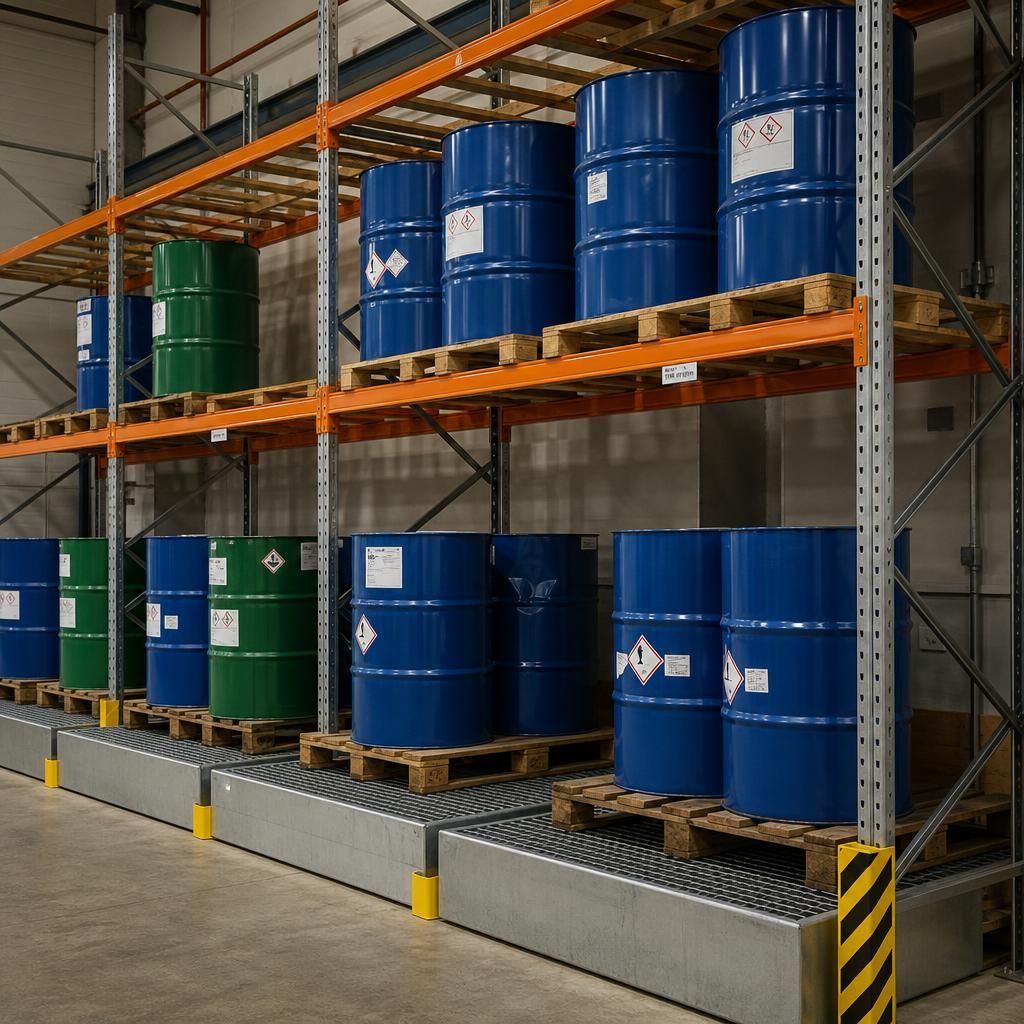
How should chemical drum storage accommodate changing stock levels?
Chemical drum storage should allow safe reconfiguration as stock levels change, while preserving suitable capacity, containment and access. We can review your stock profile and site through consultation and survey, then provide proposals and working drawings for the required arrangement.
Changing stock levels are best handled by planning chemical drum storage around routine demand, peak demand and safe access between both.
Start by separating the stock information that affects capacity. This should include:
- Drum dimensions, weights and pallet footprints.
- The substances stored and any compatibility restrictions.
- Typical quantities, maximum quantities and expected stock changes.
- Delivery patterns, collection arrangements and stock rotation requirements.
- Handling equipment, access routes and the people using the storage area.
This information shows whether capacity needs to increase through additional positions, adjustable levels or a different layout. It also prevents unused space from being confused with available capacity.
Design capacity in stages rather than filling every position immediately. A working level can cover normal stock, while reserved positions accommodate increases without placing drums in aisles or unsuitable areas.
Reserved positions still need suitable containment, load capacity and access. They should not become informal overflow space without checking the storage arrangement and its operating controls.
Allow for different drum formats. Stock may change from one drum size or pallet footprint to another. A layout based on one container dimension can lose useful capacity when the stock profile changes.
Adjustable pallet racking may support changing pallet positions, but its suitability depends on the drum loads, pallets, containment arrangement and handling method. Load ratings alone do not establish that the arrangement is suitable for chemical storage.
Where smaller containers or accessories share the area, shelving may support separation from palletised drums. The specification should define which items belong on shelving and which require pallet positions.
Keep containment effective as the layout changes. Bunds, trays or other containment features must remain correctly positioned beneath the stored drums. Moving storage levels or adding stock should not create gaps, blocked drainage points or inaccessible inspection areas.
Stock growth can also affect separation. Different substances may require separate areas, containers or handling controls. Review safety data and site procedures before combining changing stock groups within one storage arrangement.
Protect working space around the storage. Extra capacity has limited value if increased stock obstructs drum handling, inspection or emergency access. Mark the intended storage footprint and keep routes clear as quantities rise.
Place frequently handled drums where the approved handling method allows straightforward access. Less frequently moved stock may occupy positions that do not interfere with routine picking, provided the arrangement remains suitable.
Stock rotation should form part of the layout decision. Identify how incoming drums, part-used drums and empty drums will move through the area. Empty containers can retain residues, so they should not be treated as ordinary general storage without checking site controls.
Plan for change without creating unnecessary disruption. A modular arrangement can make future alterations easier to assess, particularly where stock quantities vary throughout the year. Changes should still follow a documented review before positions, levels or containment components move.
For pallet racking, shelving or other storage systems, the proposal should record intended loads, dimensions, access requirements and the permitted arrangement. This gives operators a clear reference when stock levels change.
Site conditions may limit the capacity available for expansion. Columns, doors, fire routes, floor conditions, lighting and handling equipment can all affect the usable layout. A site survey helps identify these constraints before the proposed arrangement is finalised.
We can develop written proposals and working drawings from the agreed requirements. Where a project involves several workplace or storage elements, project management may continue through installation and final commissioning where required.
For a practical specification, define normal and maximum stock levels separately. Record the drum types, containment, segregation, handling method, access routes and reserved capacity. This creates a clearer basis for managing future changes safely.
Chemical drum storage should support controlled consolidation when stock falls, not only expansion when quantities rise. Empty positions may appear available, but they still need checking before accepting different drums or combining stock groups.
Review the revised arrangement against drum weights, containment, compatibility, handling routes and inspection access. Update the working drawings or storage instructions where the change affects the approved layout. This gives operators a clear basis for using released capacity without treating empty space as unrestricted storage.