


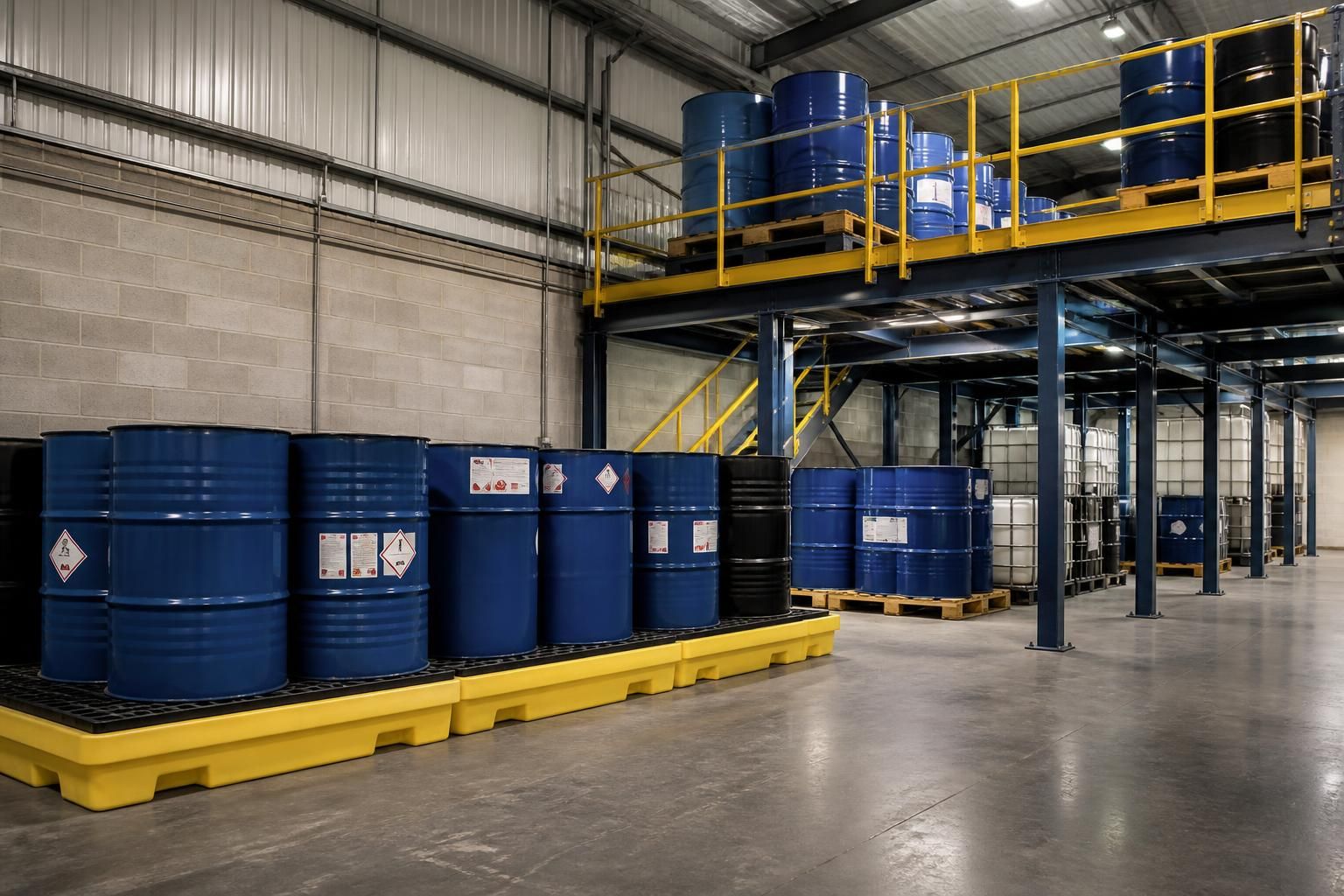
Should chemical drum storage be floor-level or raised?
Floor-level chemical drum storage suits direct access, while raised storage can support controlled handling and use of vertical space when loads and containment allow. The right choice depends on your stock, handling methods, workflow and site requirements.
Floor-level chemical drum storage is usually the starting point when containment, stability and direct handling matter most. Raised storage can suit a site needing vertical capacity, but only when the structure, access equipment, drum loads and containment arrangements support it.
Choose floor-level storage when:
- Drums are heavy, frequently moved or handled directly from the storage position.
- Operators need clear access for inspection, identification and connection to handling equipment.
- Spill containment needs to remain simple, visible and accessible for inspection.
- Drums vary in size, shape or condition, making consistent raised positioning difficult.
- The available building height does not justify adding a raised platform or upper storage level.
Floor-level storage can also make segregation easier. Separate locations may be required for different substances, drum conditions or handling stages. The layout should leave enough working space around each area without obstructing warehouse routes, emergency access or other operations.
Raised storage may suit you when:
- Floor space is limited but suitable vertical space remains available.
- Drums can be placed and removed using controlled mechanical handling equipment.
- The supporting structure can carry the combined weight of the drums, containment and handling activity.
- Operators can reach the storage positions without unsafe climbing, lifting or stretching.
- Raised containment can capture leaks and allow inspection, cleaning and maintenance.
Raised storage is not simply floor-level storage moved upwards. The elevation changes how people place, retrieve and inspect drums. It also introduces questions about loading, impact protection, access routes and what happens if a container leaks above floor level.
Assess the drum load, not only the drum size. A full drum weighs considerably more than an empty one. The assessment should consider the maximum stored quantity, the number of drums on each level, the containment system and any equipment used during loading.
Drum dimensions also affect the layout. Allow space for forklift access, drum trucks or other handling equipment where applicable. The design should prevent handling movements from striking adjacent drums, barriers, racking or structural members.
Containment can influence the level you choose. Floor-level bunding may provide a straightforward arrangement for collecting leaks. Raised storage needs containment that remains suitable at height, including access for checking accumulated liquid and dealing with any incident safely.
Containment materials must suit the chemicals stored. A solution suitable for one substance may not suit another. Review the chemical information, container type, storage quantities and proposed materials before selecting the arrangement.
Handling frequency matters. High-turnover stock may need positions that support frequent access and clear stock rotation. Less frequently accessed drums may use higher positions, provided operators can retrieve them without unsafe manual handling.
Do not assume that every drum belongs on pallet racking or a mezzanine floor. Those systems need assessment against the drum loads, containment requirements and handling method. A raised arrangement that works for packaged goods may not suit liquid chemicals.
Floor-level storage may occupy more floor area, while raised storage may use more building height and require additional access arrangements. Compare both options against the full workflow rather than storage capacity alone.
Check these points before selecting the level:
- What chemicals and drum types will be stored?
- What are the full and part-full drum weights?
- How many drums need storage at each stage?
- How often will operators inspect, move or dispense them?
- Which handling equipment will enter the storage area?
- What containment, segregation and protection measures apply?
- Can operators access every position without climbing or excessive reaching?
- Can the building support the proposed raised arrangement?
- How will leaks, damaged drums and contaminated materials be managed?
A site survey can review these conditions alongside available floor area, clear height, access routes, columns, doors and existing equipment. We can then prepare written proposals and working drawings showing the proposed storage arrangement.
Where the project requires several stages, project management may cover proposal and tender work through installation and final commissioning. This gives you a defined basis for checking the selected level against the site, stock and handling requirements before work begins.
The final choice should support safe drum handling, suitable containment and practical inspection. Floor-level storage is often the clearer option for direct access and heavy loads. Raised storage becomes appropriate only when its structural and operational controls have been properly established.
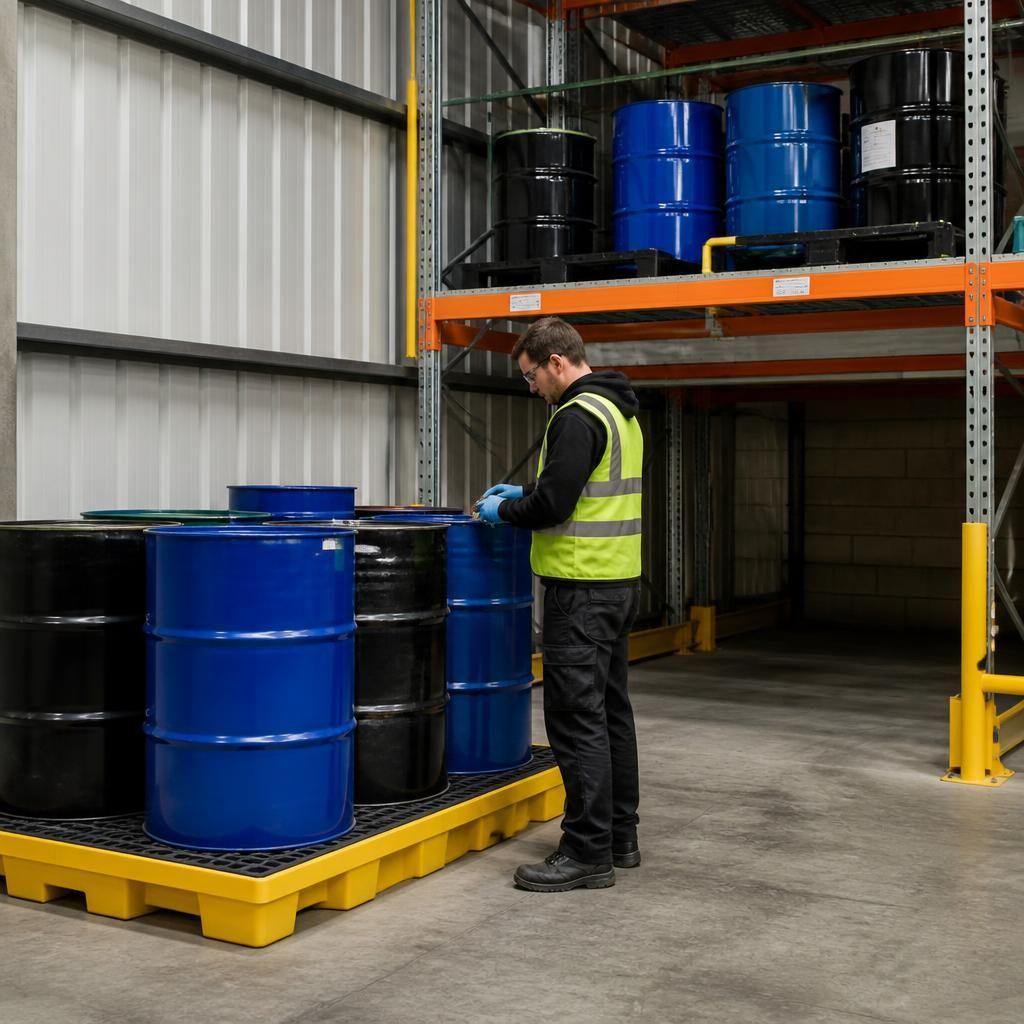
A mixed arrangement can distinguish active stock from reserve stock. Keep drums handled frequently at floor level, while less frequently accessed stock may use raised positions when the structure and containment support them.
Plan the storage sequence around receiving, inspection, picking and dispensing. This shows where operators need the clearest access and where raised storage could create extra handling steps.



