What containment features should chemical drum storage include?
Chemical drum storage should include secondary containment, stable support, clear access, and protection against leaks, impacts, and incompatible substances. A site survey should check drum types, quantities, chemical compatibility, handling routes, and applicable fire and environmental requirements.
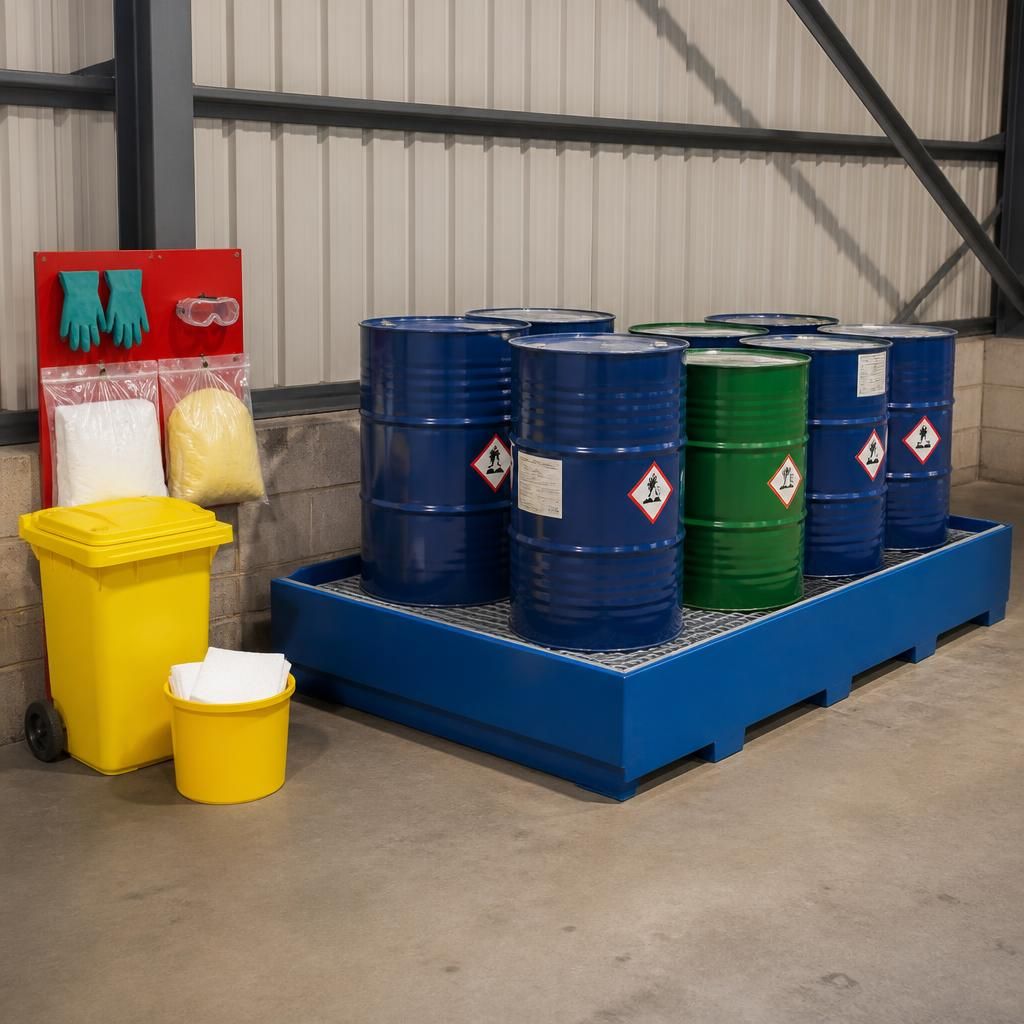
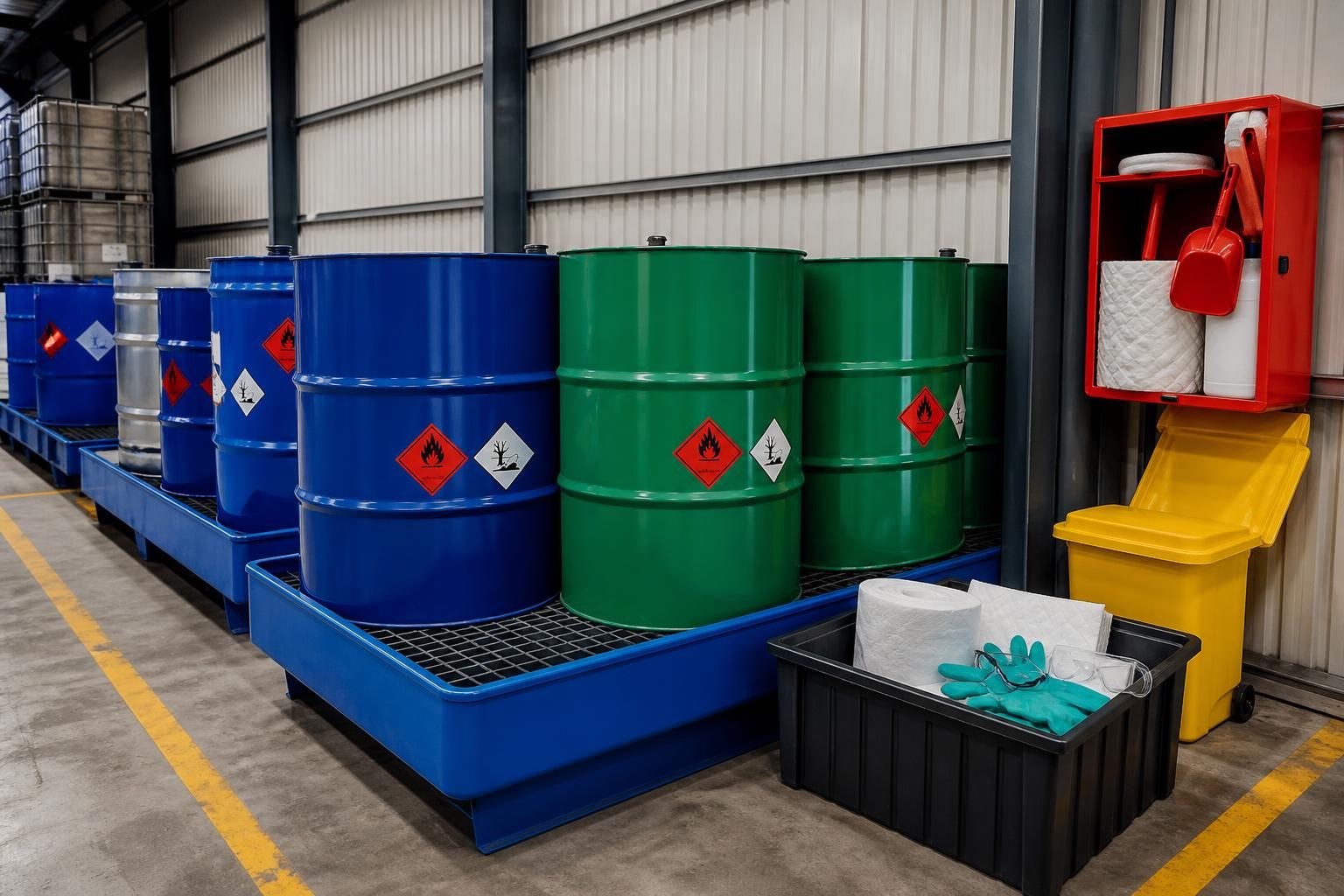
Chemical drum storage should use an impermeable, chemically compatible bund with controlled drainage, segregation and inspection access. The arrangement must contain a release without creating a new route into floors, drains or neighbouring storage.
Use chemically compatible surfaces
The bund floor and walls should resist the stored substances, including their likely concentration and temperature. Check coatings, sealants, joints and drainage components against the chemical safety information.
Containment should not rely on porous concrete, damaged finishes or exposed joints. Smooth, sealed surfaces make leaks easier to identify and support safer cleaning after an incident.
Provide suitable collection and drainage
A low point or sump can collect escaped liquid for controlled removal. It should remain accessible without requiring people to enter the containment area.
Drainage should stay closed unless an authorised person has checked the liquid and confirmed its safe disposal route. Avoid any permanent connection that could carry chemicals into surface water or foul drainage.
Where pumping is necessary, specify equipment that suits the chemical and the operating procedure. Do not assume that one pump or hose suits every drum-storage application.
Allow for the credible release
The containment assessment should consider the largest drum, several damaged containers and liquid released during handling. It should also account for rainwater where storage sits outside.
Capacity should remain available between inspections. Accumulated liquid, wash water or rain can reduce the space available for a later release.
Separate incompatible substances
One bund should not automatically serve every chemical in a storage area. Substances that could react together require separate containment or a design that prevents mixing.
Use clear identification for each containment zone, its permitted stock and the action required after a spill. Keep safety data information available for checking compatibility and response arrangements.
Protect the containment structure
Edges, corners, valves and access points need protection from routine warehouse traffic. The design should allow drums to move into position without crossing bund walls unnecessarily.
Where handling equipment operates nearby, include physical protection and a clear route around the containment area. Inspect the structure after any contact, impact or change to the storage layout.
Keep inspection points visible
Inspection access should allow checks of floors, walls, joints, sumps, valves and accumulated liquid. Do not cover critical areas with fixed items that prevent a proper view.
Inspection records should identify defects, stock changes, removed liquid and corrective action. A damaged bund, blocked sump or uncertain chemical residue needs assessment before continued use.
Control external conditions
A roof or other weather protection can prevent rain from occupying containment capacity. External storage also needs consideration of temperature, sunlight, drainage and access during emergency response.
Containment alone does not address every hazard. Ventilation, ignition control, fire protection, signage and emergency procedures should match the chemicals and the storage environment.
We can review these requirements during a no-obligation consultation, then prepare written proposals and working drawings for the agreed arrangement. This helps you compare containment capacity, segregation, handling routes and inspection access before installation.
Include a defined spill-response point
Position clearly marked, chemically compatible spill-response equipment beside the containment area, without blocking drum access or inspection points.
Provide suitable absorbents, collection containers and protective equipment for the substances stored. Keep recovered material separate until its disposal route is confirmed.
This arrangement supports prompt control of minor releases while the bund remains the primary containment feature.