



What compliance requirements apply to chemical drum storage?
For UK workplaces, chemical drum storage requirements centre on risk assessment, COSHH controls, suitable spill containment, safe handling and fire precautions. The exact specification depends on the chemicals, quantities, drum types, site conditions and planned workflow.
Compliance depends on the chemical, quantity, container and workplace activity. There is no single storage standard for every chemical drum. You must assess the hazards, select suitable controls and keep evidence that those controls remain effective.
Start with the current safety data sheet. The supplier’s safety data sheet identifies classification, handling precautions, storage conditions, incompatibilities, firefighting measures and spill response. Check the sheet against the drum label and the stock held onsite. Keep the information accessible to people who store, handle or respond to the chemical.
Your COSHH assessment should cover the complete storage activity. Consider receiving, positioning, opening, dispensing, transferring, moving and disposing of drums. Assess exposure routes, including skin contact, inhalation and accidental ingestion. Record the controls selected, the people exposed and the arrangements for checking those controls.
Storage must reflect chemical compatibility. Separate substances that could react if they leak or mix. This may require separate areas, dedicated containment or physical segregation. Do not rely on labels alone when deciding which chemicals can share a storage location.
DSEAR may apply to flammable or otherwise dangerous substances. The Dangerous Substances and Explosive Atmospheres Regulations require assessment of fire and explosion risks where relevant. Controls can include reducing quantities, preventing leaks, controlling ignition sources and managing static electricity. The assessment may also identify areas requiring special equipment or additional access controls.
Fire precautions must align with the chemical assessment and the site’s fire risk assessment. Consider ignition sources, emergency routes, firefighting arrangements, ventilation and the location of drums relative to occupied areas. Your fire and rescue arrangements must suit the substances present, rather than assuming water is appropriate for every incident.
Containment must prevent a foreseeable leak from spreading. Select floors, pallets, drip trays or bunded systems that resist the stored chemicals. Check compatibility between the containment material and the chemical. Determine capacity from the stock, drum sizes and applicable site requirements. Do not treat a nominal containment volume as suitable without checking the actual arrangement.
Keep inspection points accessible. A compliant arrangement should allow you to identify damaged drums, corrosion, staining, residue and accumulated liquid. Define who carries out checks, what they record and what happens when a defect is found. Remove damaged containers from service using a controlled procedure.
Labels must remain legible and attached to the correct container. Mark storage areas with suitable hazard information and keep incompatible or restricted materials identifiable. Control access where untrained people could be exposed. Keep aisles, emergency routes and access to safety equipment clear.
Handling arrangements form part of compliance. Assess drum weight, movement distances, lifting equipment, manual handling and the risk of puncture during transfer. Storage should support controlled access without forcing people to reach across containers or work beneath unstable loads. Written procedures should cover leaks, damaged packaging and spill response.
Training should match each person’s task. Explain the hazards, labels, safety data sheet information, storage rules, personal protective equipment, spill procedure and emergency actions. Keep training and assessment records where they demonstrate how risks are being controlled.
Environmental duties may also apply. Prevent chemicals entering drains, soil or watercourses, and manage contaminated absorbents and unwanted chemicals correctly. Separate waste from usable stock. Additional rules can apply to oils, pesticides, fuels or substances moved as dangerous goods, so check the chemical-specific requirements before finalising storage.
Inspect the arrangement after changes to stock, quantities, drum types, processes or building layout. A new chemical can alter compatibility, ventilation, fire or containment requirements. Review the assessment when an incident, near miss or damaged container identifies a weakness.
We can use a site meeting and survey to record drum dimensions, quantities, chemical information, access routes, surrounding activities and handling methods. We then prepare written proposals and working drawings for the storage arrangement. Where required, project management can continue through installation and final commissioning.
Our role is to translate the recorded requirements into storage infrastructure. You remain responsible for confirming the applicable workplace, environmental and fire requirements with the competent persons and authorities relevant to your site. A documented assessment should support the final specification, not follow it after installation.
- Current safety data sheets and matching drum labels
- COSHH assessment covering storage and handling activities
- DSEAR assessment where dangerous substances create fire or explosion risks
- Compatibility checks and clear segregation arrangements
- Chemically suitable containment and a defined inspection process
- Fire, spill, emergency access and waste arrangements
- Training, operating procedures and records for relevant workers
- Review points after changes, incidents or identified defects
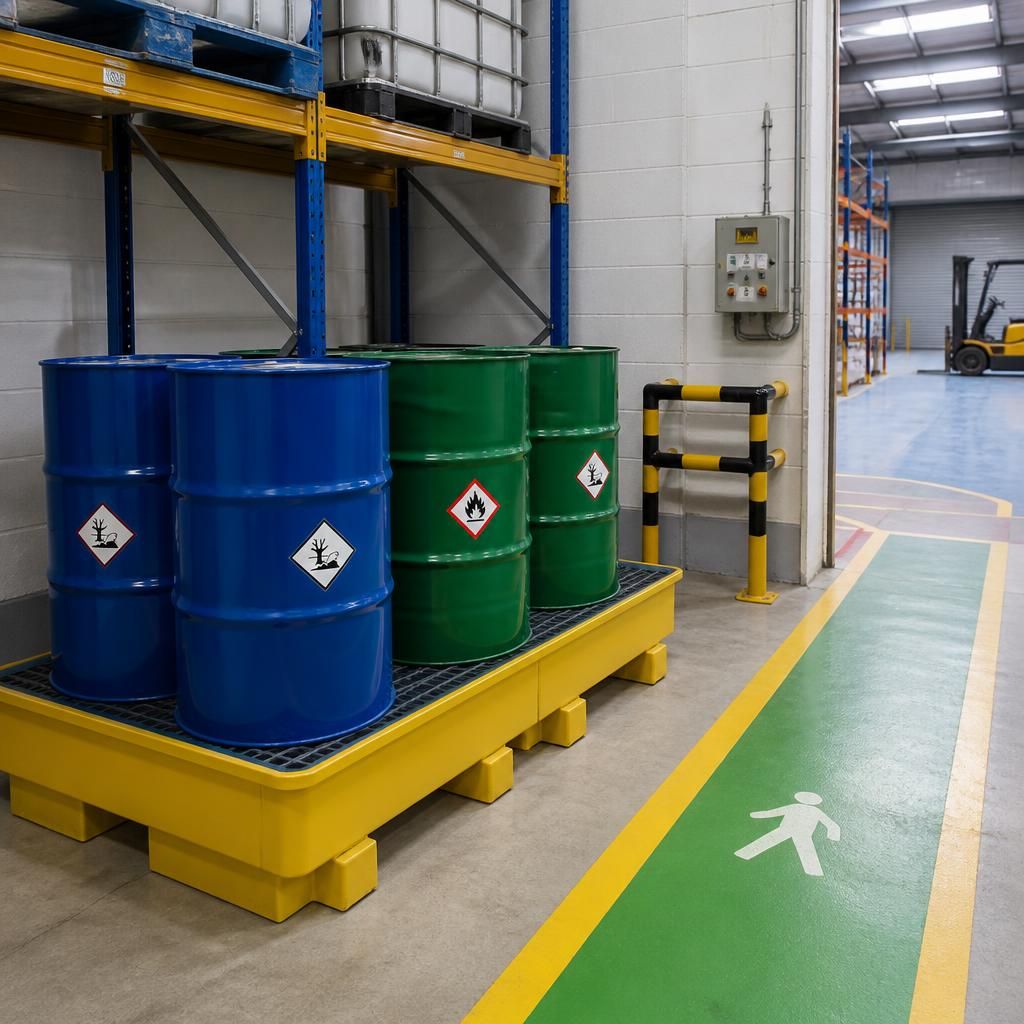
Keep an audit trail linking each chemical drum storage decision to the hazard information available at the time.
Record the relevant safety data sheet version, assessment findings, approved storage arrangement and any assumptions about quantities or drum types. Update these records when information changes, so workers and contractors can understand why the arrangement is suitable.



