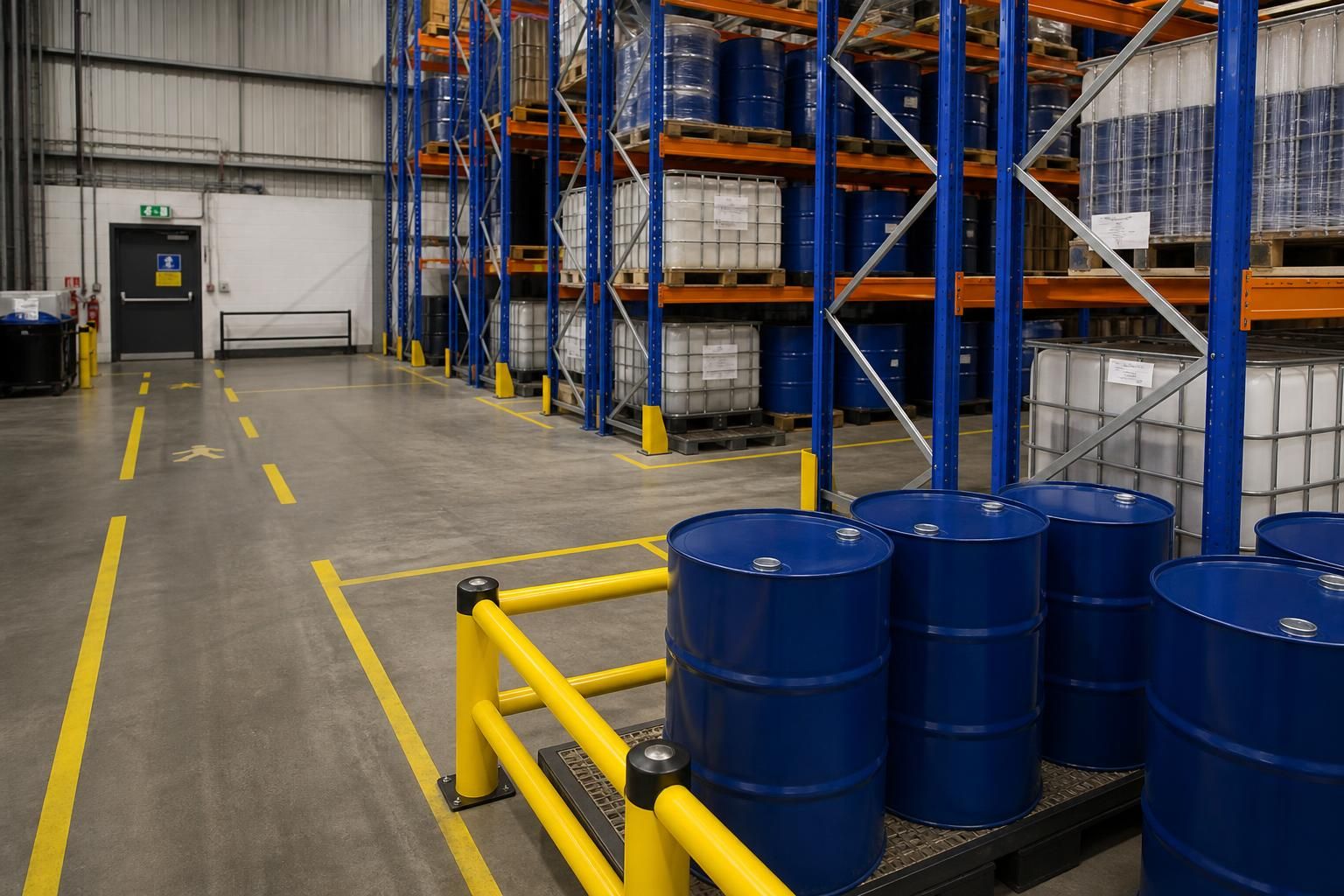
How should chemical drum storage address ignition risks?
Chemical drum storage should separate flammable or reactive stock from ignition sources, with access and handling controls considered in the layout. We assess the site, stock and workflow before preparing storage proposals and working drawings.
Chemical drum storage should control vapour, static electricity, heat and equipment-related ignition risks together. The correct arrangement depends on the substances, containers, handling methods and building conditions.
Start with the chemical information. Review the safety data sheets before selecting storage equipment. Record each product’s flash point, storage temperature, vapour characteristics, incompatibilities and container requirements. This information helps determine which drums can share an area and which require separate arrangements.
Do not treat every chemical as presenting the same hazard. Flammable liquids may release vapour during opening, dispensing or damage. Oxidising substances can intensify combustion, while reactive chemicals may create heat or gas when mixed. The storage plan must reflect these differences.
Consider how vapour can move. Vapour may collect in low points, enclosed corners, pits or poorly ventilated areas. A storage layout should therefore consider air movement, drainage, adjacent rooms and nearby openings. Ventilation requirements should be confirmed through the site risk assessment and the relevant chemical information.
Do not rely on general ventilation assumptions. Building construction, drum condition, temperature and the way staff handle products can all affect the risk. Where the assessment identifies a hazardous atmosphere, electrical and mechanical equipment may need additional controls.
Review every possible ignition source. This includes heaters, boilers, hot work, smoking areas, vehicle exhausts, battery-charging equipment, unsuitable electrical equipment and damaged cables. Temporary activities also matter. Maintenance, welding and contractors’ work can introduce ignition sources after the storage area has been installed.
Mark restrictions clearly and include them in site procedures. Safety barriers can protect drums from vehicle impact, while partitioning can help define controlled storage zones. These measures do not replace the risk assessment, but they can support separation and reduce accidental access.
Manage static electricity during handling. Movement, dispensing and transfer can generate static charges in some circumstances. The required controls depend on the chemical, container, equipment and process. Bonding, earthing and suitable transfer equipment should be assessed by a suitably competent person before use.
Staff should avoid improvised transfer methods. They also need clear instructions covering container opening, drum movement, spill response and the actions required if a container becomes damaged. Storage drawings should reflect the actual handling route, not simply the available floor area.
Keep the storage arrangement compatible with the stock. Drum orientation, spacing, containment and access should follow the product information and risk assessment. Inspect containers for corrosion, leaks, damaged closures and other signs of deterioration. A leaking or swollen drum needs a defined response, rather than remaining in the normal storage position.
Containment can limit the spread of a leak, but it must also suit the stored substances. Materials that resist one chemical may not resist another. Check compatibility before selecting trays, pallets, cabinets or other storage equipment.
Control traffic and routine work. Forklift routes, pedestrian access, picking activity and maintenance tasks should not bring unnecessary ignition risks into the storage area. Marking, barriers and a clear working route can help staff recognise the controlled zone. Keep emergency access and required equipment routes unobstructed.
Changing stock levels can alter the risk. New products, larger drums, different containers or added dispensing activity may require the arrangement to be reviewed. Do not assume that an existing layout remains suitable after the chemical range changes.
Use the survey to turn the assessment into drawings. We can review the building, access routes, existing equipment, stock information and workflow before preparing a written proposal and working drawings. These documents can show storage positions, controlled areas, barriers, access routes and relevant handling points.
Where a project includes several workplace changes, project management may coordinate the proposal, installation and final commissioning. The finished arrangement should then be checked against the agreed information and the site’s operating procedures.
Ignition-risk controls should be recorded within the site’s wider fire, chemical and workplace risk assessments. Chemical drum storage equipment supports those controls; it cannot replace suitable procedures, staff instruction, inspection or emergency planning.
Temporary work can undermine an otherwise controlled chemical drum storage area. Before maintenance, welding or contractor activity starts, check the task against the chemical risk assessment.
Decide whether drums need moving, equipment needs isolating or the work should stay outside the storage area. Record who controls the task and when normal storage can resume. This keeps ignition-risk decisions aligned with daily warehouse activity, rather than treating protection as a fixed installation.