



What inspection and maintenance arrangements should hazardous materials storage include?
Hazardous materials storage should have documented routine inspections, planned maintenance and clear arrangements for recording and correcting defects. Checks should cover containment, structural damage, corrosion, labels, access routes and spill-control equipment.
Effective hazardous materials storage maintenance needs a written inspection plan, defined responsibilities and a recorded process for closing defects. The plan should match the substances, containers, storage equipment, handling methods and site conditions.
Start by listing each storage asset and its associated controls. Include bunds, drum stores, pallet racking, shelving, transfer points, drainage controls, ventilation equipment and spill-response provisions. Give each item an identification reference so inspectors can link findings to a specific location.
- Pre-use checks: Operators should look for obvious damage, leaks, movement, obstruction or missing controls before using the storage area.
- Planned inspections: A suitably experienced person should complete more detailed checks at intervals based on the risk assessment, equipment guidance, operating conditions and previous findings.
- Post-incident checks: Inspect the area after a spill, impact, fire, unusual loading event or other incident before returning it to normal use.
- Change reviews: Reassess the arrangements when substances, container sizes, stock levels, handling equipment or storage layouts change.
Inspection criteria should reflect how the store operates. Check that containers remain compatible with the stored substances and that closures, valves, taps and transfer connections remain secure. Confirm that bunds and collection points can still perform their intended function.
For racking or shelving, examine frames, beams, supports, anchors, load notices and protection from vehicle impact. Check that the installed arrangement still matches the loads and access methods in use. Do not allow damaged storage equipment to remain in service without a recorded decision.
Inspect safety controls that support maintenance rather than treating storage equipment in isolation. These may include ventilation, lighting, fire precautions, access restrictions, segregation controls and emergency information. Safety Data Sheets should remain available for the substances held and support the risk assessment.
Every inspection record should show the date, location, asset reference, inspector, findings and required action. Add photographs where they clarify the condition. Record the person responsible, target completion date and evidence that the action has been closed.
Use a clear defect process. An immediate danger may require stopping the activity, isolating the affected area and moving stock under controlled arrangements. Less urgent defects still need an owner and completion date. Reinspect repaired equipment before removing any restriction.
Maintenance should use materials and replacement parts suitable for the stored substances and the equipment. Plan work so it does not create an uncontrolled spill, ignition source or unsafe access condition. Control contractors through site rules, permits and suitable handover information where their work affects storage safety.
Keep inspection, maintenance and incident records with the relevant risk assessments and operating procedures. Review recurring defects rather than repeatedly correcting the same symptom. A pattern may indicate unsuitable loading, poor access, impact exposure or a storage arrangement that no longer fits the workflow.
Compliance arrangements depend on the substances and activities involved. COSHH requirements may apply to hazardous substances, while DSEAR may apply where dangerous substances create fire or explosion risks. Environmental, waste and fire-safety duties may also affect the storage plan. Use current guidance and competent advice to confirm the duties applying to your site.
We can discuss inspection and aftercare requirements during a site meeting or survey. Our process can include written proposals and working drawings for storage changes, followed by installation and project management where required. We also undertake racking inspections, helping you connect findings with practical corrective work.
Before approving an arrangement, confirm who inspects each element, what triggers an additional check, how defects are controlled and where records are kept. That structure gives warehouse and industrial teams a practical basis for maintaining hazardous materials storage safely.
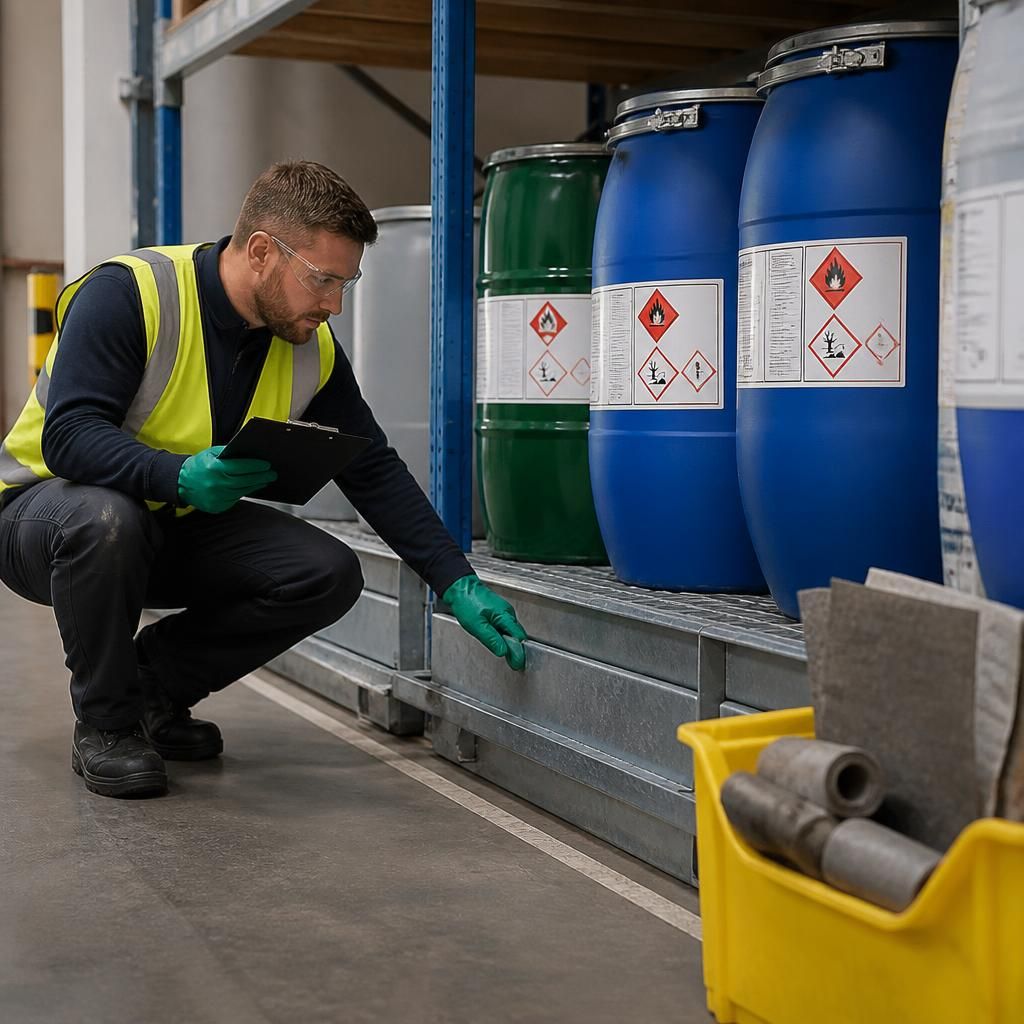
A visual check from the aisle may miss damage beneath containers or inside containment areas. Inspect bund sumps, low-level rack components, supports and collection points using safe access arrangements.
Look for residue, staining, softened materials, corrosion and standing liquid. Treat unexplained residue as a potential loss of containment until its source is established. Remove stock only under controlled arrangements, and never enter a restricted area simply to complete an inspection.
After cleaning or repair, confirm that the affected surface, seal, drain control or support can perform its intended function. Record any temporary restriction until the inspection shows that the storage area is suitable for use.



