Where should retractable safety barriers be installed?
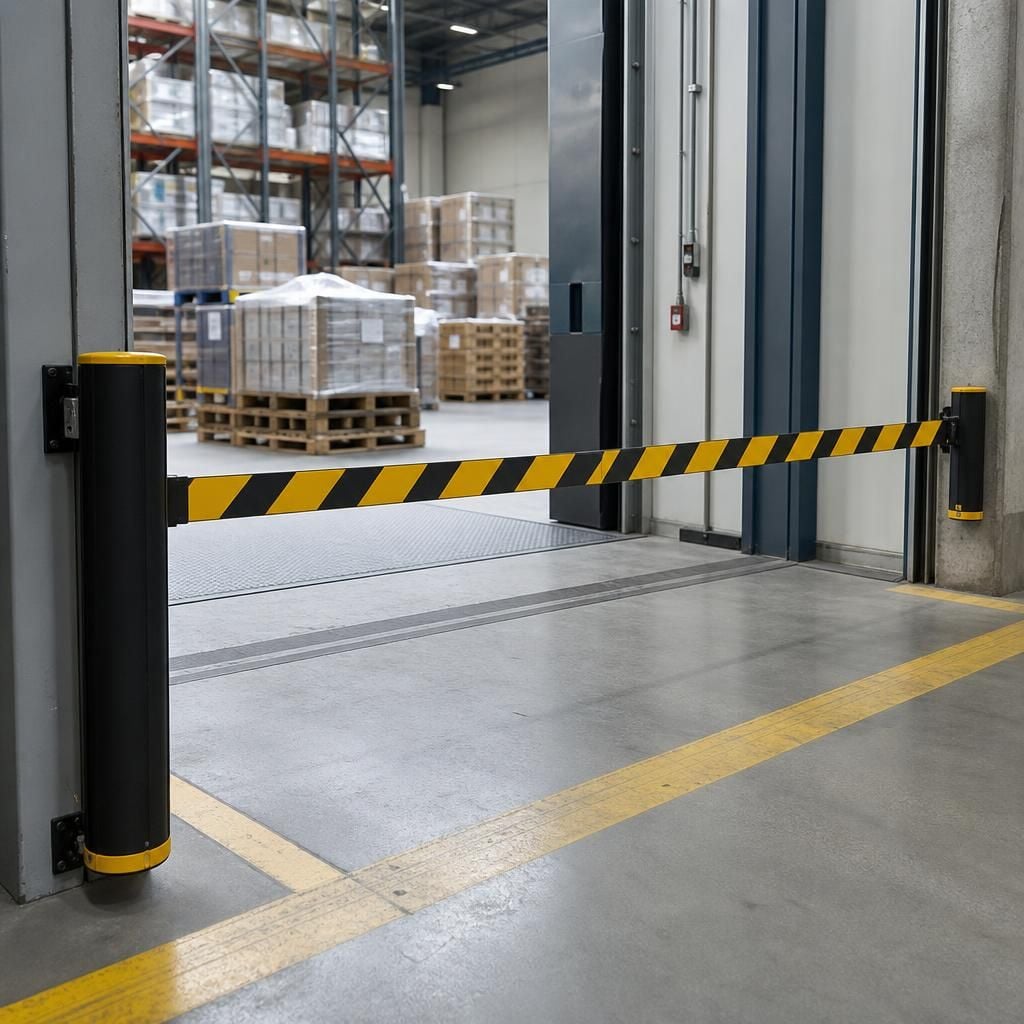
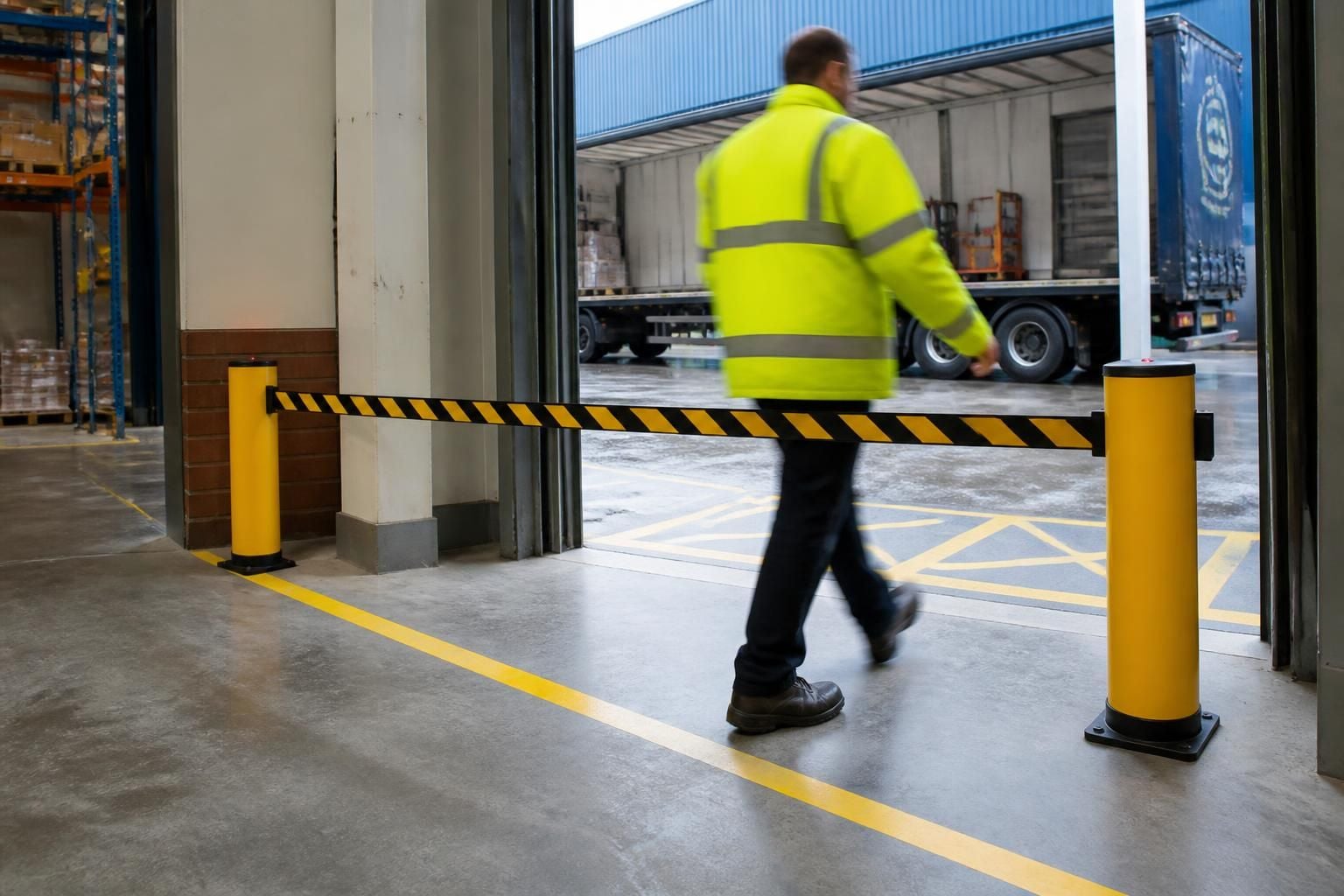
Retractable safety barriers should be installed at warehouse and industrial access points, loading areas, aisle crossings and openings where people or vehicles need controlled passage. We confirm exact positions through a site survey, considering layout, traffic routes, workflow and the protection required.
Retractable safety barriers should sit before people reach a hazard, with enough clear space for safe operation and passage. The correct position depends on movement patterns, the opening being protected and how often access is needed.
Consider these installation points when reviewing a site:
- Vehicle and pedestrian interfaces: Place barriers where walkways meet forklift, delivery or other vehicle routes. They can create a clear stop point before people enter a vehicle movement area.
- Racking aisle approaches: At pallet racking ends or crossing points, a barrier can restrict entry while vehicles are manoeuvring or stock is being handled. Position it where operators can see the route before opening access.
- Mezzanine access and raised areas: Use retractable guarding at access openings that require controlled passage. The layout must allow the barrier to close fully without obstructing stairs, handling routes or other required access.
- Loading and transfer points: Install barriers between people and areas where goods move through an opening. The position should account for pallets, handling equipment, door movement and the space needed to approach safely.
- Maintenance and restricted work areas: A retractable barrier can mark an opening or route that must remain controlled during maintenance, stock movement or other site activities.
- Office and commercial routes: In office fit-outs or mixed-use premises, barriers may separate staff or visitor routes from deliveries, storage areas and operational work zones.
Do not place a barrier where it creates a new trip point, narrows an essential route or forces people into vehicle movements. Its stored position also matters. When retracted, it should not interfere with doors, pallet movement, fire access arrangements or routine work.
We assess the approach to each opening, rather than selecting positions from measurements alone. A site meeting and survey can review traffic routes, visibility, workflow, floor conditions, fixing points and the protection required. We then set out the proposed positions in written proposals and working drawings.
Where several barriers form part of a wider workplace segregation plan, coordinated drawings can show how each section controls movement. This helps you compare access points as one layout instead of treating each barrier separately.
Retractable barriers suit locations where access changes during normal operations. If an area needs continuous physical separation, another guarding arrangement may be more appropriate. We can discuss the distinction during the consultation and identify where retractable access provides the practical choice.
Before installation, confirm who will operate each barrier, when it should remain closed and how the route will be managed during deliveries or maintenance. The final position should support those working practices without obstructing the wider workflow.
A suitable fixing position matters as much as the opening itself. We check floor conditions and fixing points so the retractable safety barrier sits securely without conflicting with nearby workplace features.
This is particularly important beside partitions, raised areas and handling routes, where an unsuitable mounting position can reduce usable access. Our working drawings show the proposed barrier location, allowing you to review the arrangement before installation.