What compliance requirements should retractable barriers meet?
Retractable barriers should suit the access point, withstand expected use, remain visible, and secure safely when extended. Their specification and installation should follow the site risk assessment, relevant workplace safety requirements, and the manufacturer’s guidance.
Safety barriers and retractable barriers should satisfy the site risk assessment, relevant UK workplace duties, and the chosen product’s instructions. Compliance also depends on documented decisions, suitable installation, safe operation, and ongoing inspection.
There is no single compliance label that makes every retractable barrier suitable for every workplace. You must show that the barrier addresses the hazard, location, traffic pattern, and access needs identified during assessment.
Risk assessment and location
- Record the hazard requiring control, such as vehicle movement, pedestrian access, falling materials, or restricted areas.
- Identify who may use or approach the barrier, including employees, visitors, contractors, and people requiring assisted access.
- Consider the barrier’s position when extended, retracted, opened, or temporarily removed from service.
- Check that the arrangement does not obstruct required traffic routes, work areas, emergency access, or escape routes.
- Review the arrangement if stock, vehicles, equipment, processes, or the workplace layout changes.
Workplace traffic routes must remain organised and controlled. A barrier should support the site’s segregation plan rather than create a new obstruction or confusing access point.
Construction and operating requirements
The selected barrier should have suitable materials, joints, fixings, and operating components for the conditions identified during assessment. Consider impact exposure, frequency of use, corrosion, temperature, contamination, and cleaning requirements.
Operating controls should be understandable to authorised users. The barrier should move through its intended range without creating avoidable trapping, striking, or manual-handling risks.
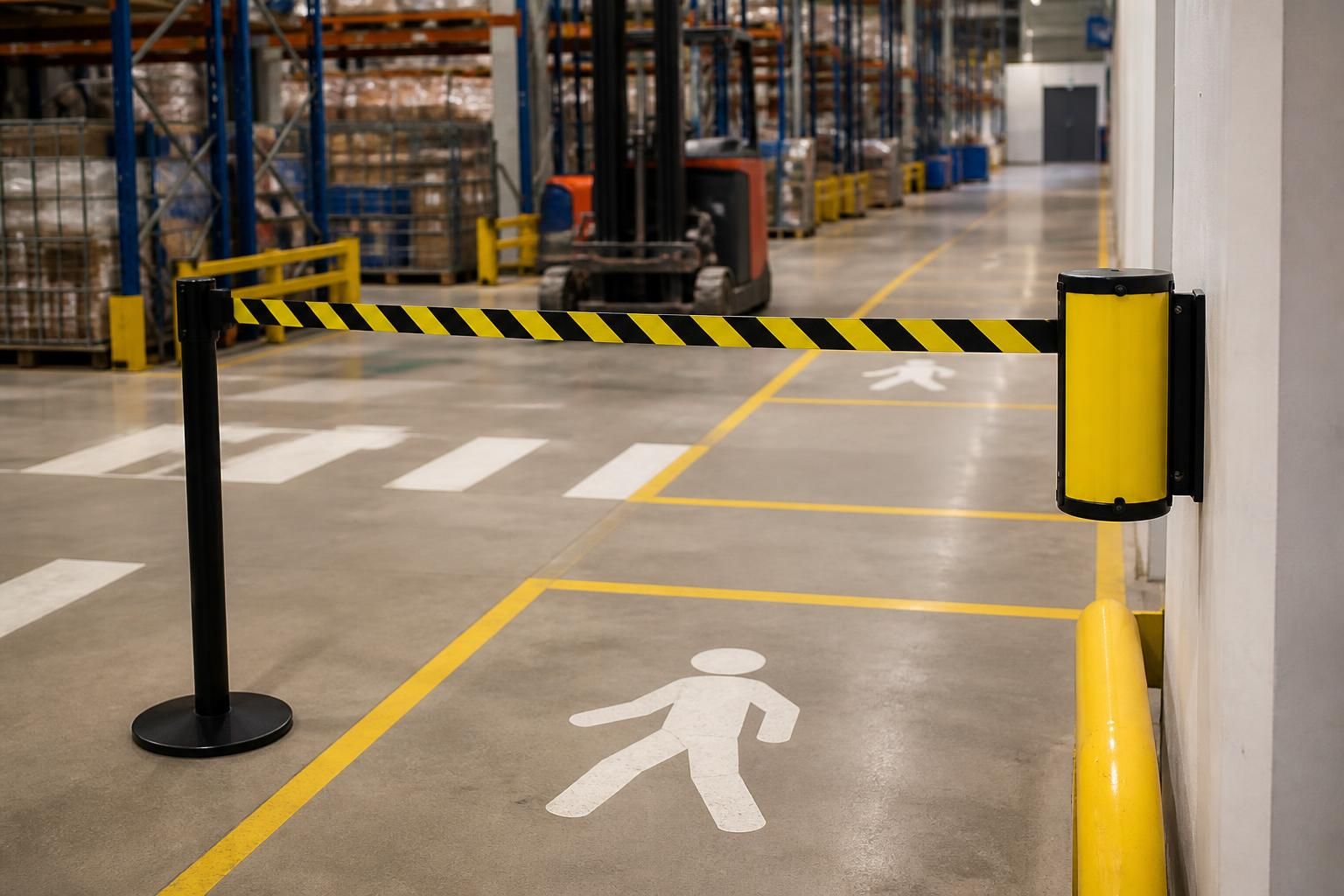
Where the barrier separates pedestrians from vehicles or machinery, assess the complete arrangement. This includes adjacent barriers, gates, floors, columns, racking, loading areas, and visibility at crossings.
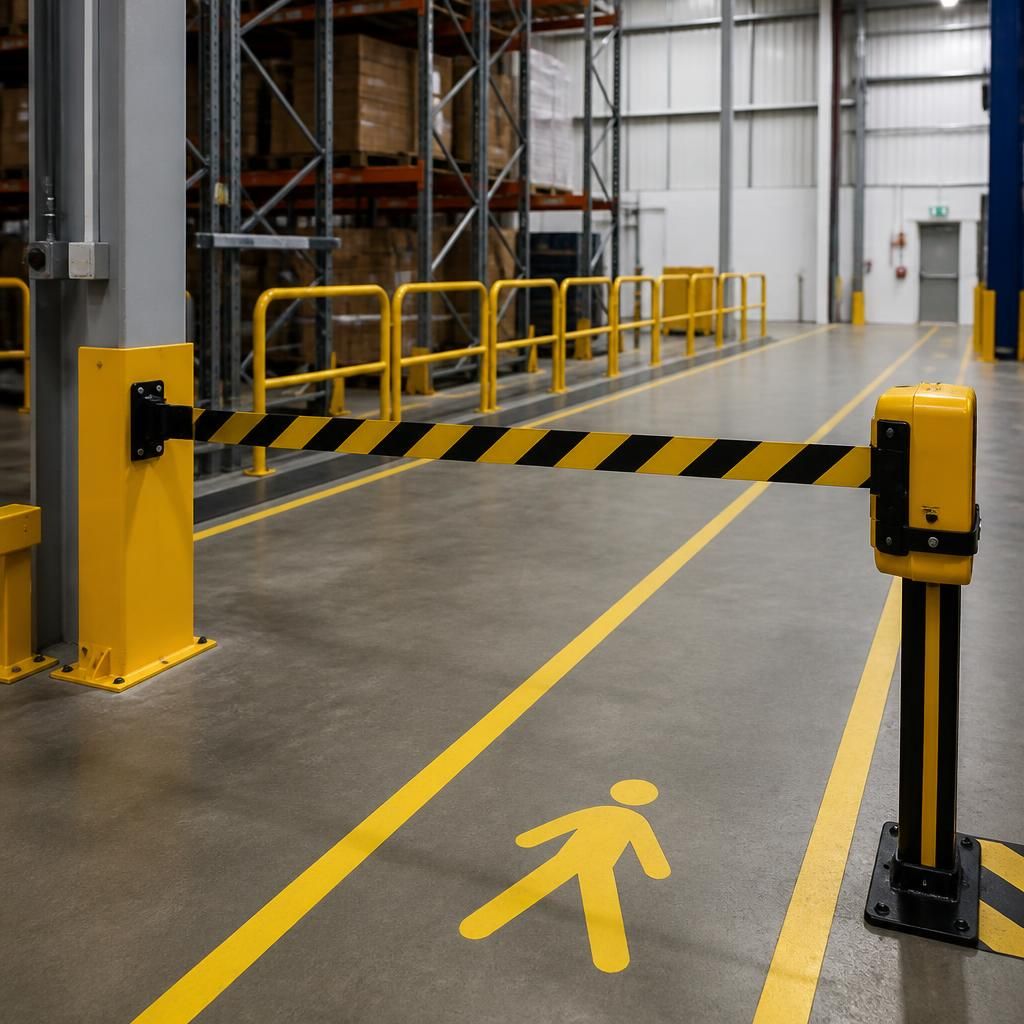
Clear identification supports correct use. Mark the controlled route, restricted area, or access condition where people could otherwise misunderstand the barrier’s purpose.
Installation and supporting information
Installation should follow the manufacturer’s instructions and the site drawings. Fixings must suit the supporting structure, floor condition, and forces expected during normal use.
Before work starts, confirm the proposed fixing points and surrounding services. A site survey can identify obstructions, floor changes, clearance issues, and conflicts with existing equipment.
Keep the quotation, written proposal, working drawings, product instructions, installation details, and risk assessment with the project records. These documents explain why the barrier was selected and how it should operate.
Ask for handover information covering operation, cleaning, inspection points, damage reporting, and restrictions on use. This gives managers a practical reference after installation.
Inspection and management controls
- Nominate responsibility for routine visual checks and defect reporting.
- Inspect moving parts, connections, fixings, end posts, signs, and protective finishes.
- Check that the barrier remains in its intended position and does not interfere with routes.
- Remove damaged equipment from use where it no longer controls the identified hazard.
- Record significant defects, corrective actions, and any changes to the risk assessment.
The inspection frequency should reflect use, impact risk, environmental conditions, and the manufacturer’s instructions. A higher-risk location may require more frequent checks than a lightly used office access point.
Fire and accessibility considerations
Check the fire risk assessment before placing a retractable barrier near an escape route or fire-resisting door. The barrier must not compromise evacuation arrangements.
Also consider clear passage, operating force, reach, and visibility for people using the route. Access controls should not create unnecessary difficulty for disabled users or emergency response.
How we support compliance planning
We can begin with a no-obligation consultation, site meeting, and survey. We then prepare written proposals and working drawings for the planned arrangement.
Where required, project management can continue from proposal and tender stage through installation and final commissioning. This gives you a defined record of the decisions made during the project.
Our wider work includes safety barriers, workplace segregation, line marking, and barrier protection alongside storage and workplace systems. Coordinating related measures can help keep the compliance information consistent across the site.
Before approving a retractable barrier, compare the proposed product with the risk assessment, manufacturer’s instructions, installation details, access arrangements, and inspection plan. That evidence matters as much as the barrier itself.
Compliance should be demonstrable after installation, not inferred from appearance. Record the barrier’s location, intended purpose, operating limits and acceptance checks against the approved arrangement.
Confirm that the barrier opens, retracts and secures as intended, without conflict along its travel path. Note outstanding actions and assign responsibility before putting the access point into normal use.