


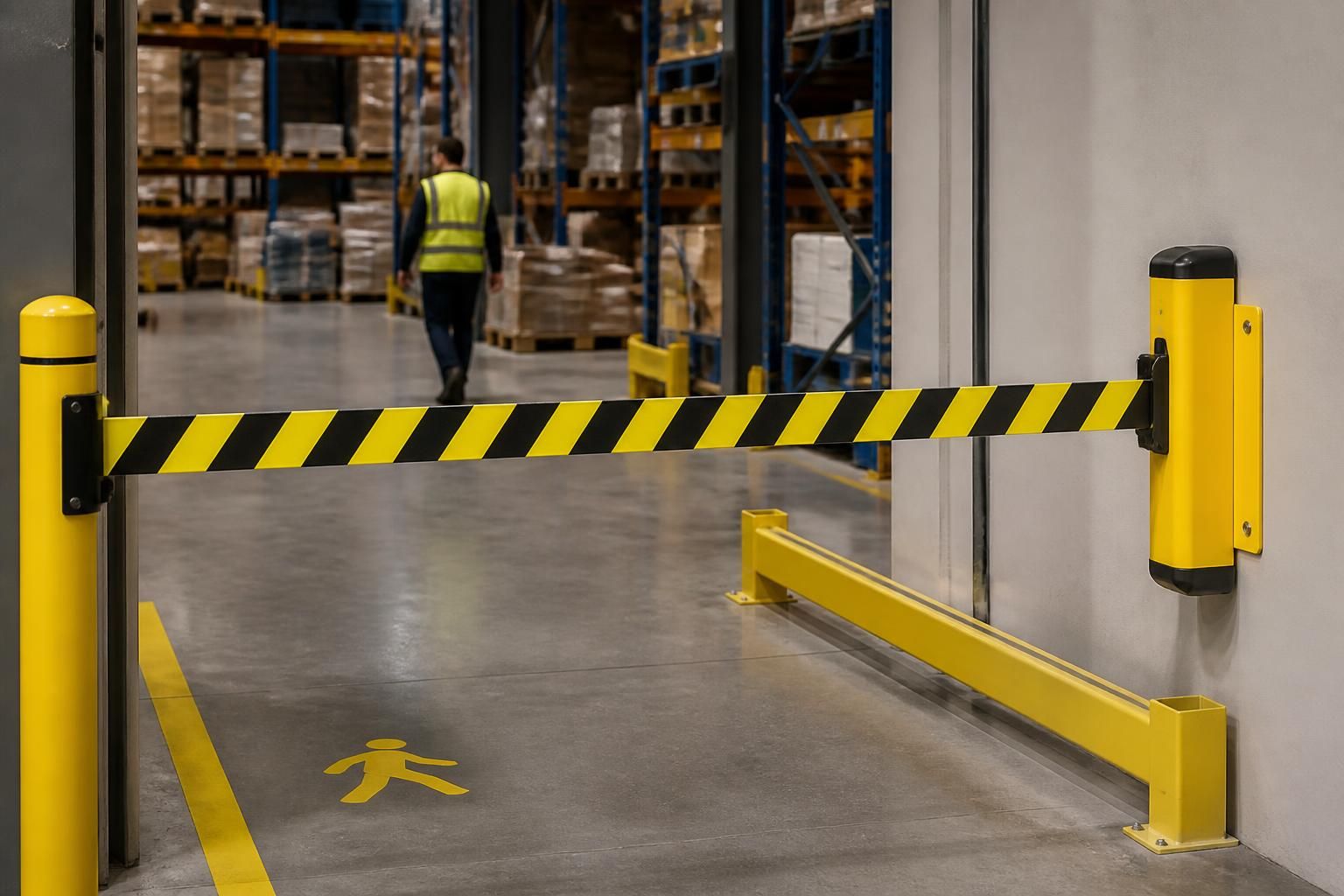
What safety features should a retractable barrier include?
A retractable barrier should include high-visibility marking, secure locking, controlled movement and a stable structure suited to the site.
These features help identify restricted areas, prevent unintended access and protect people around changing warehouse or workplace layouts.
A retractable barrier should protect people by creating a clear, controlled boundary without introducing trapping points or obstructing normal work. The safest specification combines suitable construction, safe operation, visible separation and straightforward inspection.
When comparing options, assess these features alongside the access opening, traffic routes, floor condition and surrounding equipment. A barrier that suits one warehouse or office layout may not suit another.
- Safe handling points: The handle or operating area should let users open and close the barrier without placing hands near moving joints, edges or pinch points.
- Protected edges: Rounded or guarded edges can reduce the risk of cuts, snagging and contact injuries around busy access points.
- Positive end positions: The barrier should remain properly positioned when extended or gathered. This prevents it drifting into walkways or leaving an opening smaller than intended.
- Suitable impact performance: Where vehicles, equipment or stock may contact the barrier, assess its intended level of protection. Do not assume every retractable format suits vehicle movements.
- Appropriate clearance: The opening should allow the required people, goods or equipment to pass without forcing users against nearby racking, partitioning or machinery.
- Secure fixing arrangements: The fixing method should suit the floor, wall or supporting structure. Poorly selected fixings can affect how the barrier performs after repeated use.
- Clear status indication: Users should be able to tell whether access is open, restricted or protected. This supports consistent separation between pedestrians, vehicles and work areas.
- Compatibility with site protection: Line marking, workplace segregation, guarding and barrier protection should work together. A retractable barrier should not create a confusing route or an isolated hazard.
Consider operation as part of the safety specification. If users must lift, drag or release the barrier awkwardly, they may leave it open or bypass it. The chosen arrangement should support the way people move stock, equipment and themselves through the site.
Inspection access also matters. Operators should be able to check fixings, moving parts, end positions and visible damage without dismantling the barrier. Record findings and remove damaged equipment from use when it no longer provides the intended separation.
Site conditions determine which features matter most. A warehouse may need protection around vehicle routes and loading areas. An office may need controlled separation around work zones, deliveries or temporary access points.
We can review these factors through a no-obligation consultation, including a site meeting and survey where appropriate. We then prepare a written proposal and working drawings for the specified arrangement.
For projects requiring several workplace measures, we can coordinate safety barriers with line marking, partitioning and other space-planning work. Project management may cover the proposal and tender stage through installation and final commissioning where required.
Ask for the intended use, fixing method, access width and surrounding hazards to be recorded before you compare prices. This gives you a clearer basis for judging safety features, installation requirements and fit within the existing layout.
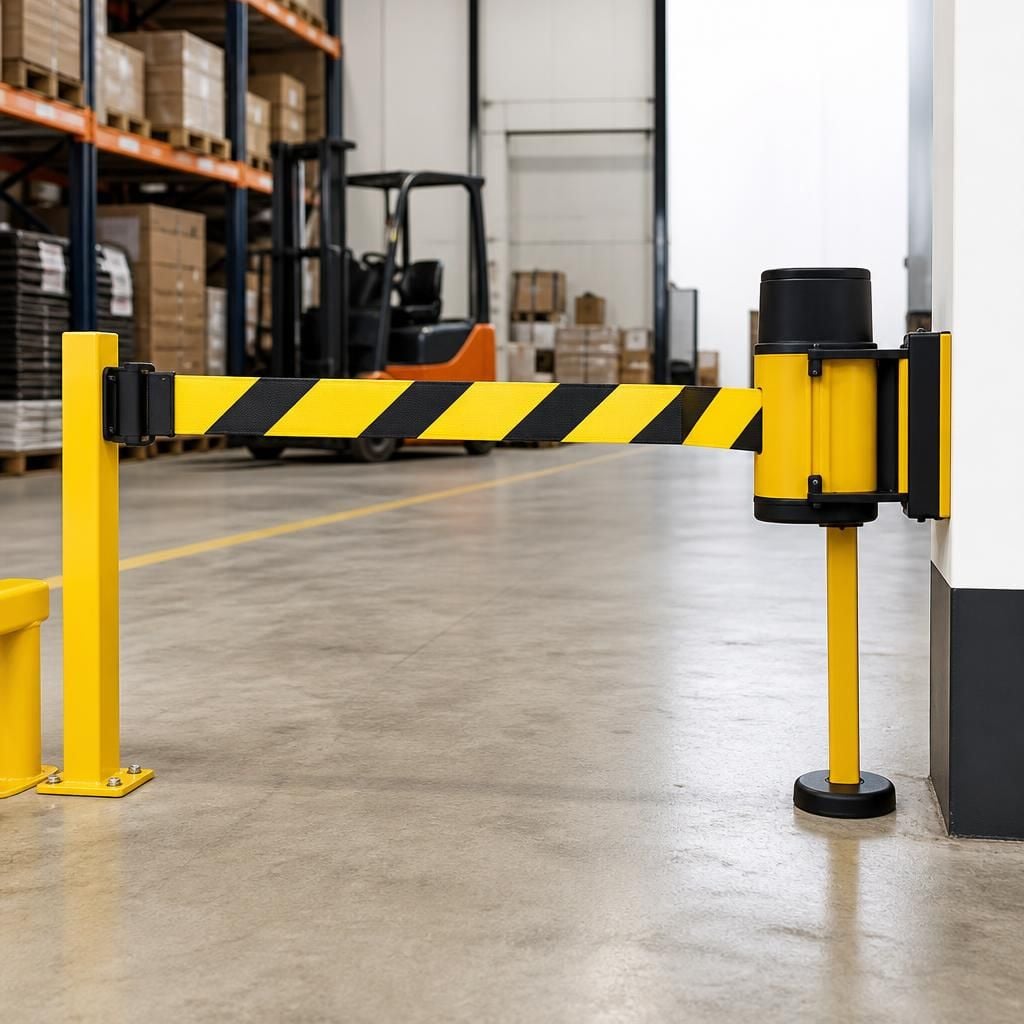
The most useful safety feature is one that matches the way the barrier will be used. A secure arrangement should support consistent access control without encouraging users to bypass it.
Before selecting a retractable barrier, compare each feature against the intended route, opening and surrounding activity. This keeps the specification focused on practical protection rather than unnecessary additions.



