


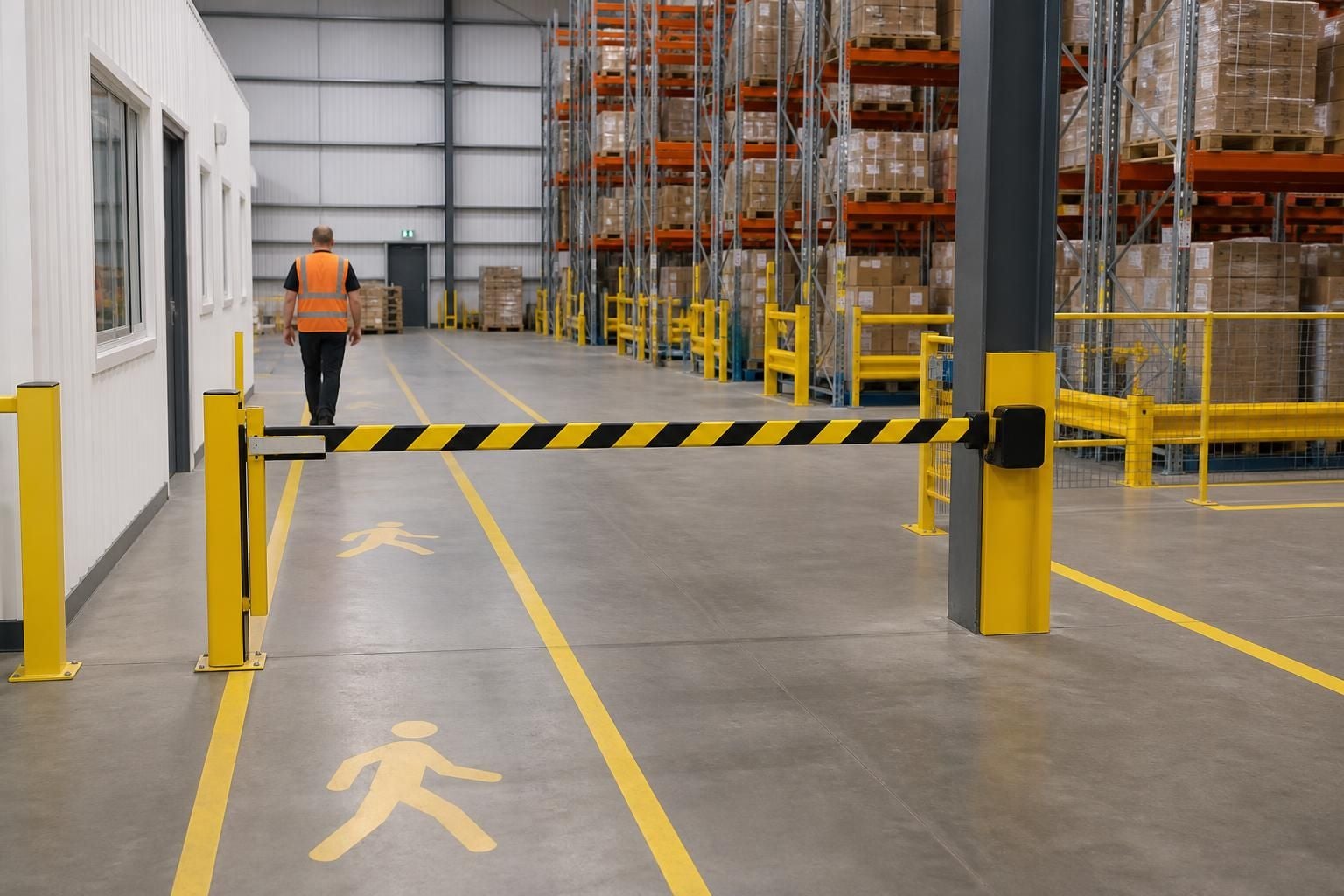
What affects the cost of retractable barriers?
Retractable barrier costs depend on materials, dimensions, quantity, fixing method and installation requirements. Site access, floor conditions and layout adjustments can also affect the quotation, so we assess requirements before preparing proposals.
The overall cost of retractable barriers reflects the selected specification, the fixing conditions and the work needed to integrate them into your site. The price also depends on how clearly the access arrangement is defined before work begins.
Barrier specification and access function
A retractable barrier used for occasional access may require a different specification from one forming a regular separation point. The required level of control, visibility and access affects the components selected. Safety features can also influence the price when the barrier needs to support a more controlled movement route.
Discuss the intended use before selecting equipment. A barrier protecting a pedestrian route, separating work areas or controlling vehicle access may need different arrangements. Defining the purpose helps prevent you paying for features that do not suit the site, or later changing the installation because the original arrangement does not support the workflow.
Posts, returns and changes in direction
The cost is not determined only by the barrier section itself. End posts, return sections and changes in direction can add design and installation work. A straight opening generally requires a different arrangement from a boundary with corners, interrupted access points or several connected sections.
Working drawings help identify these details before installation. They show how the barrier will sit within the available space and how people, stock and equipment will move around it.
Fixing conditions and preparation
The surface receiving the fixings can affect the work involved. The survey considers the floor and surrounding structure, including any restrictions that could affect the proposed fixing method. Preparation or adjustments may be needed where the existing area does not provide a suitable starting point.
Access around the installation point also matters. Congested aisles, operating equipment and restricted working areas can affect the installation sequence. These conditions may require additional planning to protect workflow and reduce interference with normal site activity.
Survey, drawings and project management
A no-obligation consultation may include a site meeting and survey. We then use the recorded requirements to prepare a written proposal and working drawings. This process gives you a clearer basis for comparing the selected arrangement with the available space and intended use.
Where a project needs coordination from proposal and tender stage through installation and final commissioning, project management may form part of the work. The level of coordination required affects the overall quotation, particularly where the barriers form part of wider workplace segregation or safety infrastructure.
Installation conditions and related work
Installation costs depend on the work required at the site, not just the equipment supplied. The quotation may need to account for access to the work area, fixing conditions, sequencing and coordination with other site activities.
Where contractors are required for site work, their involvement can also affect the project arrangement. Confirm which activities sit within the proposed scope, especially when the barrier installation connects with partitioning, line marking or other workplace changes.
Changes made after specification
Changes to the access route, barrier position or required features after the proposal and drawings are prepared can alter the work involved. Providing accurate information about stock movement, pedestrian routes and operational restrictions at the consultation stage helps keep the specification aligned with the site.
Tell us if the workplace layout may change later. The initial arrangement may then need consideration alongside future access requirements. That discussion can affect the selected format and the work shown in the quotation.
What to check in the quotation
- Confirm the barrier format and safety features included.
- Check the number and position of posts, returns and access points.
- Review the proposed fixing method against the surveyed floor and surrounding area.
- Ask which preparation, installation and commissioning activities are included.
- Confirm how project management and contractor coordination are treated.
- Check that the working drawings reflect stock movement, pedestrian routes and site restrictions.
We can assess these points during the consultation before preparing the proposal. Spartan Direct Limited has designed and installed storage and workplace systems for companies of different sizes across the UK since 1982. That practical background supports a review based on how the barrier must work within your existing layout, rather than on the equipment alone.
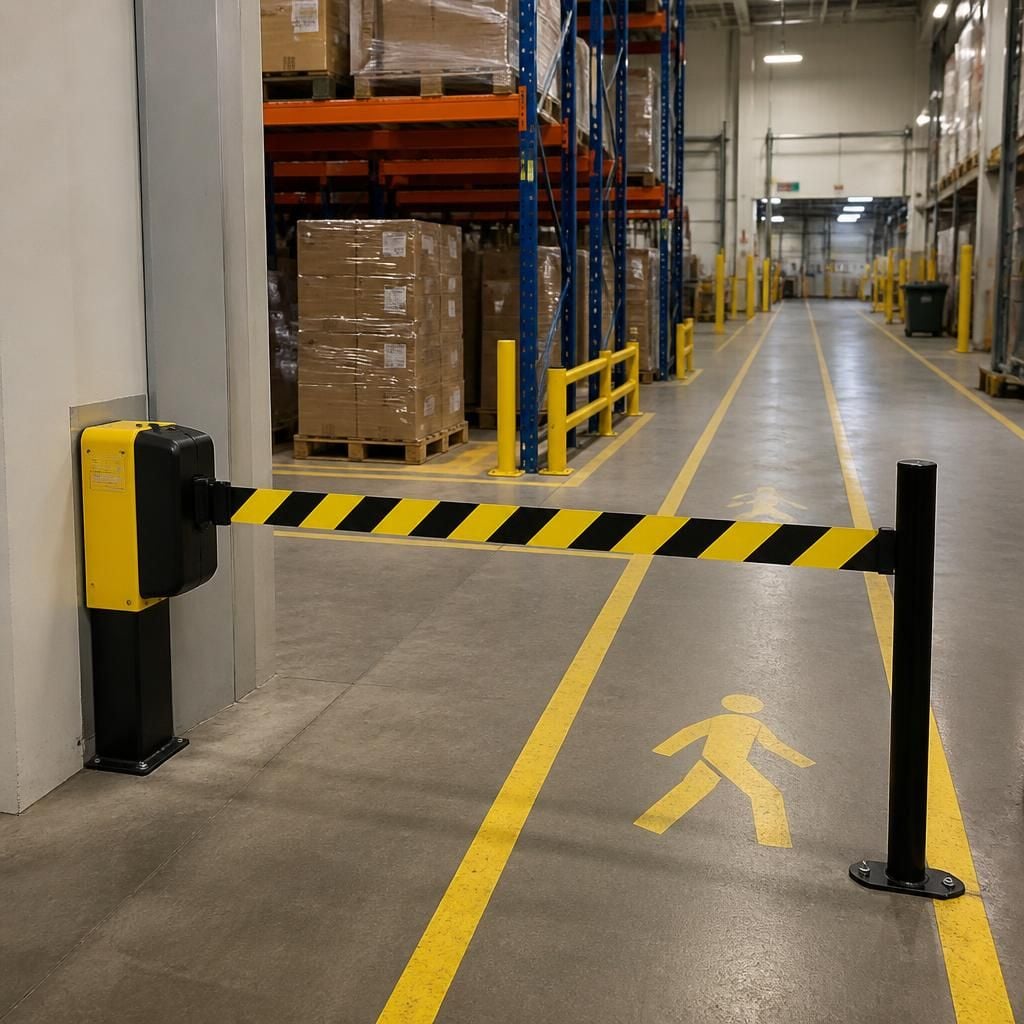
The number of retractable barriers affects the equipment supplied, fixing points and installation planning. Each opening should be considered within the wider movement route.
A clear schedule showing barrier positions, access widths and operating requirements helps us separate equipment costs from site work. This gives you a more useful quotation and makes later changes easier to identify.



