


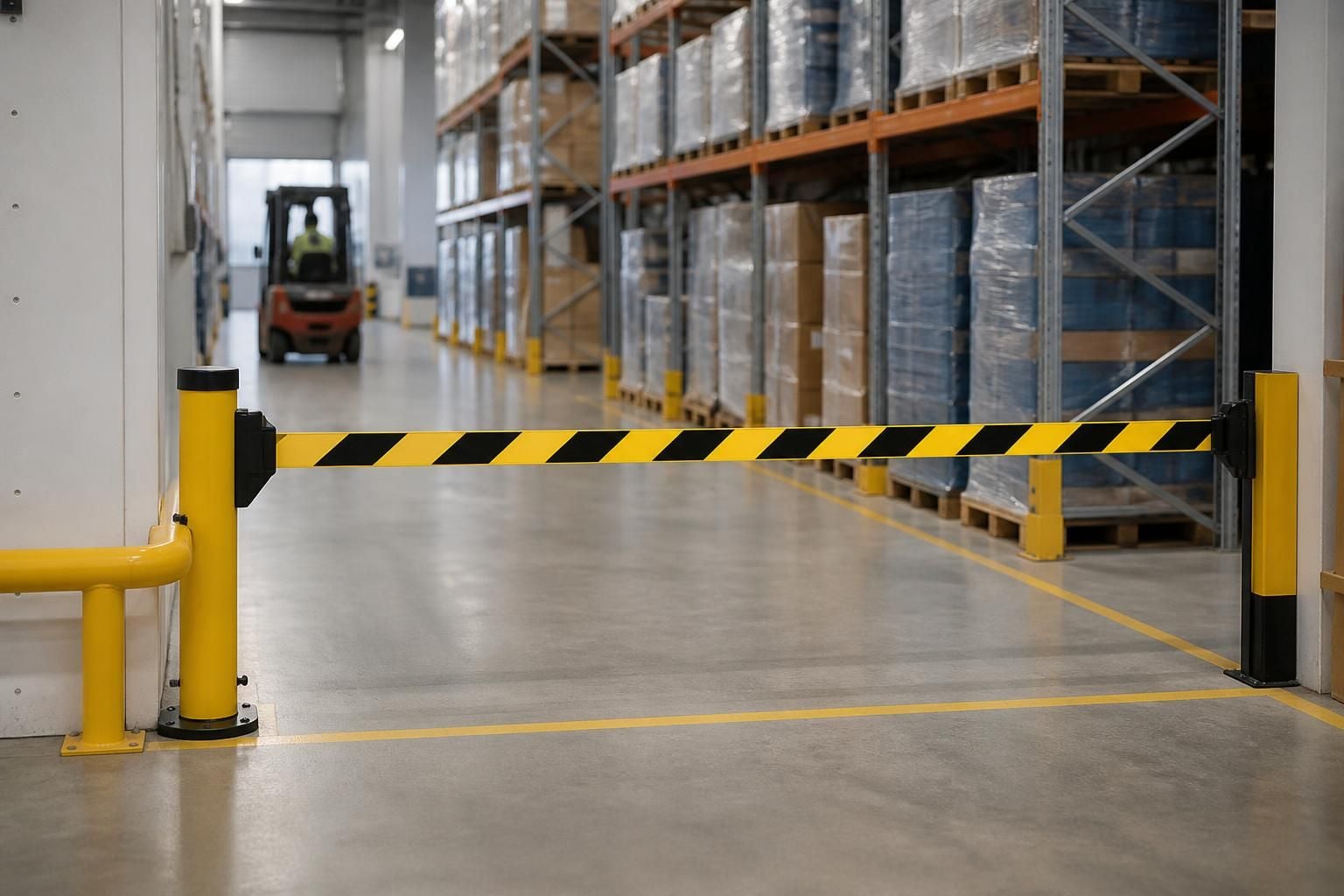
When are retractable barriers preferable to fixed safety barriers?
Retractable safety barriers are preferable when you need controlled access that can open for deliveries, maintenance or changing work areas. Fixed safety barriers suit locations requiring a permanent physical boundary, while retractable systems preserve access when the layout or workflow changes.
Retractable safety barriers are preferable when access must remain available for part of the working day, but a clear boundary is needed during specific activities. They can suit shared routes, temporary work zones and layouts that change between work phases.
The main advantage is controlled use of floor space. When retracted, the barrier leaves the route available for people, equipment or stock. When extended, it marks a boundary that tells people where access stops. This can support safer movement without keeping a permanent obstruction across the route.
A retractable barrier may be appropriate where:
- Aisles or doorways serve more than one purpose.
- Work areas need separating only during particular tasks.
- Stock, equipment or personnel need occasional passage through the same opening.
- The workplace layout may change as operations develop.
- A fixed barrier would reduce useful circulation space.
- Staff can follow a clear process for extending and retracting the barrier.
Fixed safety barriers are usually more suitable where protection must remain in place continuously. This may include a permanent boundary around an area that people should not enter during ordinary operations. A fixed arrangement also avoids relying on someone to deploy the barrier before access becomes unsafe.
The decision should therefore consider the risk created when the barrier is open, not only the space saved when it is retracted. If the area needs constant separation, a fixed safety barrier may provide the clearer arrangement. If access is essential at defined times, retractable guarding may fit the workflow better.
Operating discipline matters. A retractable barrier needs an agreed storage position, a clear person responsible for using it and instructions explaining when it must be extended. If the barrier is left open during a task, it cannot provide the intended boundary.
Consider the route, traffic, fixing points and surrounding activity before choosing between the two formats. A site with frequent vehicle movements or possible contact from handling equipment may need a different assessment from an office walkway. The barrier must also suit the available space and the way people use the area.
Retractable barriers should not be selected simply because they take less space. Their suitability depends on the required level of separation, the frequency of access and the consequences of leaving the route unprotected. Fixed and retractable barriers may also be used in different parts of one workplace.
We can discuss the intended use through a no-obligation consultation. This may include a site meeting and survey, followed by written proposals and working drawings. Where required, we can also coordinate project management through installation and final commissioning.
This process helps compare the practical options against the site layout, stock movements and working requirements. It gives you a clearer basis for deciding whether retractable safety barriers provide useful flexibility, or whether fixed safety barriers are the safer long-term arrangement.
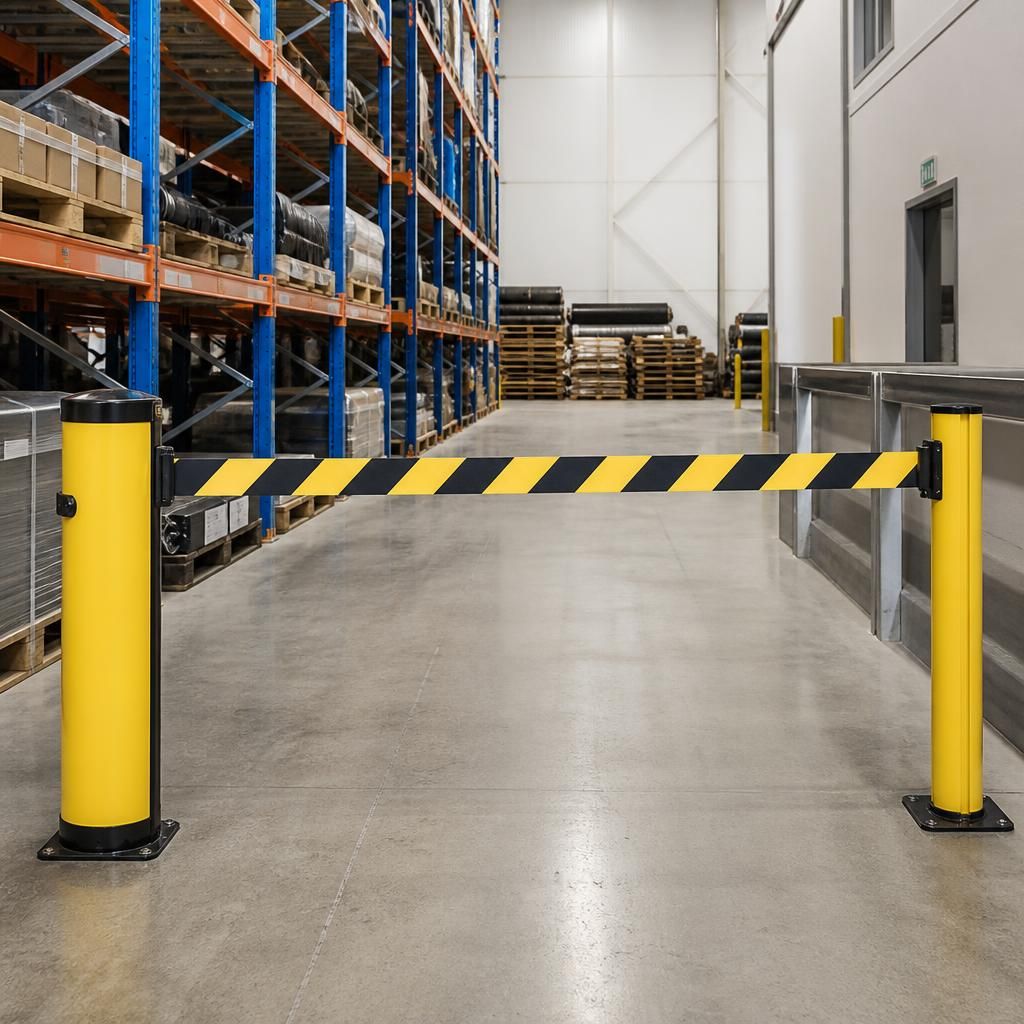
Retractable safety barriers can suit planned transfer points where removing the boundary supports the task without dismantling fixed guarding.
Fixed safety barriers remain preferable where the boundary must stay present, even when access becomes less convenient. Compare the task, access route and required separation before choosing.



