


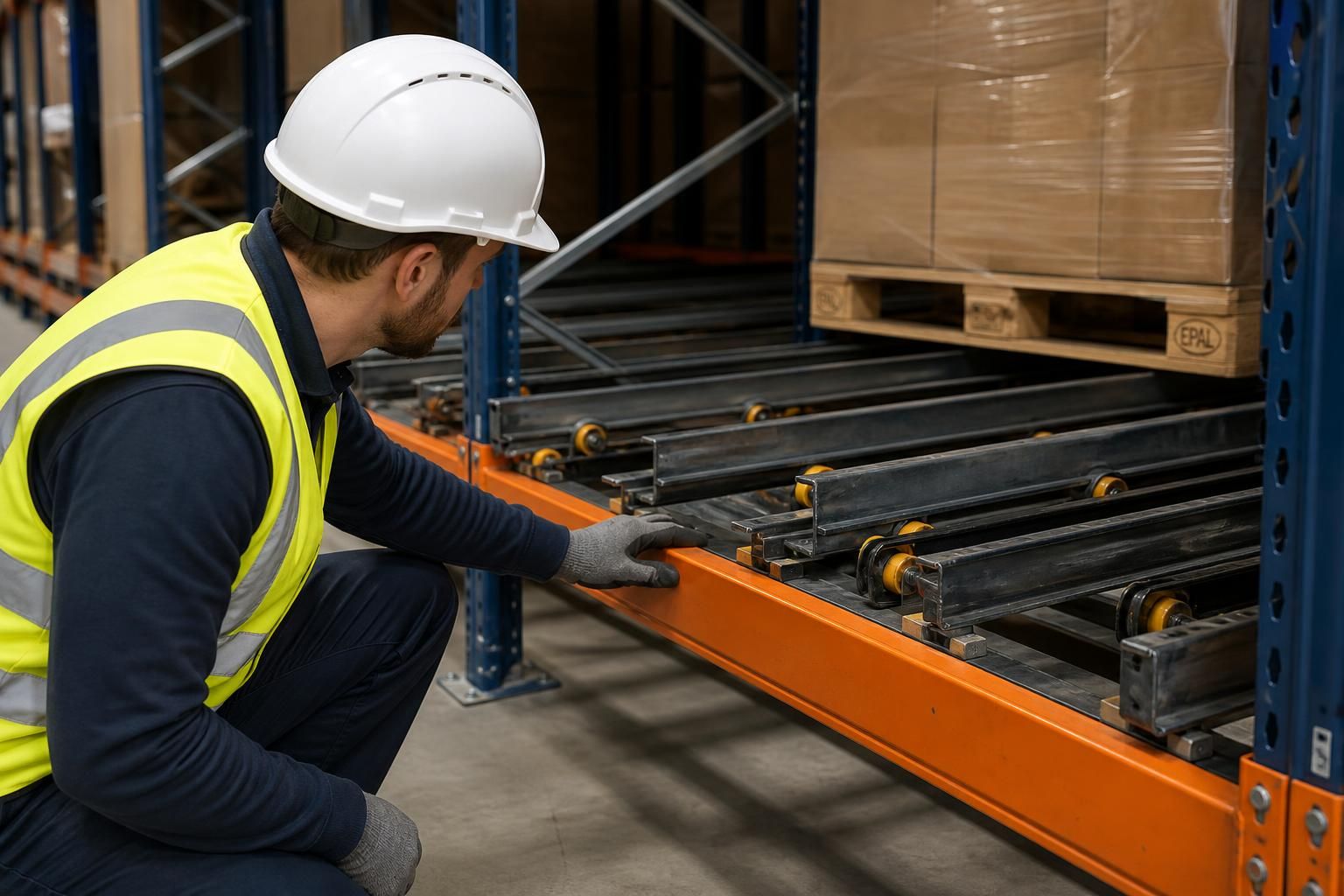
What maintenance does push back pallet racking require?
Push back pallet racking requires routine visual checks, planned inspections and prompt attention to damage, wear or changes in use. We can inspect the system and advise on repairs or aftercare, helping protect safe access and efficient pallet storage.
Push back pallet racking needs maintenance of its frames, beams, rails, carts, guides and safety components. Maintenance should also confirm that loading practices still suit the system.
Check the working parts
- Inspect carts, wheels, rollers, guides and stops for damage, looseness or restricted movement.
- Look for bent rails, displaced components, cracked welds or unusual gaps between connected parts.
- Check that pallets enter and travel through each lane without catching or stopping unexpectedly.
- Remove dirt, packaging and other obstructions that could affect cart movement or pallet positioning.
- Examine frames, bracing, beams, protectors and floor fixings for impact damage or movement.
- Check decking and pallet supports for distortion, missing sections or damage from loading operations.
Push back systems contain moving storage equipment, so small faults can affect loading, retrieval and access. Report unusual noise, resistance or movement rather than forcing the cart through the lane.
Review pallets and loading practice
Maintenance includes checking that pallets remain suitable for the pallet racking configuration. Damaged pallets can sit unevenly, catch on guides or place loads outside the intended position.
- Keep loads stable, evenly distributed and within the stated load limits.
- Do not allow damaged pallets to enter lanes where they could obstruct movement.
- Keep loads clear of frames, beams and protective components.
- Make sure operators place pallets centrally and follow the agreed loading sequence.
- Review stacking and access arrangements after changes to stock, equipment or warehouse layout.
Load notices and working drawings should remain available to support correct use. If the stored goods, pallet type or loading method changes, reassess the arrangement before continuing.
Act promptly after impact or damage
Take an affected bay out of use when a forklift impact or other incident damages the racking. Prevent further loading until the condition has been assessed.
Mark the location clearly and record what happened, which components were affected and whether stock needs controlled removal. Do not straighten, weld, drill or improvise repairs on site.
A suitable repair may involve replacing damaged components rather than attempting to restore them. The correct action depends on the damage, system design, loading requirements and surrounding structure.
After repair, confirm that the bay is correctly reinstated before returning it to service. Update records where the repair changes the system or its operating information.
Keep inspection and repair records
Useful records identify the equipment, inspection date, findings, photographs, recommended action and completion date. They should also show any restricted bays and the date of reinspection.
Keep records alongside installation information, drawings, load details and commissioning documents. This gives future inspections a clear reference point and helps identify changes over time.
Maintenance frequency should reflect the warehouse environment, traffic levels, equipment use and previous damage. A fixed interval may not suit every installation, so review the inspection arrangement when conditions change.
Use planned inspections for the complete system
Operational staff can identify visible problems, but a planned inspection should examine the complete push back arrangement. It should cover structural members, moving components, protection and use.
Spartan Direct provides racking inspections and aftercare for storage systems. We can assess the installation, document findings and advise on appropriate repairs or further investigation.
Where a warehouse layout, stock profile or storage requirement changes, a site survey can establish whether the existing system remains suitable. We can then prepare written proposals and working drawings where required.
Good maintenance protects access to stored goods, supports orderly warehouse movement and helps you continue using available space without an avoidable relocation.

Replacement parts must match the push back system’s design, load requirements and working arrangement. Do not substitute rails, carts or guides based on appearance alone.
Ask us to review proposed replacements where the original specification is unclear. This helps maintain compatible movement and avoids introducing a component that changes how the lane operates.



