


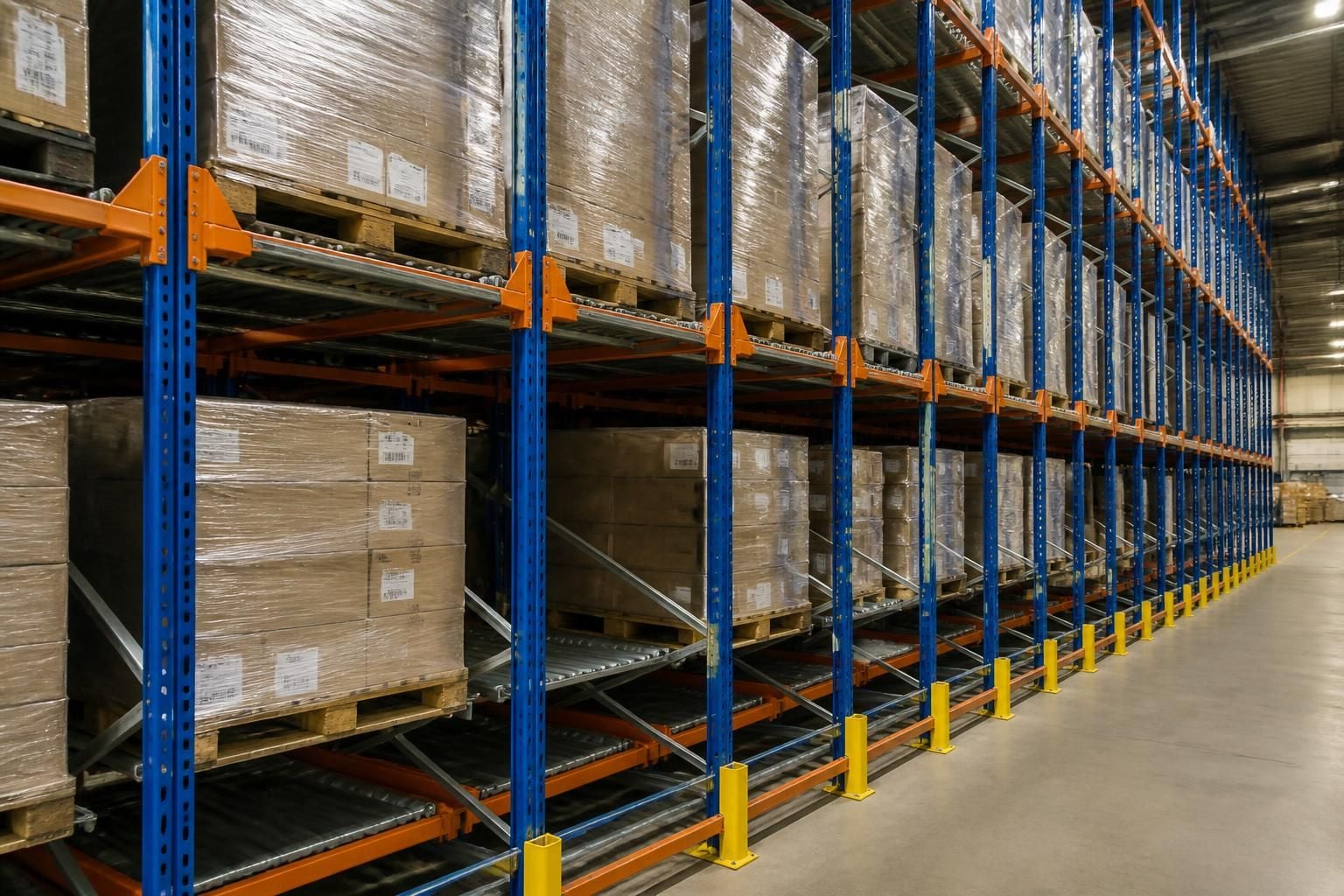
How is push back pallet racking priced for a warehouse?
Push back pallet racking prices depend on system size, storage levels, load requirements, warehouse layout and installation needs.
We assess these factors through a site survey, then provide written proposals, working drawings and a project-specific quotation.
Push back pallet racking should be priced as a complete storage arrangement, not simply by the number of frames. A meaningful comparison separates equipment, capacity, site constraints, protection, documentation and installation work.
Start with the storage brief. Pallet dimensions and weights affect lane depth, cart capacity, frame selection and clearances. The number of pallets stored in each lane also affects the required equipment quantity.
Storage levels influence the steelwork, access arrangements and usable warehouse height. The quotation should identify the proposed number of levels and explain the capacity assigned to each position.
Push back racking uses carts or rollers to support pallets within each lane. Their specification, quantity and load rating form part of the equipment price. Ask whether these items appear clearly within the written scope.
Allow for the building itself. Columns, doors, lighting, sprinklers, uneven areas and restricted access can alter the arrangement. Clear height and aisle requirements also affect how much equipment fits within the available footprint.
A survey provides the information needed to check those constraints before the figure is finalised. It can also identify conflicts between the proposed racking, handling routes and existing workplace arrangements.
Separate the main cost areas. A clear comparison should show which of these areas the price covers:
- Frames, beams, carts, rollers and associated racking components.
- Ancillary items required for the proposed configuration.
- Column guards, frame protection, end protection and safety barriers where specified.
- Design information, working drawings and related project documentation.
- Installation activities, site access requirements and any agreed project management.
Protection equipment can change the total, particularly where vehicle movements or exposed rack ends require additional controls. It should not be treated as an assumed inclusion without checking the scope.
Installation pricing can also reflect the condition of the area, access for installation teams, coordination with other contractors and the need to maintain warehouse operations. Ask which preparation or follow-on work remains outside the quoted scope.
Check the capacity information. The lowest initial price may not represent the lowest cost per usable pallet position. Compare the number of positions, levels, lane arrangement and stated load information on the same basis.
Also check whether the proposal explains operating clearances and the intended relationship between storage lanes and handling aisles. A cheaper arrangement may be unsuitable if it restricts access or conflicts with the workflow.
Consider the value of the design work. A price supported by written proposals and working drawings gives you a clearer basis for checking dimensions, quantities and site fit. It also helps identify changes before equipment reaches the warehouse.
Spartan Direct Limited can combine consultation, drawings, installation and project management where a project requires several coordinated stages. This gives you one stated scope to review instead of comparing disconnected allowances.
Request a project-specific quotation. We assess the storage brief and site information before setting out the proposed arrangement. The resulting figure should be reviewed alongside the drawings, equipment description, protection items and installation scope.
Our terms state that a quotation remains valid for 14 Business Days from its issue. Check the issue date before relying on the quoted figure for purchasing decisions.
Agreed completion dates are estimates under the terms. We use all reasonable endeavours to meet them, but time is not of the essence.
The right comparison is therefore not simply the lowest total. It is the price that clearly matches the required pallet positions, equipment, clearances, protection, documentation and site work.
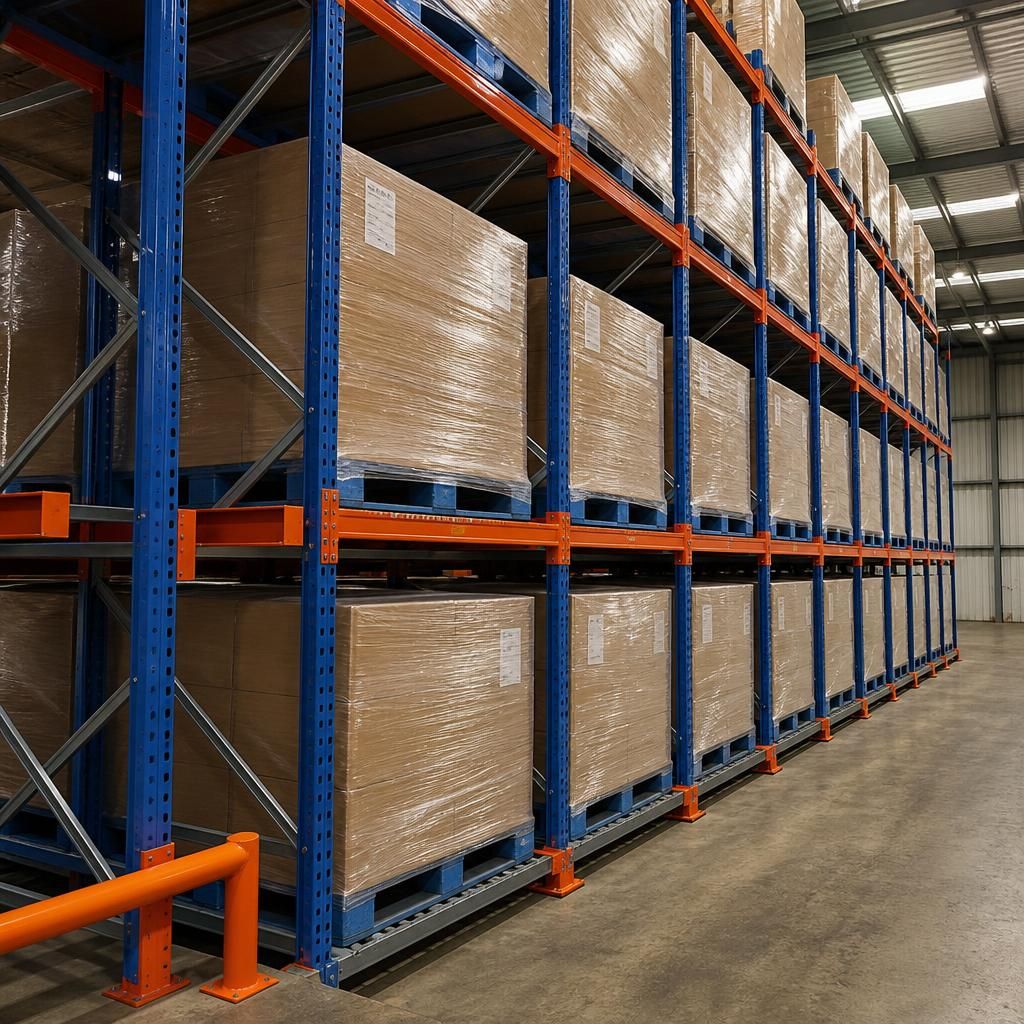
The operating rule for each lane also affects the price. Push back pallet racking stores pallets at depth, so the quotation should reflect grouped stock and the required loading sequence.
If direct access to every pallet is essential, another arrangement may be needed, changing the equipment and usable capacity. State stock rotation and handling methods during consultation, so the proposal reflects the intended operation rather than steelwork alone.



