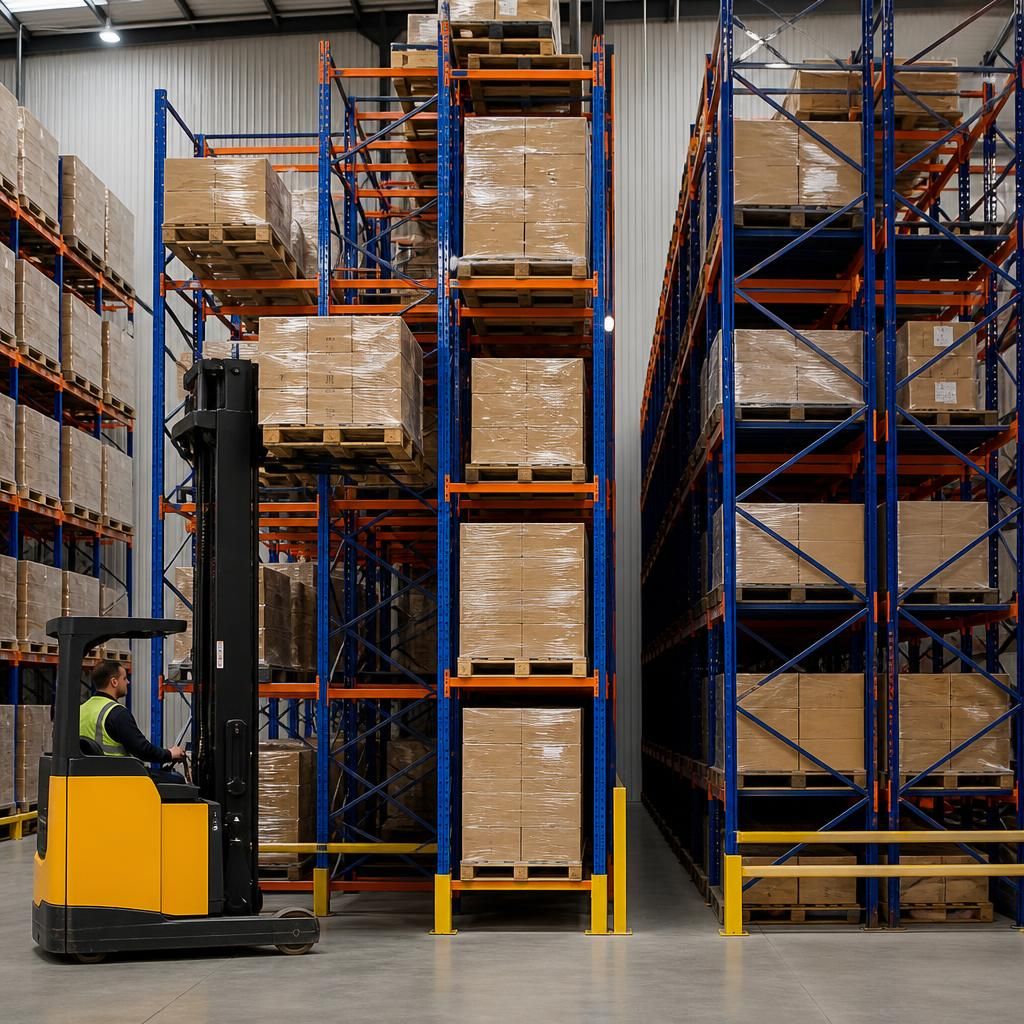
When should you choose push back pallet racking over double deep racking?
Choose push back pallet racking over double deep racking when you need varied stock and easier access to several pallet positions. Double deep may suit denser storage where reduced direct access is acceptable.
Choose push back pallet racking when storage access, pallet movement and operating method matter more than maximum density. Double deep racking may suit a warehouse storing fewer product lines, where placing pallets two positions deep supports a denser layout.
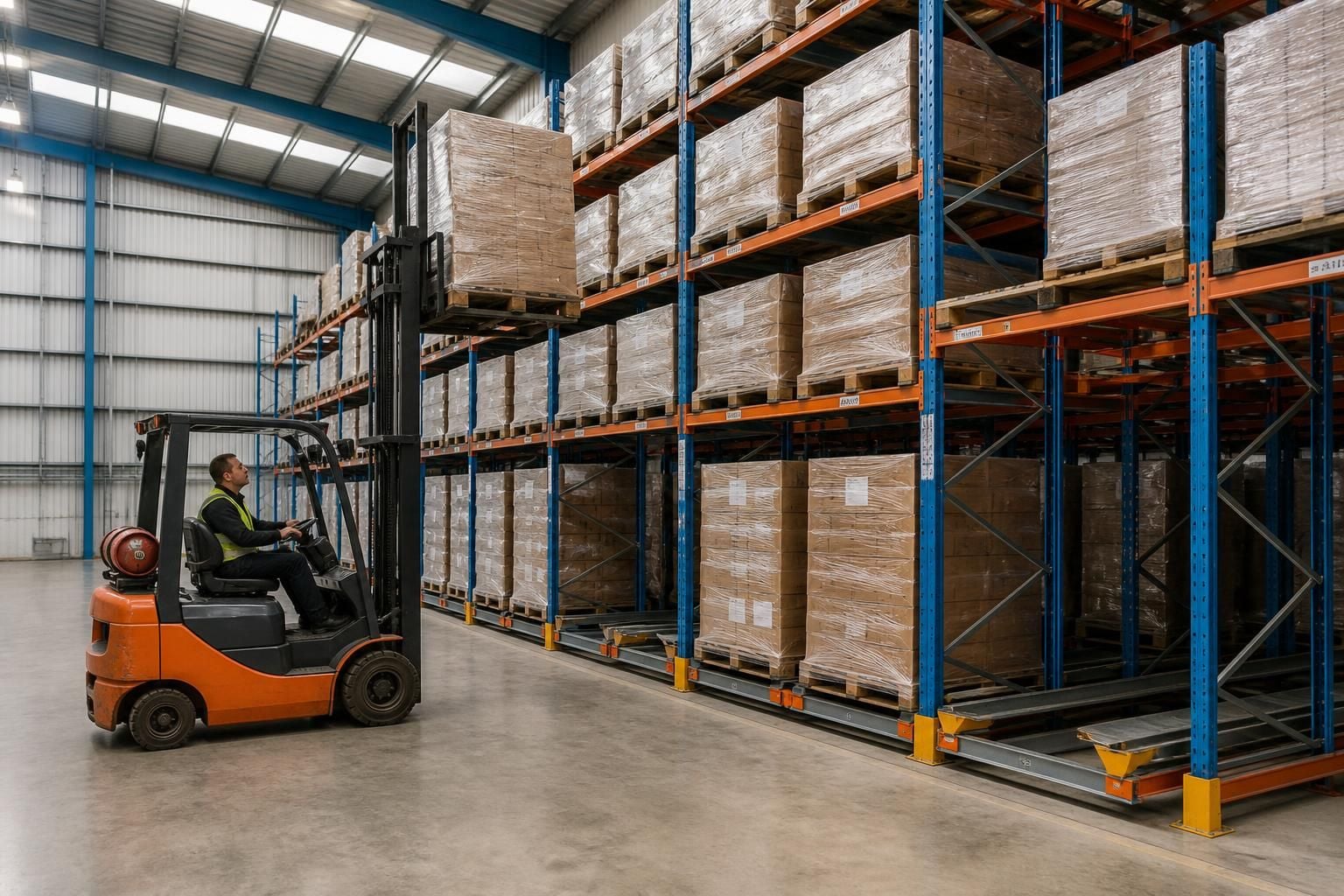
Push back racking uses inclined rails and nested pallets. Forklift operators load and retrieve pallets from the aisle, while later pallets move forward as stock is removed. This arrangement commonly supports last-in, first-out stock rotation.
Double deep racking places one pallet behind another. The forklift must reach past the front pallet to handle the rear position. That can make the system suitable for repeat stock held in greater quantities, but it requires appropriate equipment and careful operating procedures.
- Stock rotation: Push back racking suits stock where the newest pallet can be dispatched first. Double deep racking can work for grouped stock, but front pallets remain an access consideration.
- Product lines: Push back racking can support separate lanes for different products, sizes or batches. Double deep racking generally makes more sense when each lane holds consistent stock.
- Handling equipment: Double deep storage needs a forklift capable of reaching the rear pallet safely. Push back racking still needs suitable load-handling equipment, rail clearances and operating space.
- Warehouse layout: Double deep racking can support high storage density where aisle planning allows it. Push back racking may be preferable when the operating method needs controlled loading and retrieval from the aisle.
- Load suitability: Both systems depend on pallet dimensions, weights, condition and stability. Damaged or inconsistent pallets can affect safe use of either arrangement.
Push back racking is not automatically the better choice for every warehouse. Consider double deep racking when stock is repetitive, rear-pallet access is acceptable, and the handling equipment matches the required reach.
Consider push back racking when stock changes between lanes, loading and retrieval need a straightforward front-facing process, or the warehouse uses last-in, first-out handling. Date-sensitive stock requiring first-in, first-out rotation may need a different storage arrangement.
The choice also depends on clear heights, aisle widths, floor conditions, sprinkler arrangements and the position of doors or working areas. These factors determine whether the planned pallet racking fits the building and supports safe vehicle movement.
For West Midlands warehouses, we can assess the site through a no-obligation consultation and survey. We then prepare written proposals and working drawings for the selected arrangement. Where required, project management can continue through installation and final commissioning.
We recommend comparing both options against stock rotation, pallet consistency, handling equipment, access requirements and future layout changes. That assessment gives you a reasoned basis for choosing push back pallet racking over double deep racking.
Pallet racking comparisons should use the same measured footprint, not headline density alone. We can prepare drawings showing rack positions, aisle clearances, vehicle routes and access points for each option. This helps you judge usable capacity against daily handling, rather than selecting a system that fits only on paper.
During a no-obligation consultation, discuss replenishment and retrieval movements with us. The written proposal can then show how push back or double deep affects the working arrangement before installation.