


What pallet types suit push back pallet racking?
Push back pallet racking suits standardised, sound pallets with consistent dimensions and loads that can be stored safely on the system’s carts or rollers. Mixed, damaged or unusually sized pallets need checking during a site survey before you select this storage method.
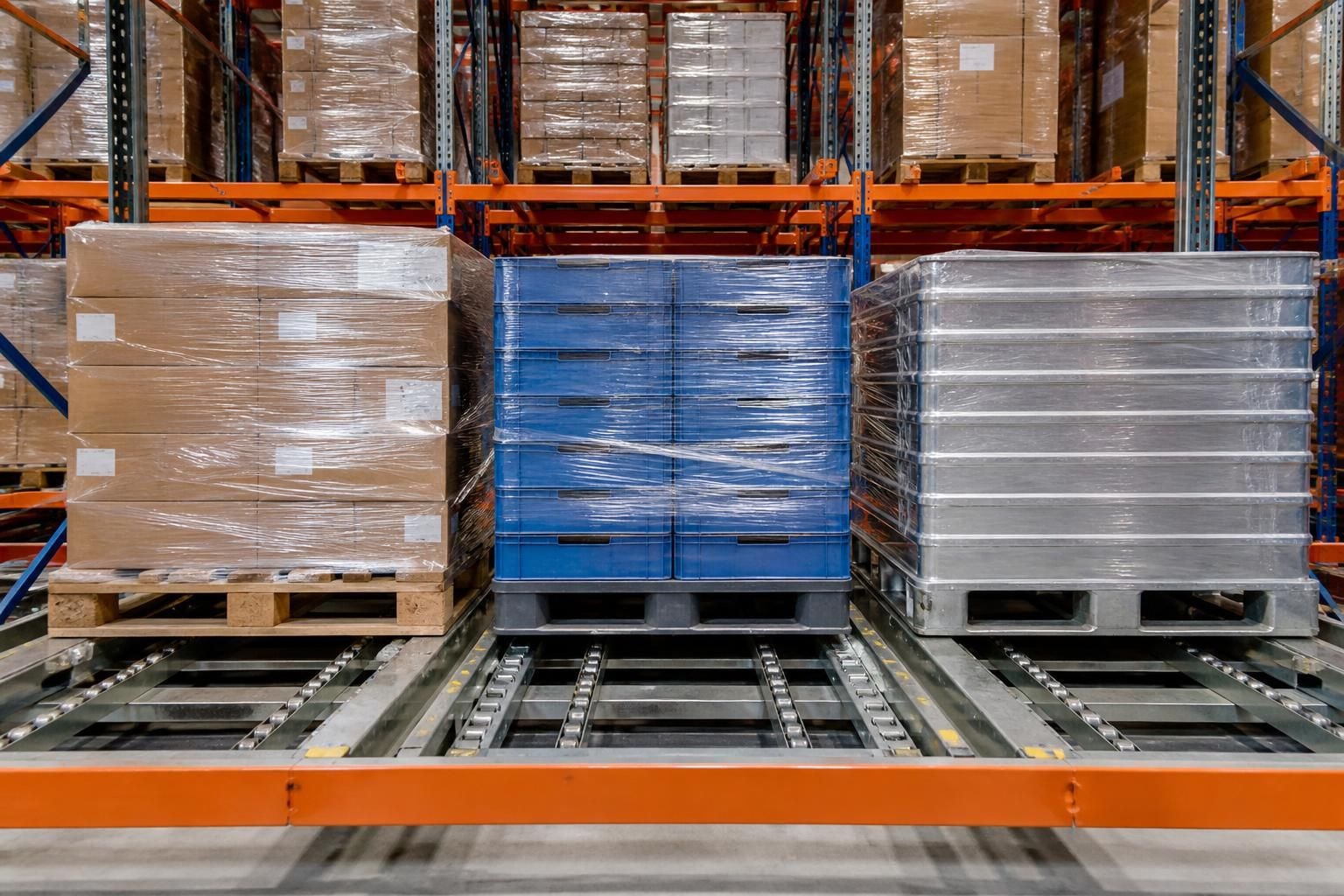
Pallet racking for push back storage suits pallets whose underside, footprint and load support match the carts or rollers. Material alone does not decide compatibility. Timber, plastic and metal pallets may all work, provided their construction supports controlled movement and stable storage.
Timber stringer pallets can suit push back pallet racking when their runners sit correctly on the supporting surfaces. Check the runner position, deckboard condition and underside clearance. Protruding boards, damaged runners or loose components can affect movement and create handling risks.
Timber block pallets need closer assessment because their blocks and deck arrangement vary. The carts or rollers must support the pallet without catching on blocks or leaving unsupported areas. A site survey should confirm how the pallet enters, travels and stops within each lane.
Plastic pallets can provide consistent construction, but moulded feet, ribs and underside profiles differ between designs. Nestable pallets may require particular attention because their underside can offer less continuous support. We check the pallet profile against the proposed equipment before recommending this arrangement.
Metal pallets may suit applications involving durable load carriers, provided the deck and edges work with the carts or rollers. Their weight, contact points and load distribution should form part of the assessment. A pallet that looks strong may still be unsuitable if it does not sit securely.
Four-way entry pallets can offer more forklift approach options than two-way entry pallets. However, entry direction does not confirm push back compatibility. The pallet still needs suitable support underneath and enough clearance for safe handling within the lane.
Pay particular attention to these pallet features:
- Overall length and width, including any projecting boards or fittings.
- Underside shape, runner position, feet and contact points.
- Deck strength where carts or rollers carry the load.
- Load distribution, including concentrated or uneven loads.
- Condition of boards, blocks, welds, feet and other structural parts.
- Forklift entry requirements and the direction used during loading.
Keep pallets with different footprints or underside designs in separate lanes unless the system has been designed for their combination. Mixing carriers can affect clearances, support and the way pallets move through the lane.
Also assess the load rather than the empty pallet alone. A flexible pallet may perform differently under a dense, uneven or overhanging load. The combined pallet and load must remain stable during placement, storage and retrieval.
For a West Midlands warehouse, we can review the pallet pool during a no-obligation site meeting and survey. We record pallet dimensions, construction, underside details, loads and handling arrangements. We then use those findings for written proposals and working drawings.
This process helps you compare push back pallet racking with the pallet types already in circulation. It also identifies carriers that may need separate storage, replacement or handling controls before installation. Where required, we can coordinate project management through installation and final commissioning.
Spartan Direct has designed and installed storage systems for companies of different sizes across the UK since 1982. Our assessment focuses on whether the pallets, loads and workflow work together safely within the available space.
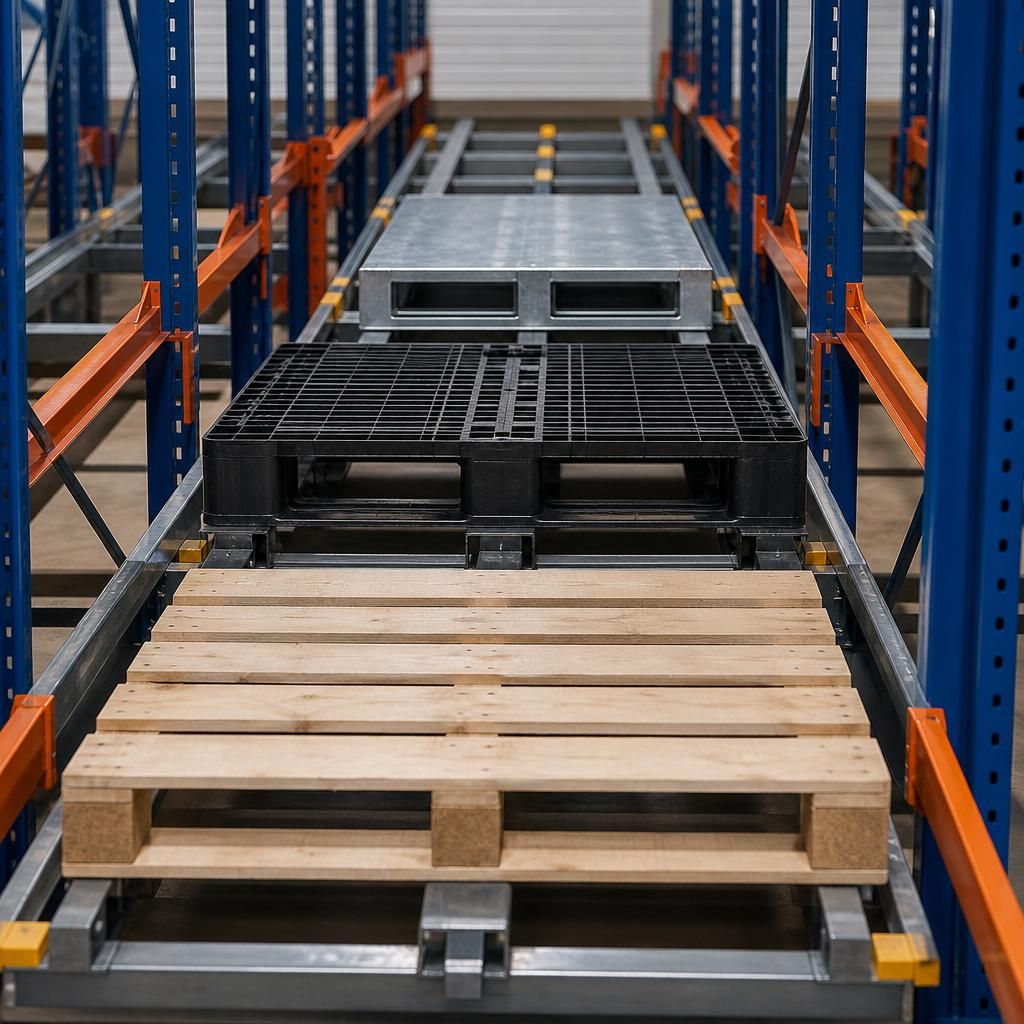
Ask for pallet compatibility to be recorded in the proposal. The written design should identify the pallet assumptions behind each push back racking lane, including the carrier profile and loaded arrangement assessed.
This gives you a clear basis for comparing the system with pallets introduced later. If the pallet pool changes, check the new carrier against those stated assumptions before using the lane.



