


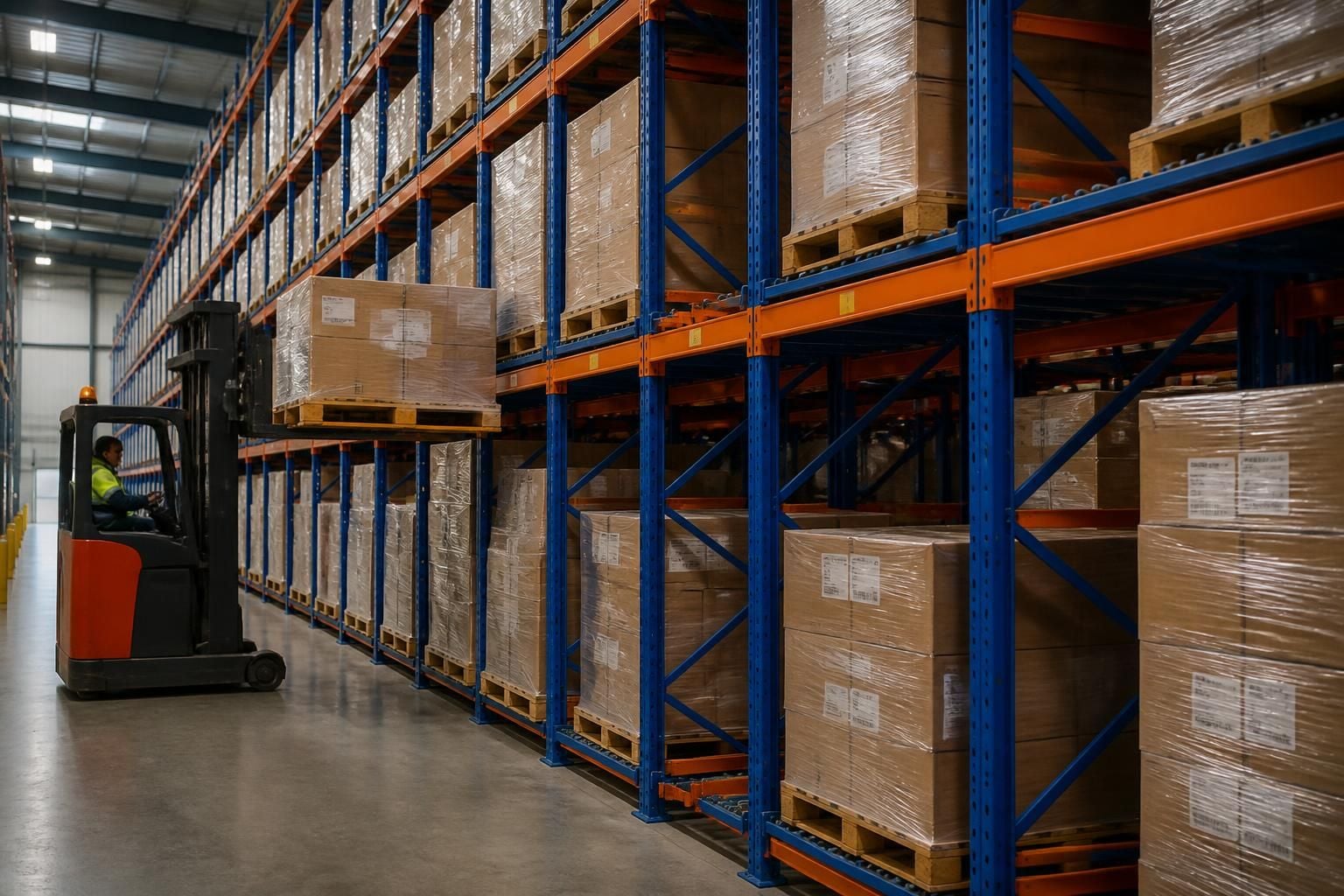
Is push back pallet racking suitable for last-in, first-out stock?
Push back pallet racking suits last-in, first-out stock because the most recently loaded pallet remains easiest to retrieve.
It supports dense storage where stock rotation permits LIFO; choose another layout when date-sensitive goods require first-in, first-out access.
Push back pallet racking is suitable for last-in, first-out stock when the newest pallet must remain available from the operating aisle. It works best when each storage lane holds a controlled product type, batch or stock group, and the loading sequence matches the retrieval plan.
The system stores pallets behind one another, using the lane depth behind a single access face. Loading places a new pallet into the front position and moves existing pallets further back. During retrieval, operators remove the front pallet before reaching those behind it.
This arrangement can increase storage density by reducing the number of access aisles. It can also support organised stock holding where you handle several pallets of the same product and do not need direct access to every pallet.
- Suitable stock: products with no requirement to issue the oldest pallet first.
- Suitable workflows: operations receiving and dispatching pallet quantities by product group or batch.
- Suitable layouts: warehouses where access from one aisle suits the loading and picking process.
- Suitable controls: clear lane identification, stock records and loading rules that prevent incompatible batches being combined.
Push back pallet racking becomes less suitable when you need to select any pallet directly, rotate stock by age, or maintain strict first-in, first-out movement. It may also create difficulty if one lane must hold several product variations without clear separation.
Stock rotation deserves particular attention. Last-in, first-out handling can leave earlier pallets behind newer ones. If storage dates, expiry dates or batch traceability determine dispatch order, another pallet racking arrangement may fit the workflow better.
Access equipment and pallet condition also affect the decision. Operators need enough room to approach the rack, position the load and remove pallets without unsafe contact with the frame or stored goods. Pallet dimensions, load weights and load stability must suit the proposed racking design.
We assess these points through a consultation that may include a site meeting and survey. The review can consider pallet sizes, load weights, lane depth, aisle space, stock rotation, access equipment and the movement of goods through the warehouse.
We then prepare written proposals and working drawings for the agreed arrangement. Where required, project management can continue from proposal and tender stages through installation and final commissioning.
The right choice therefore depends on your stock rules, not simply the available floor area. Push back pallet racking suits LIFO stock when dense lane storage and front-facing retrieval support your working method. If stock age controls dispatch, we can assess a layout that protects that requirement instead.
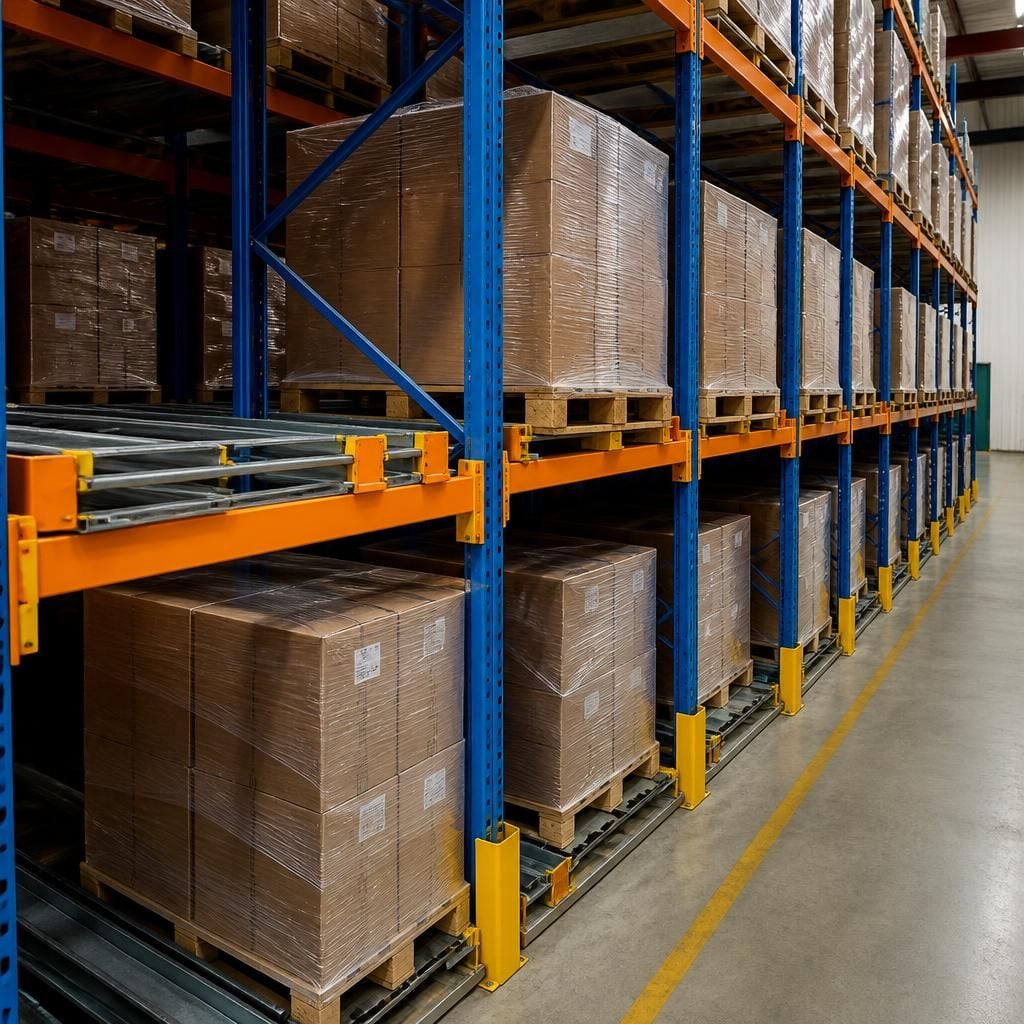
Push back pallet racking suits LIFO only when replenishment and dispatch rules match the lane sequence. If new pallets keep arriving before older front pallets leave, earlier stock may remain behind several loads.
Check the planned movement of a typical lane before choosing this arrangement. The system fits when operators can identify the front pallet, remove it first, and accept the resulting stock order.



